THE WORKSHOP – F_SEBS “Rusting with gusto”

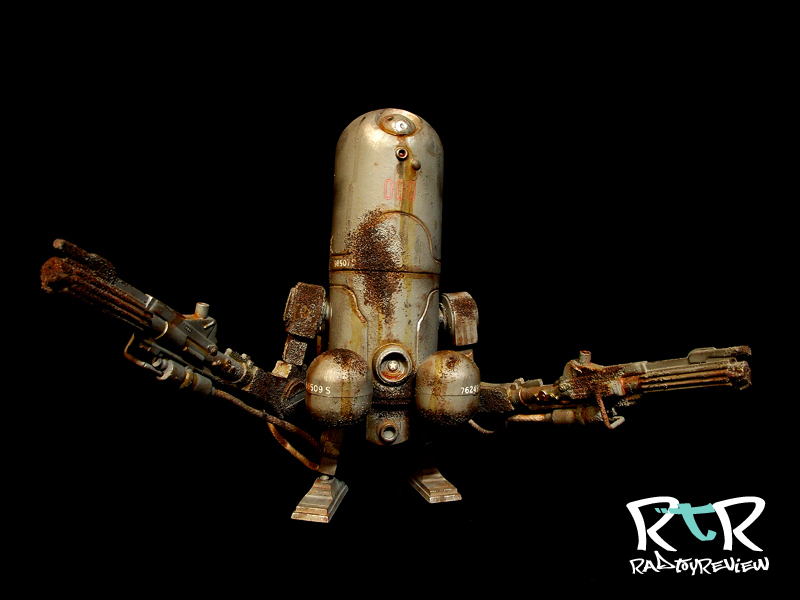
Today we have an all new workshop from F_Seb who many of you may be familiar with from his fantastic modeling, painting and character customization work. He’s gonna hold your hand and guide you through the steps he took to get some killer looking realistic rust fx on his BA custom bot. (Which had me asking, where’s the tutorial on THAT?) I know you’ll enjoy it and I think you’ll come out the other side a little more enlightened. Cheers!

– Knives

Hi all!! Before starting this custom, I had never successfully created any rusty effects as we can see on some tutorials. I’d read and tried the “salt layer” trick once a few months ago and the result was bad. I couldn’t get it to look right. I screwed up somewhere along the way I think. So on a whim, I decided to try a similar technique, but this time with sand..

Why?? I don’t really know why. At first, I didn’t think the result would be what I desired, but in the end it didn’t seem like such a bad idea. I’d made a few modifications to this little Armstrong, so it was necessary to paint it to make it more seamless.

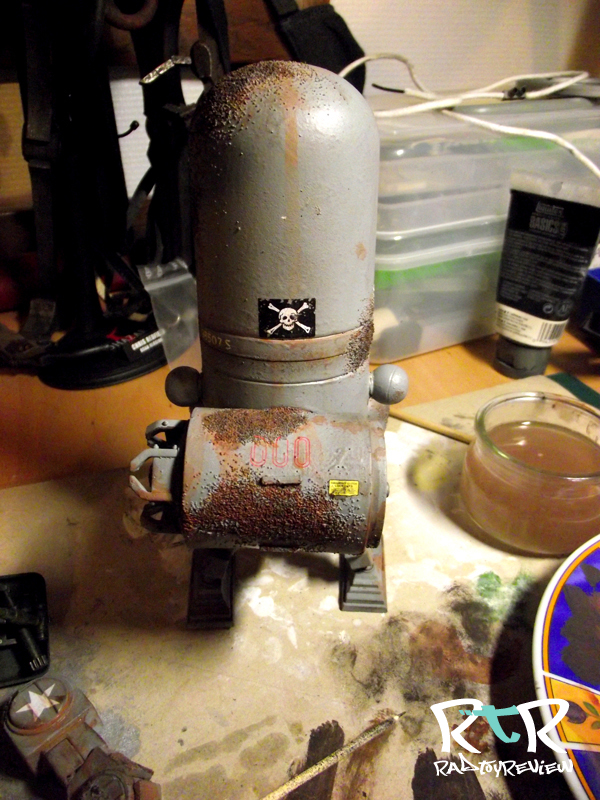
1.I used spray paint (mtn94 is my favorite, low pressure) for the base layer. I wanted a brown color as you can find in rust. I waited a little bit until it’s completely dry and used hairspray to stick the sand. The sand I used is the same of that you might find in a Japanese garden for interior design, it’s very thin and perfect for the scale. I did several spots of hairspray and then applied sand to it. You can choose to put as much sand as you like. Variety of amount here will give you variety in texture later.
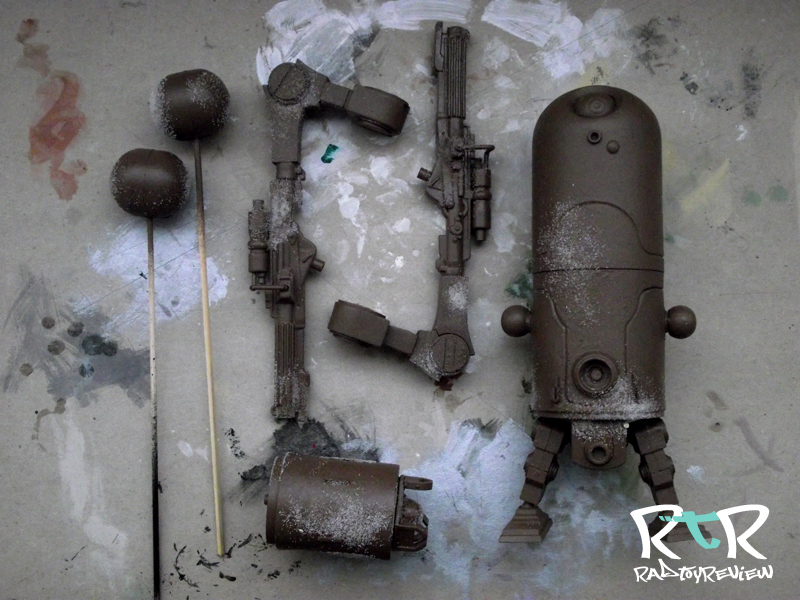
2. Once the sand is fully dry in place, I painted another layer this time in light grey. This is the color  the bot might have been when it was fresh off the factory floor/clean. Note: If you have different base colors for different parts of the bot (ie: red arms, blue legs) just paint those parts accordingly.
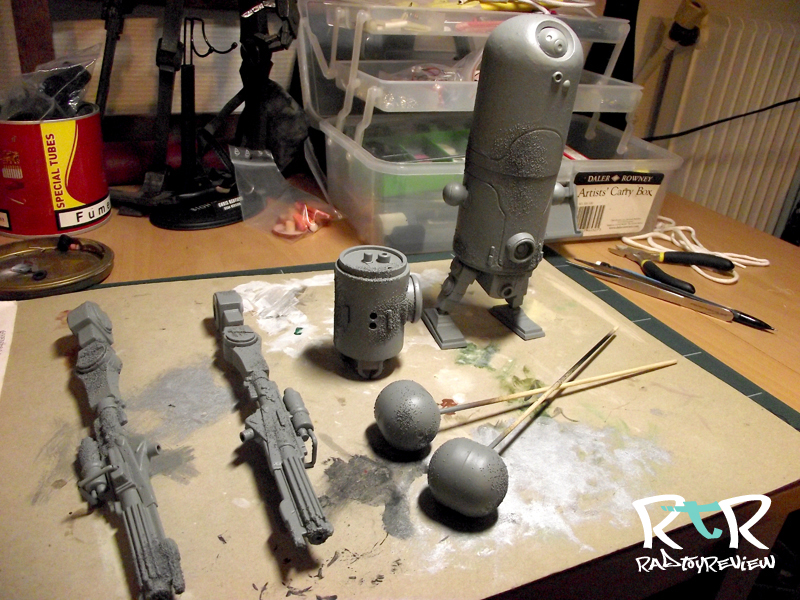
3. Alright, let’s go to make-a-the-rust, or something like that!! So, here I used only two colors, Vallejo Clear Orange (70.956) and Liquitex black mars to get various browns and oranges. I then stamp on some more sand with a flat pencil to make irregular spots as well as do some dry brushing on the edge of the rust zone. Don’t forget to do random mixes of paint, it’s more beautiful with nuances.
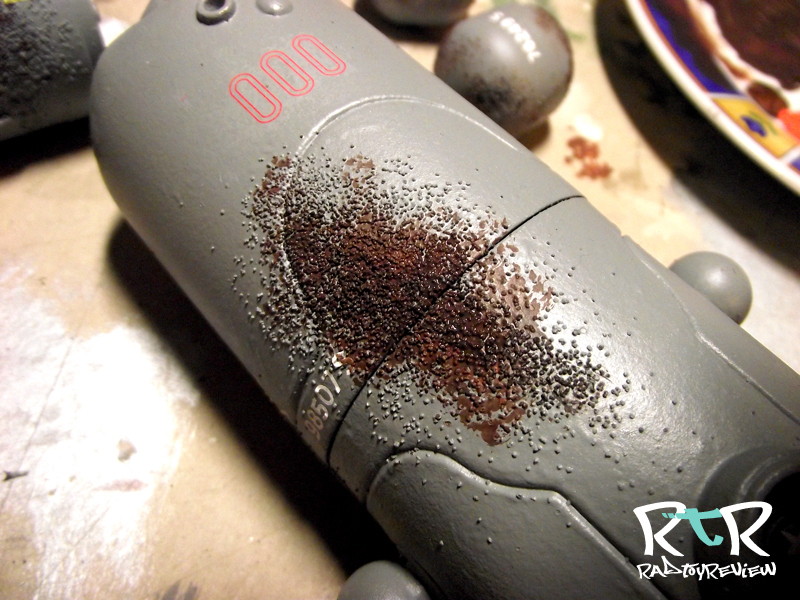
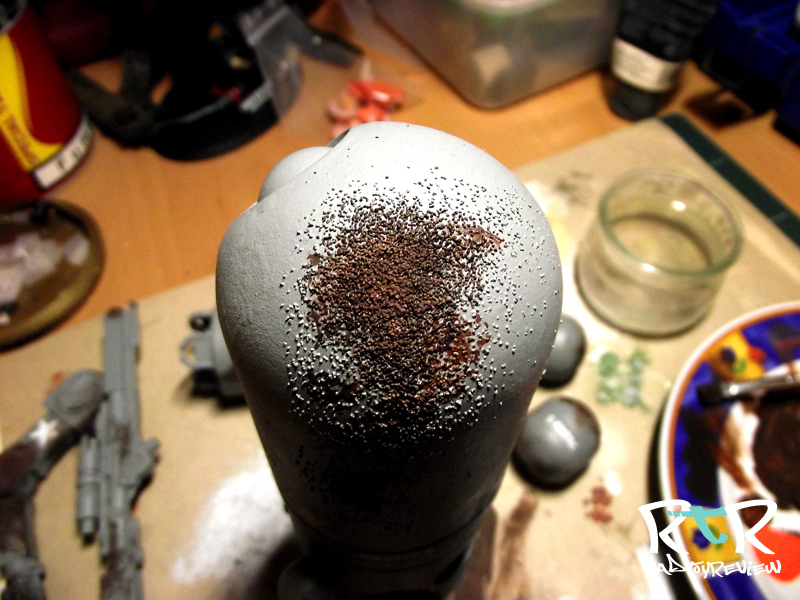
If you’re wondering why I started by painting the whole bot brown in the 1st step, you should start to see the reason for it here.  As the sand gets knocked off  while  you dry brush and stamp you’ll notice  under the color is the nice rusty brown giving the effect of rusted steel. You can knock bits and pieces of sand off  where you please to make little spots of under painted brown rust. Again more texture, more variety.

4. OK, here I use Tamiya paint X26 orange clear and the same mix of paints I did for the rust spots (Vallejo Clear Orange (70.956) and Liquitex black mars) To get the runny rust look, I take a round pencil and I drop a tiny bit of water to make “roads” running down the body of the bot. Immediately afterwards I drop a gout of very diluted paint. It will follow the road, leaving just a little color. Redo that step until it gives you the desired effect. Note: starting with a clear water “road” instead of simply using very diluted paint ensures that the drip goes where you wish without any risk of  it running over something you didn’t intend it to.
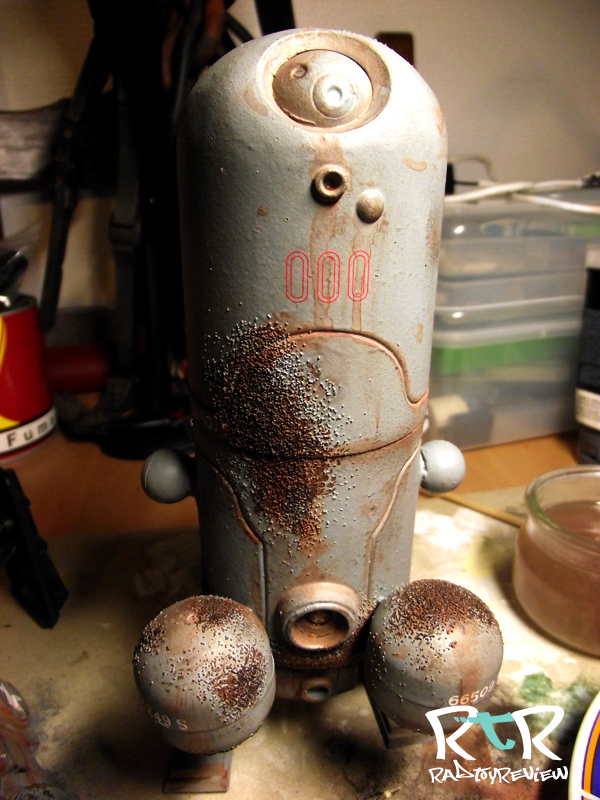
5. Now you can do some dry brush with a metallic paint (for me Tamiya chrome silver) which gives a nice scratched metal effect. You can also experiment with different ideas that mimic real world aged metal. Burn spots, oil leaks, etc..  Apply your paints in light layers and build them up until you’ve reached the desired look.
We hope you enjoyed the workshop. You can check out more of  F_Sebs amazing work on his blog: http://sebscustoms.blogspot.com/. We’d love to hear from you here, on our Facebook or Twitter page. Let us know how we’re doing and what kind of workshops you’d like to see.

Happy rusting folks 🙂

The Workshop – Jim Bailey’s “Custom Action Portable Negra/Blanco TK”

This continues our “The Workshop” series. We hope you enjoy this one and check back soon as we have many more on the way.

Jim Bailey, aka Grindhouse is today’s Workshop master. An architect, painter, kit-basher, and games designer, Jim’s got his hand’s in quite a few different creative pies… and boy do we like pie!  

Almost as much as we like to learn cool new techniques to push our customs and creations further. Thanks Jim!

–  Knives

Custom Action Portable

Sometimes I get an idea that so totally overwhelms me that I’m like a zombie all day at the office and only come alive when I get home and start working on it. As I was finishing this project last night, I realized that I had killed a 12 pack of beer and a few shots of whiskey and was so engaged in the work that I didn’t notice.  Zombie effect today not caused by excitement about project!

Custom Action Portable TKs! These are the first three of five that I have planned. Blanco and Negro ares super duper easy. You CAN try this one at home. What follows is a fairly detailed step-by step for Negro and then some narrative description of how I did Blanco and Interbaka.

Negro:

Custom Negro TK

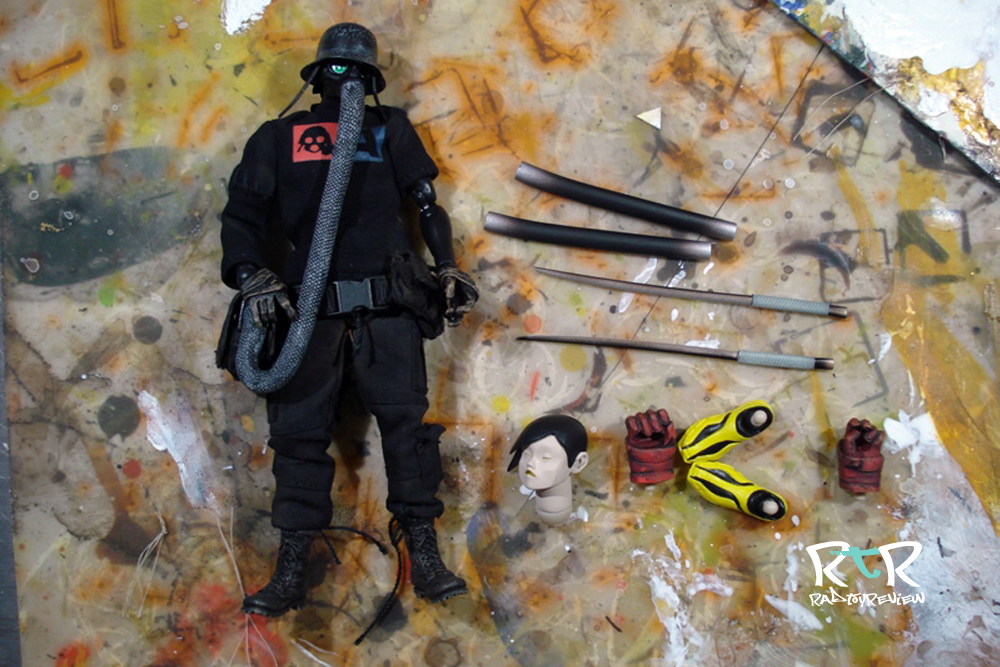
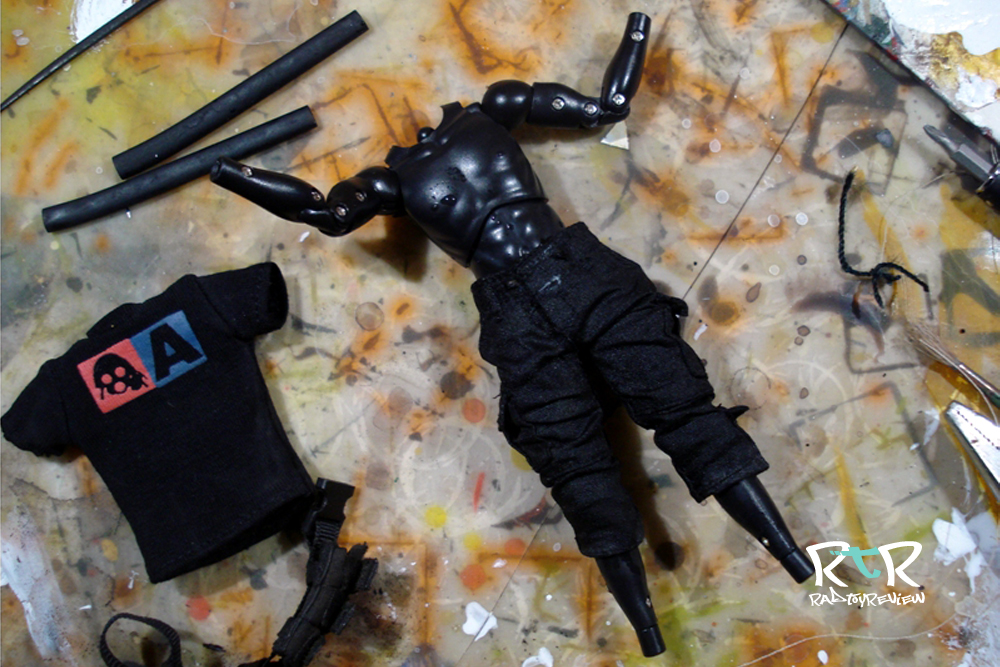
1. The components you need are a Noir Deplume (minus feet, hands, pistol, head, and hose) as well as feet, hands, head, and swords from a Yellow Jacket.

what you need

2. Carefully unscrew wrist screws part way to remove Deplume hands. Screw back in while working then unscrew later to put the final hands on. Do not force. You will break the joint.

unscrewing the arm

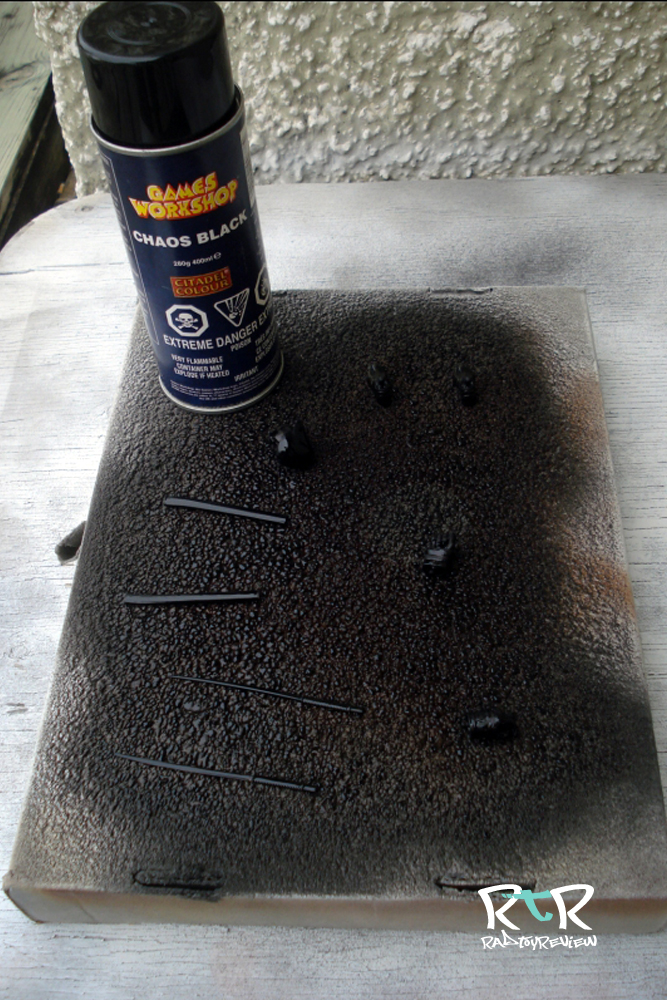
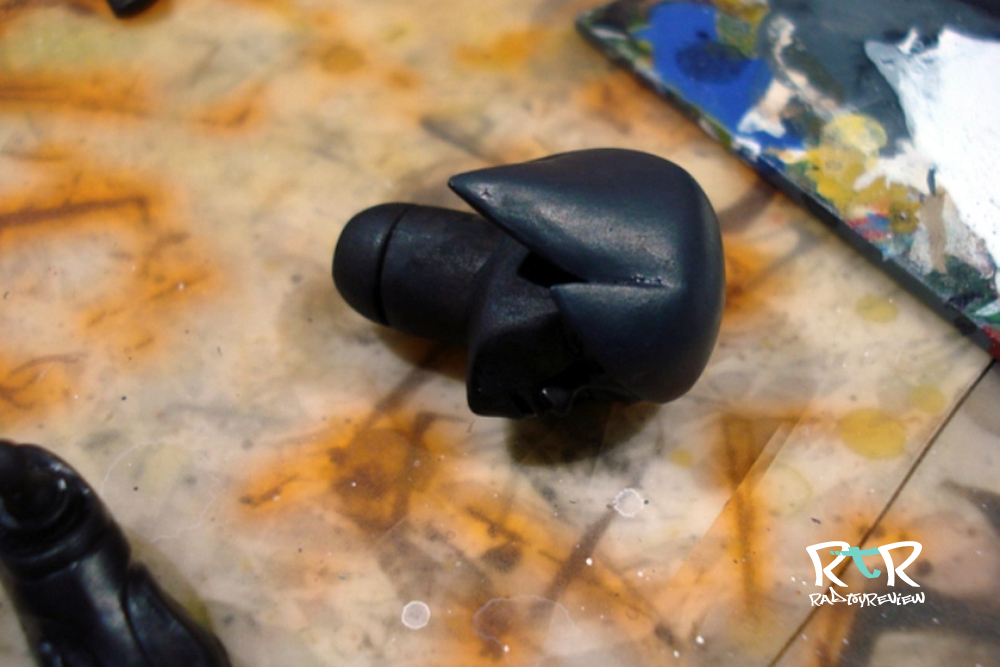
3. Spray all the components from the Tomorrow King with flat black. Use Krylon or Citadel.

spray it down

4. Remove boots, head, hose, gun/holster form Deplume

de-ccessorize

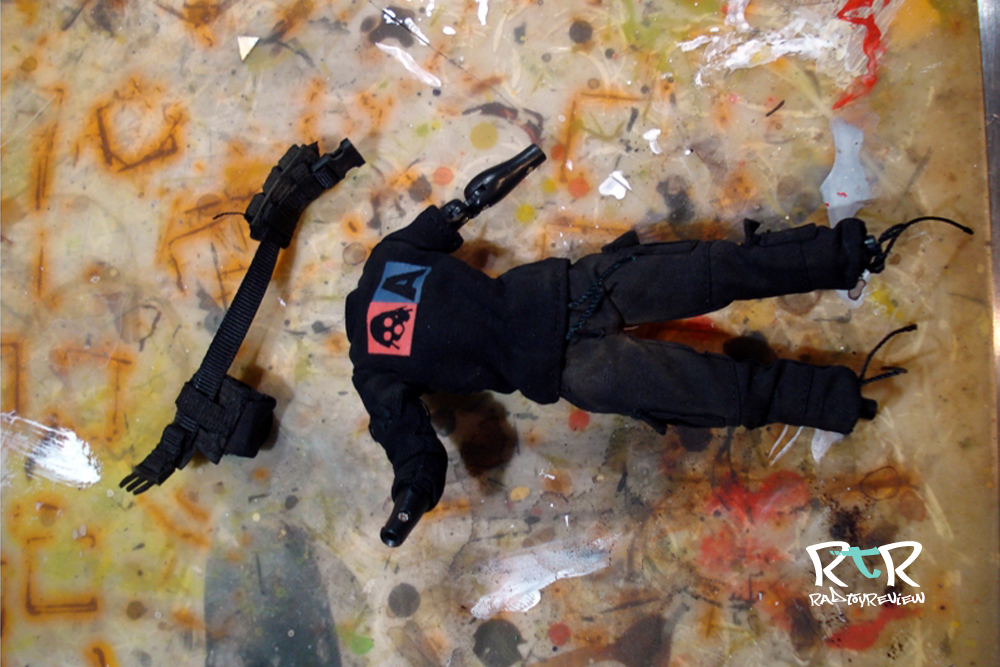
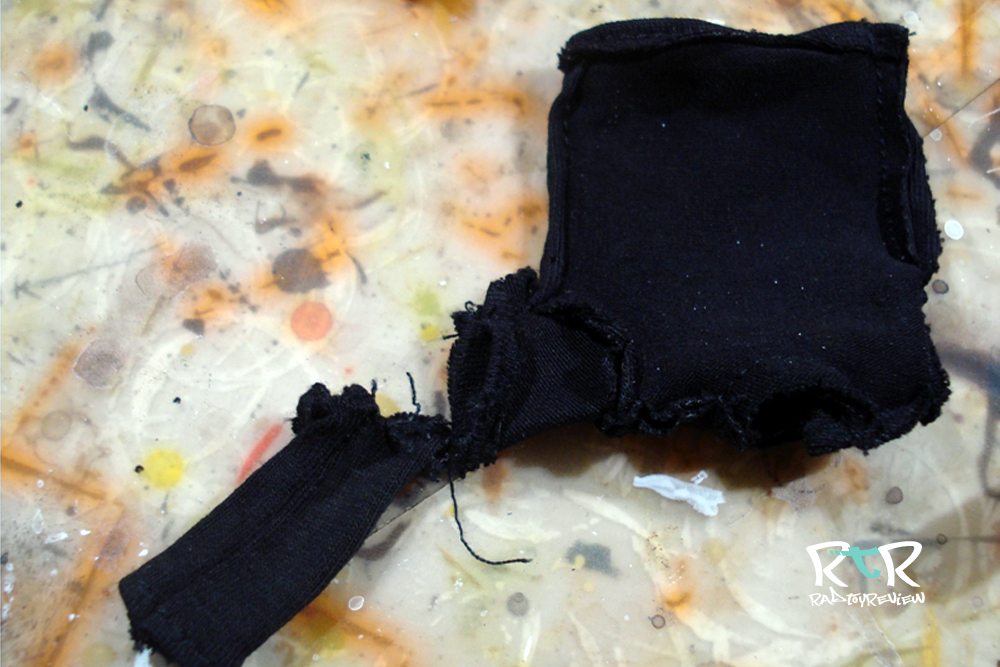
5. Remove Deplume shirt, turn inside out, and carefully remove the stitching that holds on the long right sleeve. Use Xacto knife or razor blade.

removing the sleeve

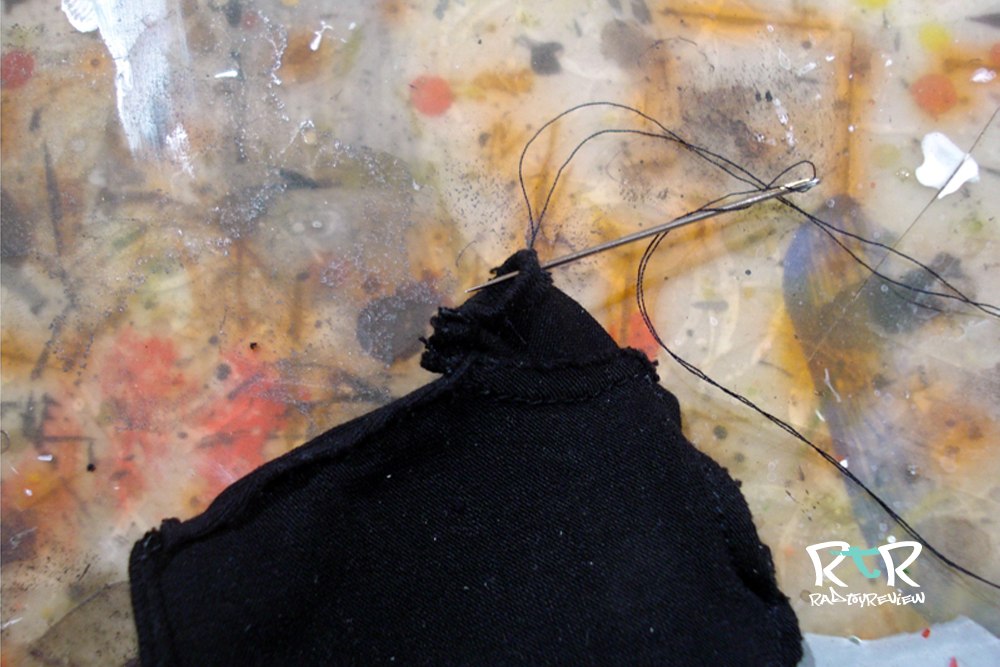
6. Fold back edge of sleeve and sew to match left sleeve. It won’t be an exact match but close enough for government work.

matchy matchy

7. Get the trousers to fit how you want by folding the cuffs up inside and sewing a stitch or using a little piece of double stick tape. You can cut to length instead but that requires hemming and limits future options. Soak the trousers in water when they are in place to make them wrinkle and conform to his body in the manner you wish.

work pants

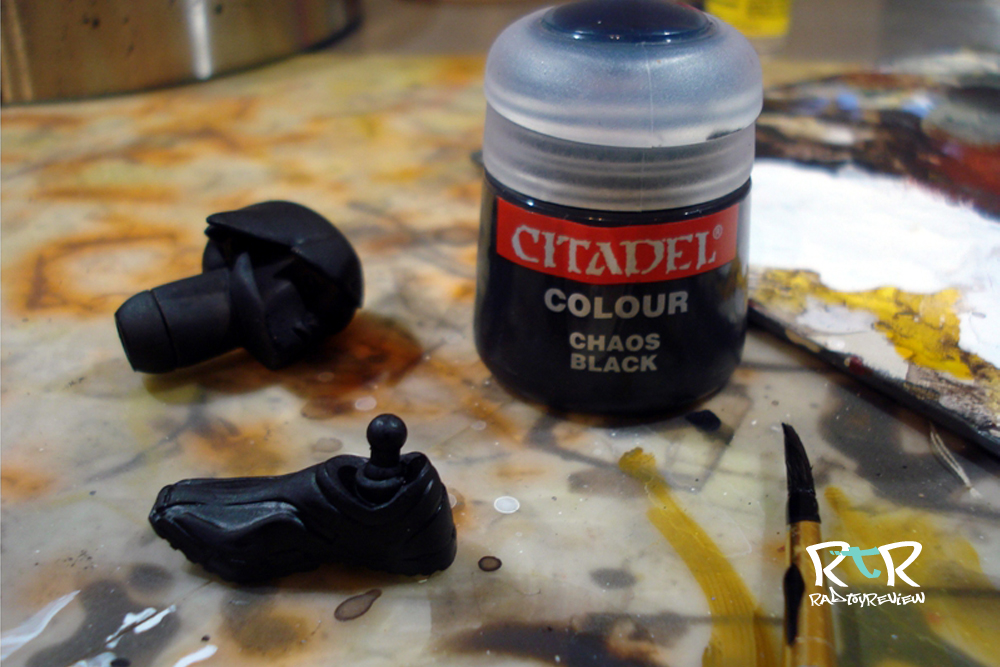
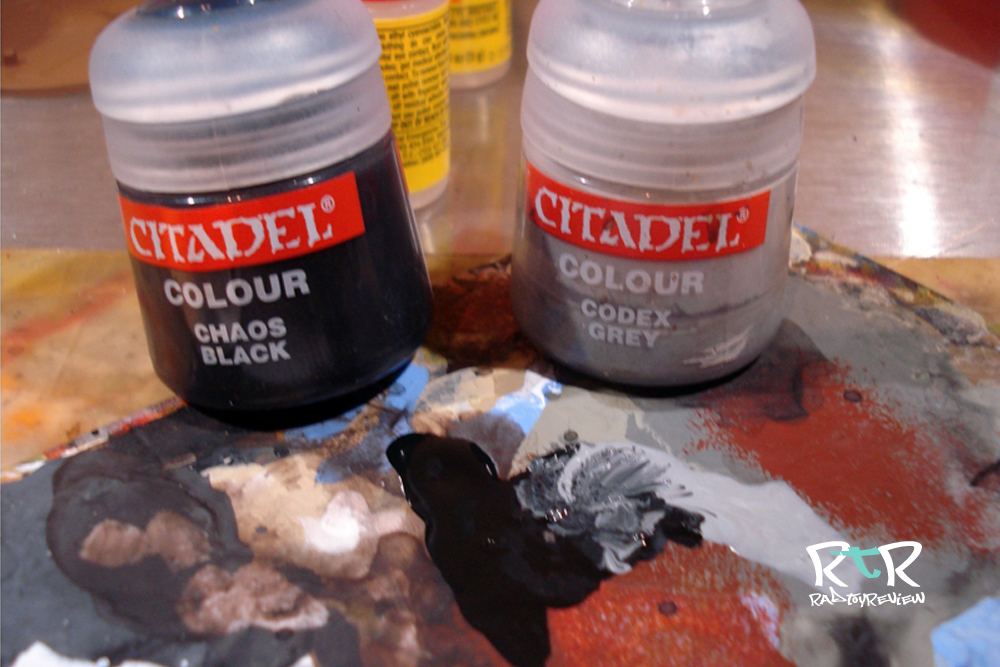
8. Paint Feet and hands with a latex satin black paint such as Citadel Chaos Black or Liquitex Mars Black. No cheap craft store paints! To chalky and/or grainy.

9. Mix a dark gray of your liking.

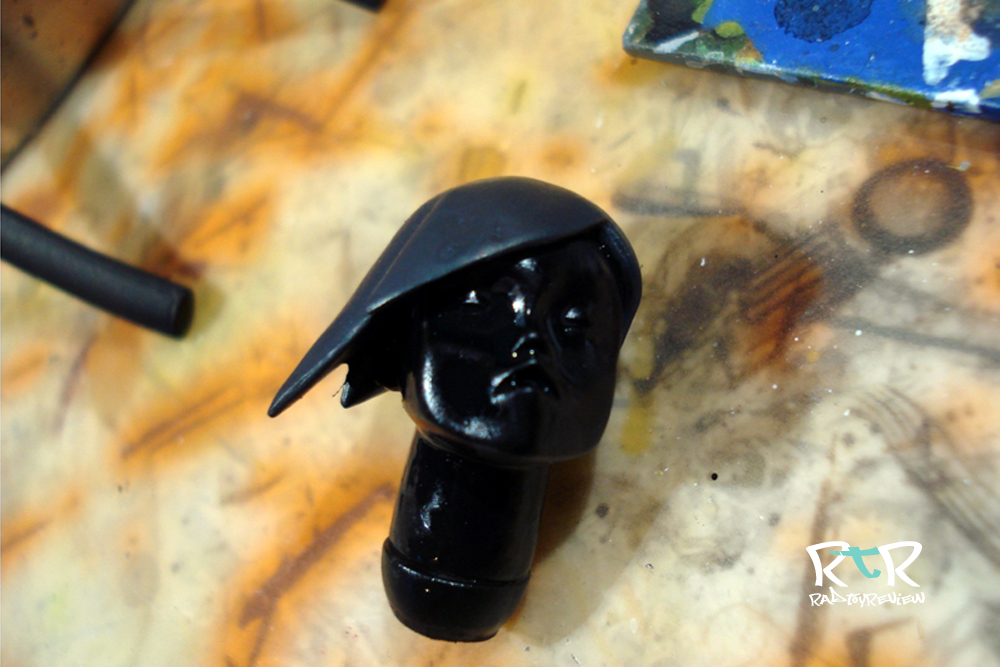
10. Paint the hair.

silk and smooth

11. Mix one part gloss varnish to four parts black paint.

12. Paint the face with this mix.

paint the face

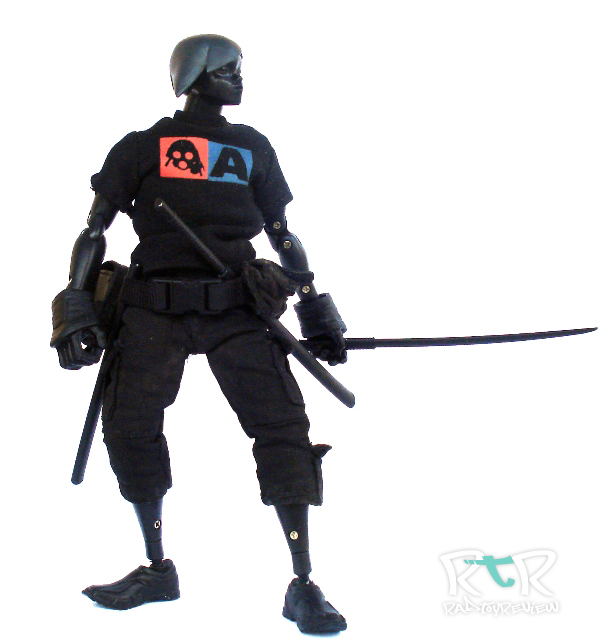
13. Final components, ready for assembly and posing! Note that the sword and sheaths have flat black spaypaint as their finish application.

all the pieces in place


Blanco:

Blanco TK

Get yourself a DIY Deplume and carefully unstitch the sleeve. Get feet, hands, swords, and head from a Yellow hornet and spray with Krylon flat white. Then take white acrylic paint and mix 4 parts to 1 with an acrylic gloss varnish. Paint face, hands, and feet with this blend. This step differs from the Negro process. Leave the hair and swords as Krylon flat white.

Interbaka:

Interbaka

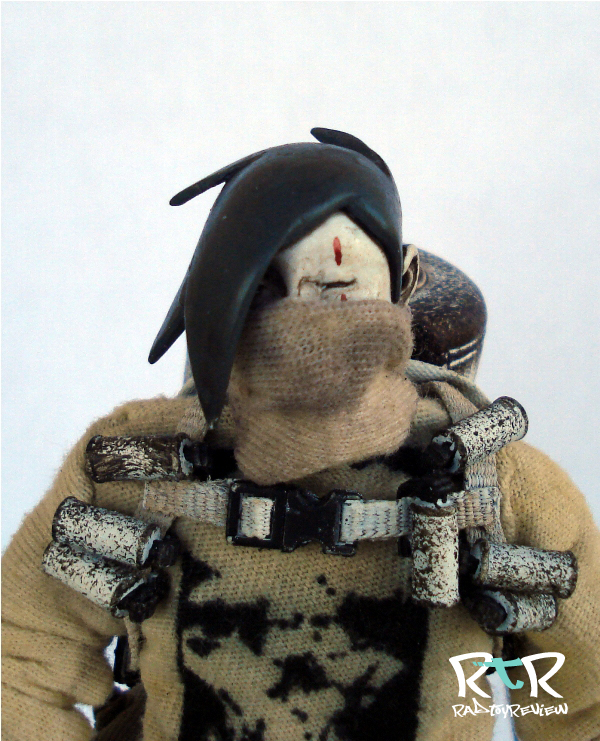
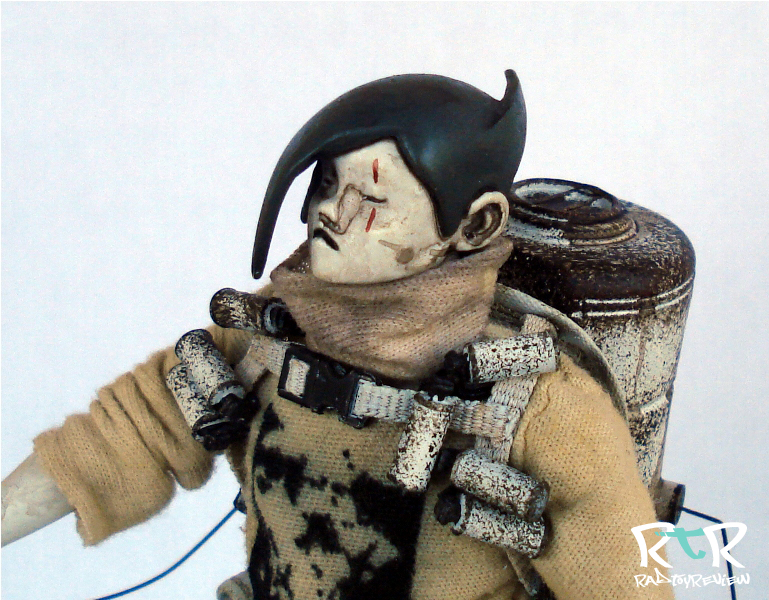
Action Portable Interbaka is another kettle of fish and should not be attempted by the faint of heart. I used a Hatchery Guard as the base along with swords from a Yellow Hornet. The power pack is from  AP Jungler Dropcloth. The grenades are a little small because they are 1/18 scale: acquired from Marauder’s Gunrunners.

I hadn’t sewed anything since about 1978 so I was a bit daunted. I sewed up the sweatshirt  and bandana out of material from one of my old t-shirts. I then created a makeshift light table and traced the art that I had pieced together and warped out in photoshop using a .05 Staedtler Pigment Liner with waterproof archival ink. It bled a little but not too bad. I then created the webbing by sewing up scavenged bits and clasps from other action figures. Next, I bleached and repainted the Hatchery Guard trousers. The hair was then  sculpted using Plastruct plasticard and Kneadtite “green stuff”.  To do the electrified swords, I added a couple of plastic bits to the back pack and drilled holes. I then drilled two holes in each sword: one at the pommel and one on the handle. I then threaded guitar wire through it all and tied it together with pliers. The wire floats free inside the backpack so all the bits can be easily removed for posing, etc. Finally, I painted it! That’s an article in itself. I may do an article on weathering, wipes, and rusting one of these days.

Enjoy

Jim Bailey aka Grindhouse


The Workshop – WWWetwork’s “getting prep’d”

Many of you may already know who WWWetworks is, but even if you don’t you’ve probably seen some of his amazing customs. Even though he’s only been rocking customs for a few years, his commissions are in high demand. On top of that he’s a massive 3A fan with the bulk of his work revolving around their 1/6 line.  Please check out the gallery after this workshop to see a few of his previous pieces.

This is the first workshop of a series Carlo (WWWetworks) has planned for Rad Toy Review. This one is the warm up, an appetizer, aimed mostly at beginners or those curious to see what Carlo uses to do the things he does. Follow along and it’ll ensure you have all the tools you need to get started and be able to handle the dirty task of weathering like a champ. Enjoy

–  Knives

Alright, for this project, I started out with a WWRp DIY De Plume.  I don’t just jump in and start painting, I prepare the surfaces first to make sure everything comes out exactly as I want it to.

All the plastic bits get covered in base/primer to prep for my paints.

I use Dylon stain remover before washing the clothes in a lukewarm bath. It’s very easy to apply, just rub it on the weathered areas you want clean.

After my surfaces are ready, it’s time to work. I won’t go into my exact process here (next time) but my general workflows is..

  •  base/primer
  •  enamel or acrylic paint for the base color
  •  weathering pigments/paints
  •  top coat

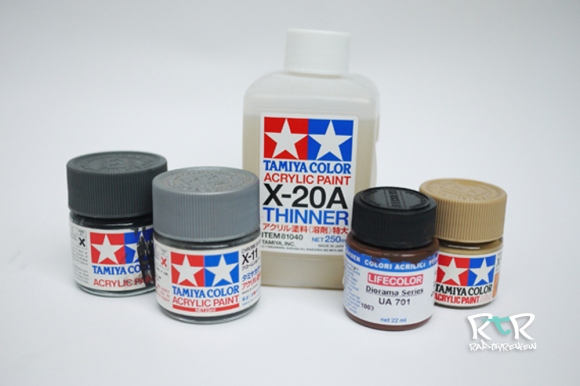
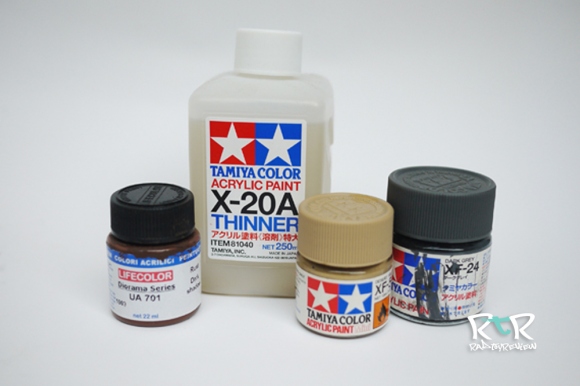
The acrylics I used for this particular project :

  1. Lifecolor – dark rust
  2.  Hobby Color – aircraft gray
  3. Tamiya – chrome silver, dessert yellow, dark grey and flat black

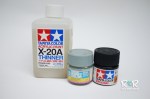
I use paint thinner to thin the paint if I want a smoother texture (no brush marks) and to create wash (a light, watery, diluted paint).

Below are the products I recommend for use on each specific part:

These five for the helmet, hose, face mask.

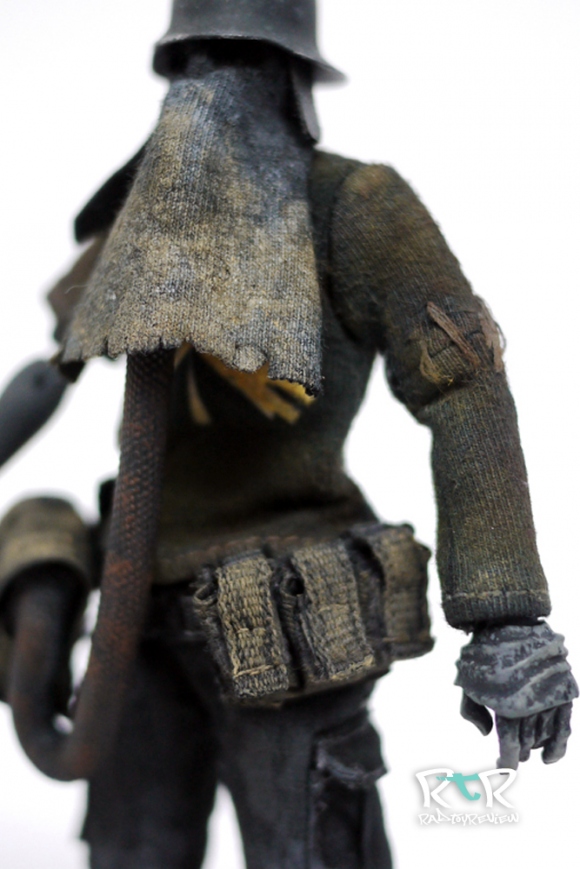
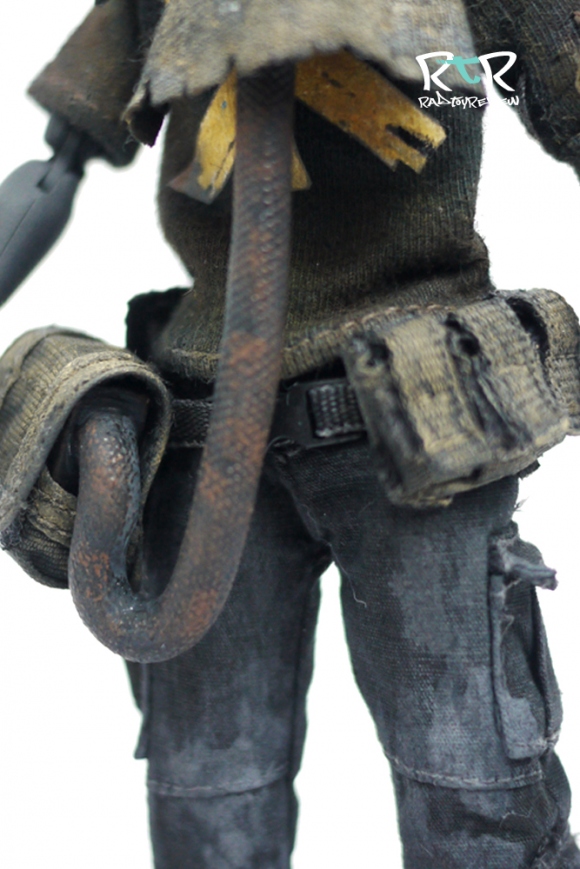
I used a sponge technique for the helmet and the hose to give it a nice varied texture

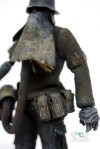
Next up, the shirt was stained with a wash technique built up in layers using the paints below.

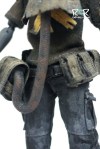
For Noms pants, I simply dyed them black and followed it up with a wash of light gray…

.. using these.

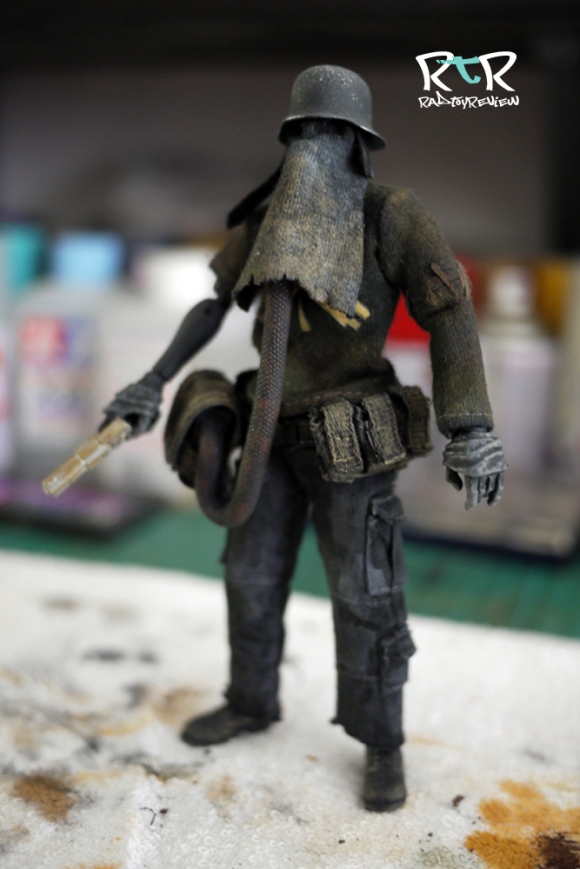
The final result.

Easy right?

That’s it for now! It’s brief but I do hope you found it somewhat informational and hopeful for your own projects. Next time I’ll go into more detail on specific techniques such as how to apply custom decals with t-shirt transfers. Cheers!

Some of WWWetworks previous works gallery