THE WORKSHOP – MK 2.1 Square by Paul Benson

I’m happy to be able to bring you the step by step process of one of Paul’s most impressive custom projects yet, The MK 2.1 Square. I was blown away when I saw the finished piece and asked Paul if he’d mind putting something together for us to glean a little wisdom from. Grab your least favorite toy, an X-acto blade and some super glue and follow along!

Also, please don’t hurt yourself..

Enjoy!

– Knives

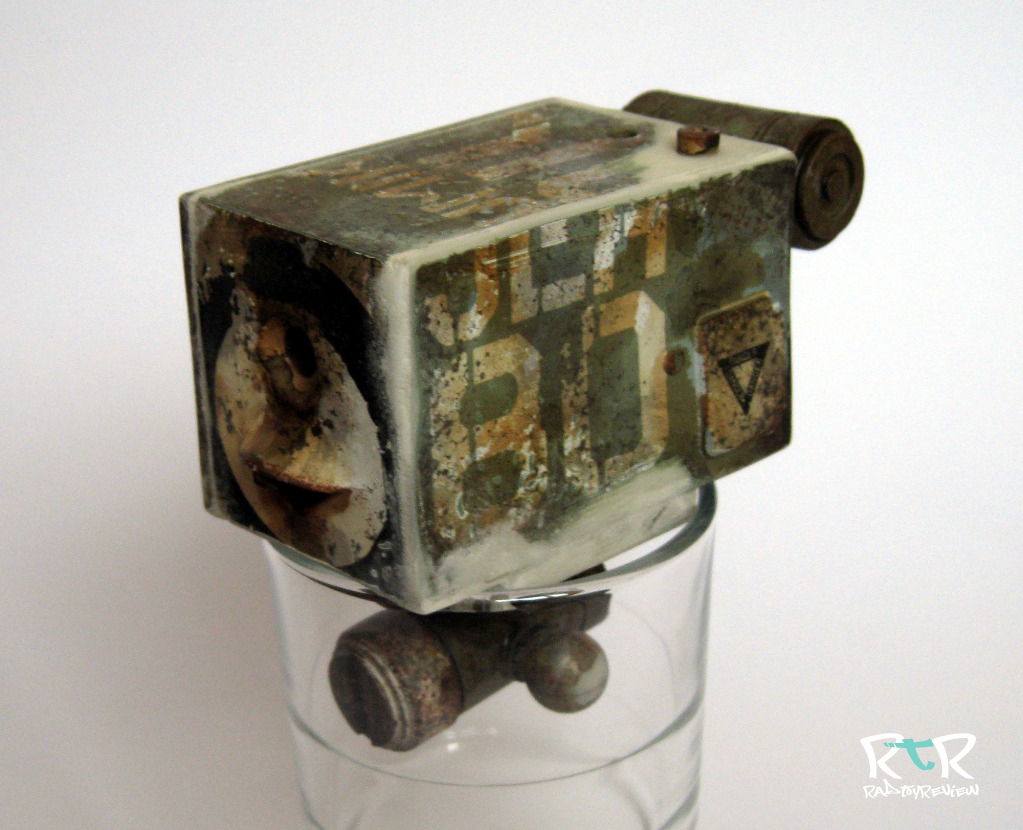
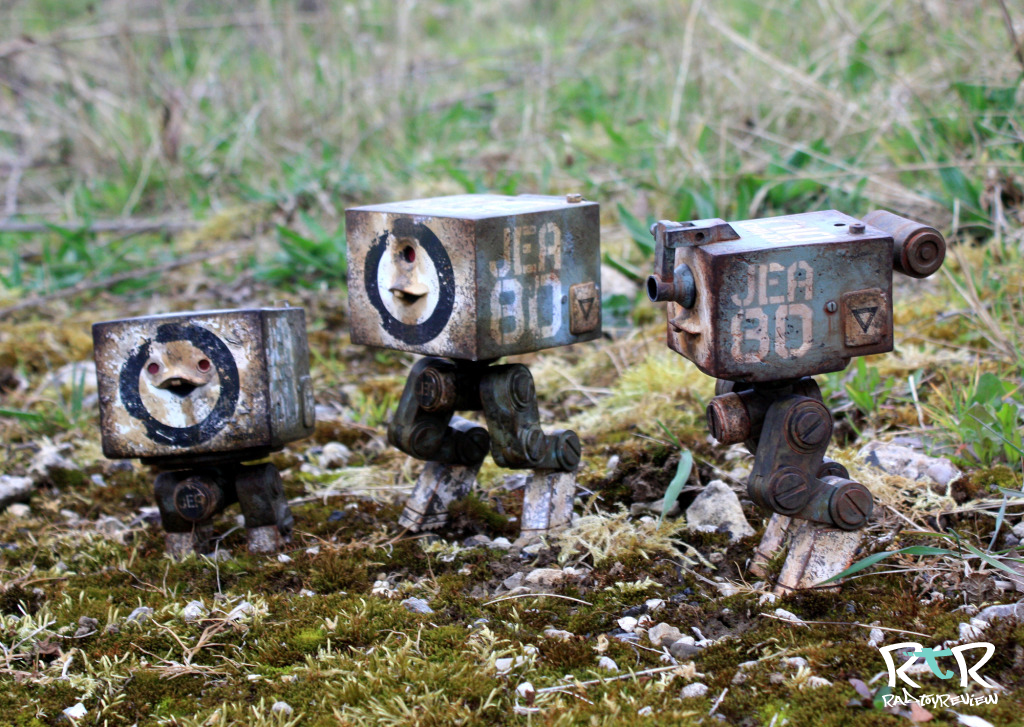
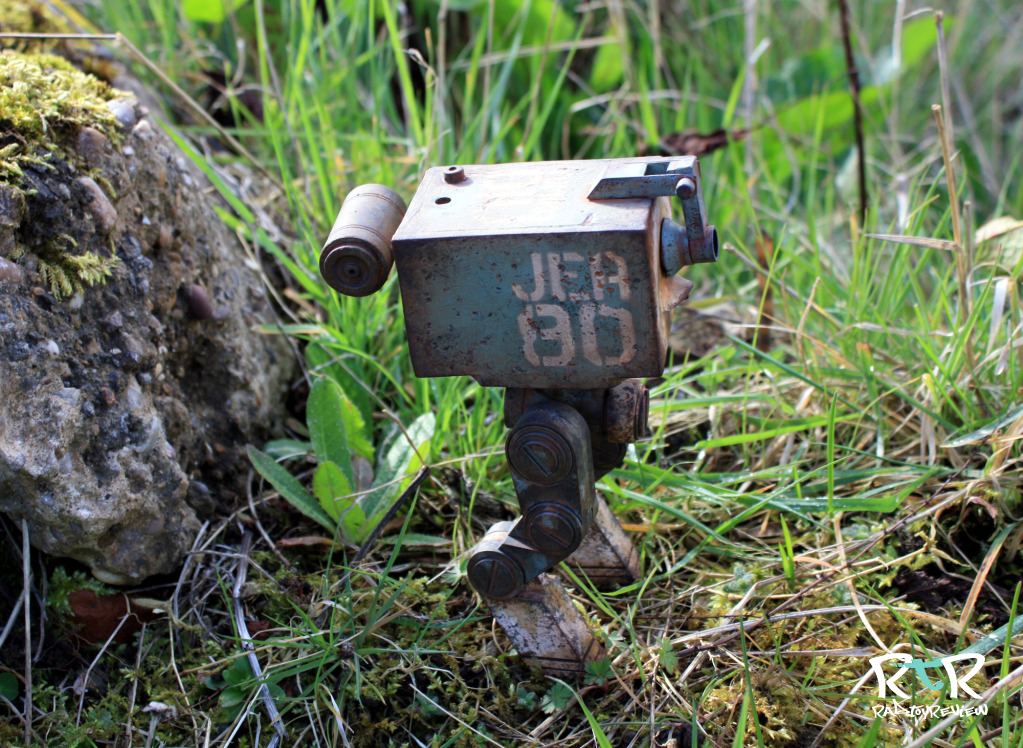
MK 2.1 Square
Although folks may not want to do a conversion like this one, hopefully the techniques I have used may help people to do their own thing. Certainly, by my reading of workshop articles on various websites and magazines, I have learned how to do things over the years.
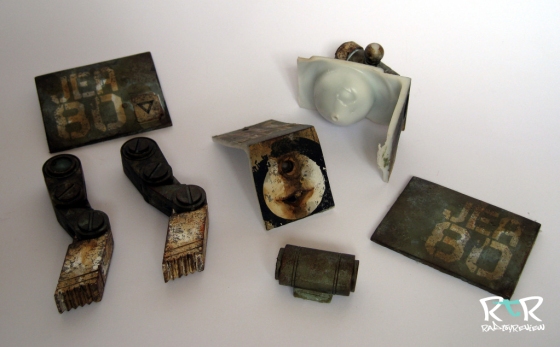
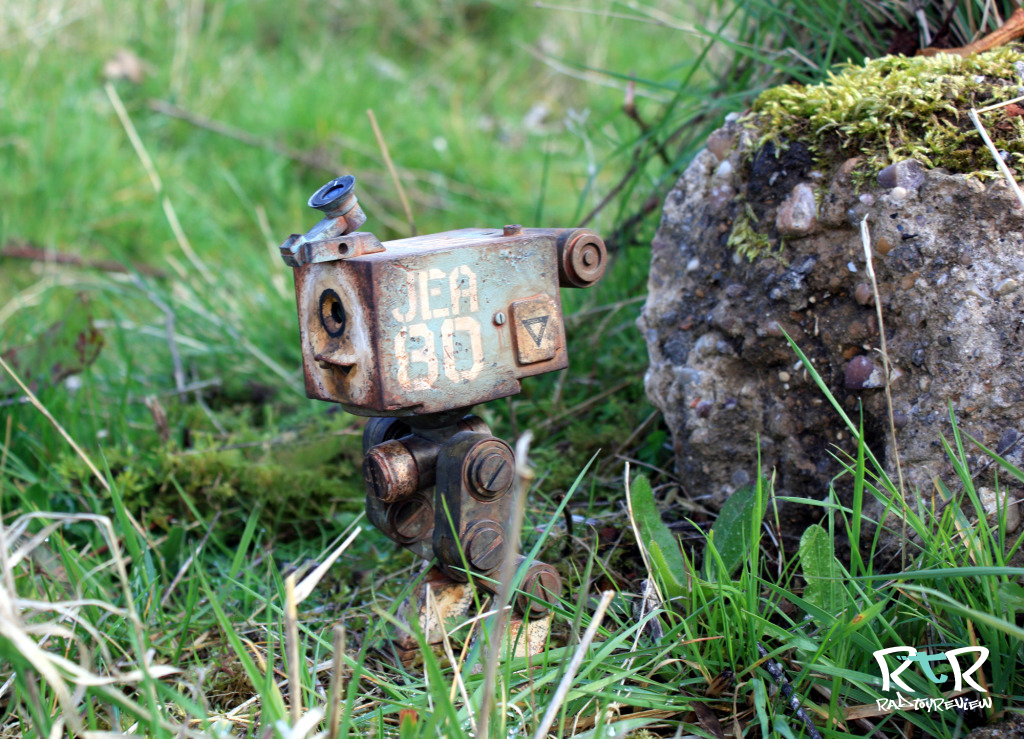
So I wanted to tweak a MK 2 square into something that might be able to move faster and could be used for reconnaissance, intelligence gathering, spotting for snipers etc.  When in trouble, it could get out of there very quickly.  It would be capable of being out in the field for days and could withstand all weathers.  I toyed with the title of a Mk 2.1 Square.
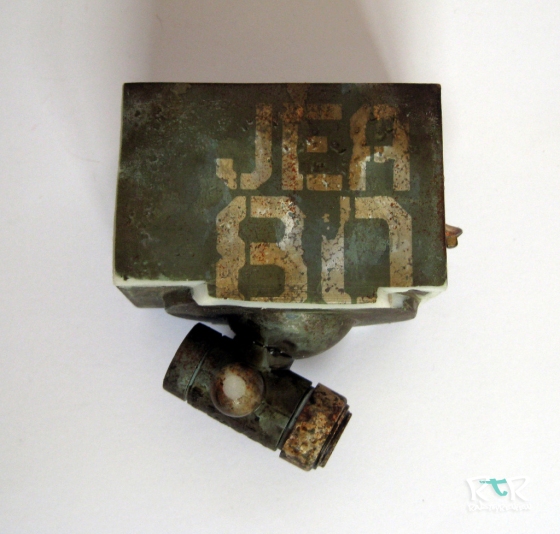
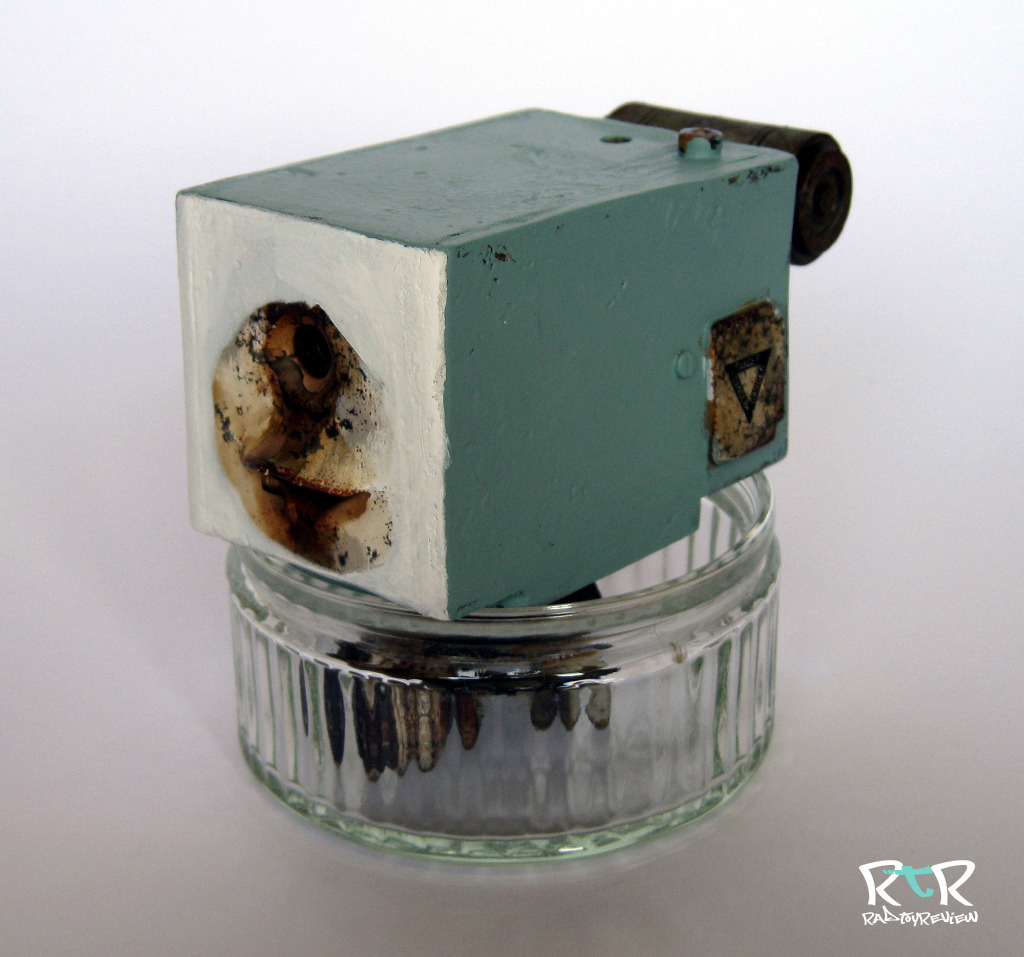
I decided to buy a second JEA Mk 2 Square to work with, because (i) I wanted the converted square to be Joint Earth Army and (ii) the original would act as reference material for the custom build.  The aim would be to modify it by reducing the size of the head to reduce it’s weight allowing a better leg power to weight ratio.
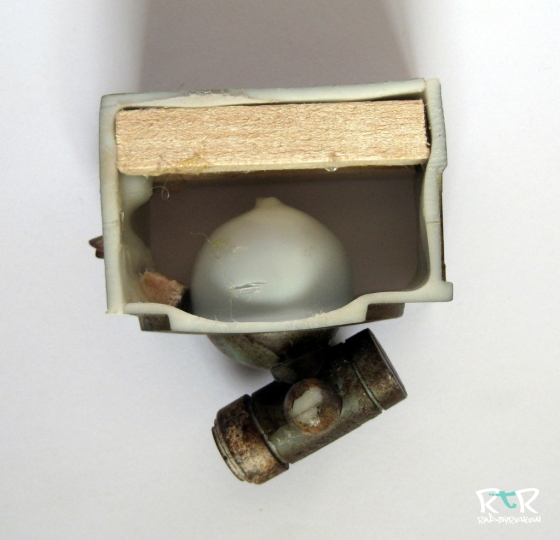
Although I wanted to reduce the size of the head I still wanted to leave enough of the front to have all the facial features there and retain the full ball joint mechanism inside.  I reckoned I could reduce the width from 75 mm to 45 mm. I was not quite sure by how much I could reduce the height, because of how big the ball socket was, until I opened the head up.
Using a fine marker/pen I drew continuous lines around the head on either side of the face. This would be where the first two cuts would go.  With a hack saw I produced four main pieces that I will bond back together later.  I was only able to remove 10 mm from the height of the head.
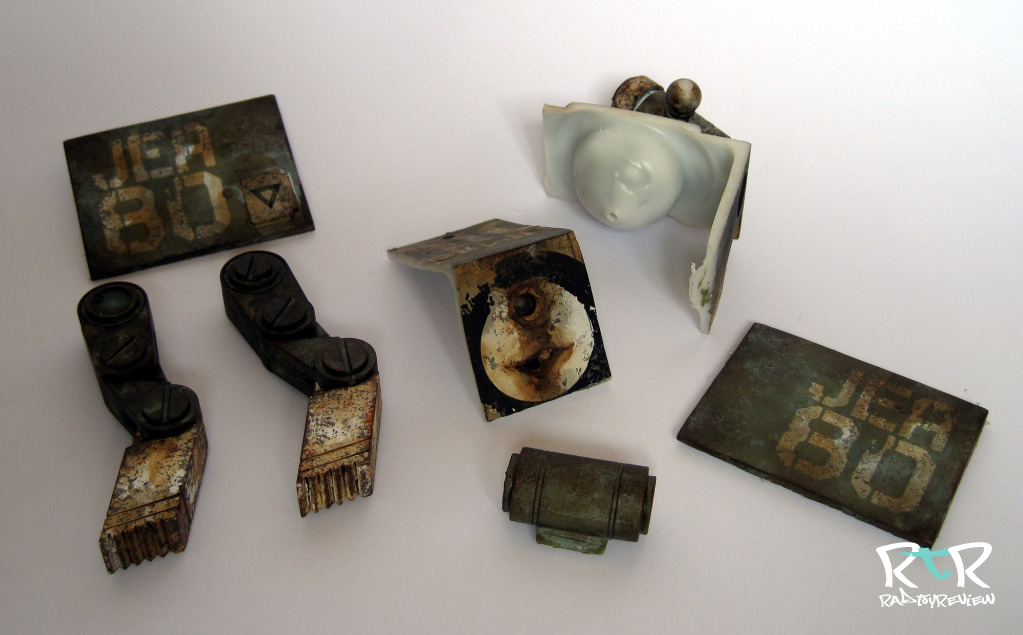
The pieces needed to be tidied up with a Dremel and sandpaper before gluing them together.  I realised I may need to strengthen the new structure as I was not sure if the force need to turn the ball joint might break it open.  To do this I used pieces of balsa wood bonded inside with super glue, I then strengthened the joints quite crudely using a glue gun.
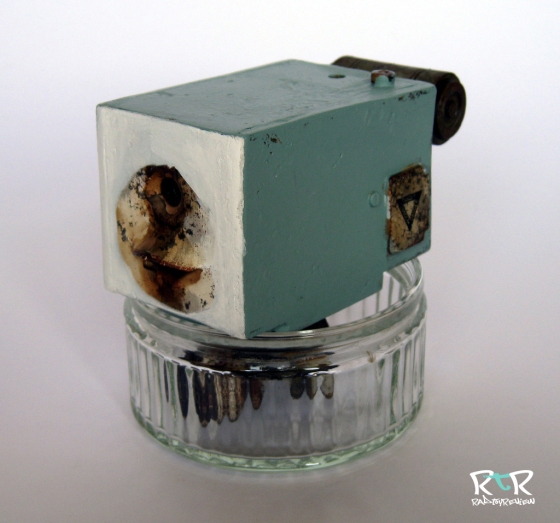
The sides were cut to size and then glued on.  Household filler was used to fill all the gaps and then sanded down.  The new dimensions of the head/body are width 45 mm, height 50 mm and length (of side) 70 mm compared to the original MK 2 Square which were, width 75 mm, height 60 mm and length (of side) which was the same.
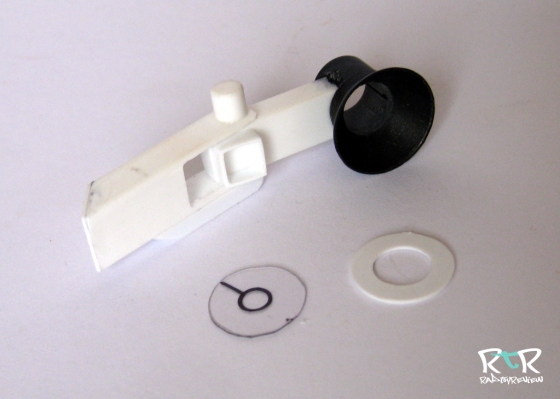
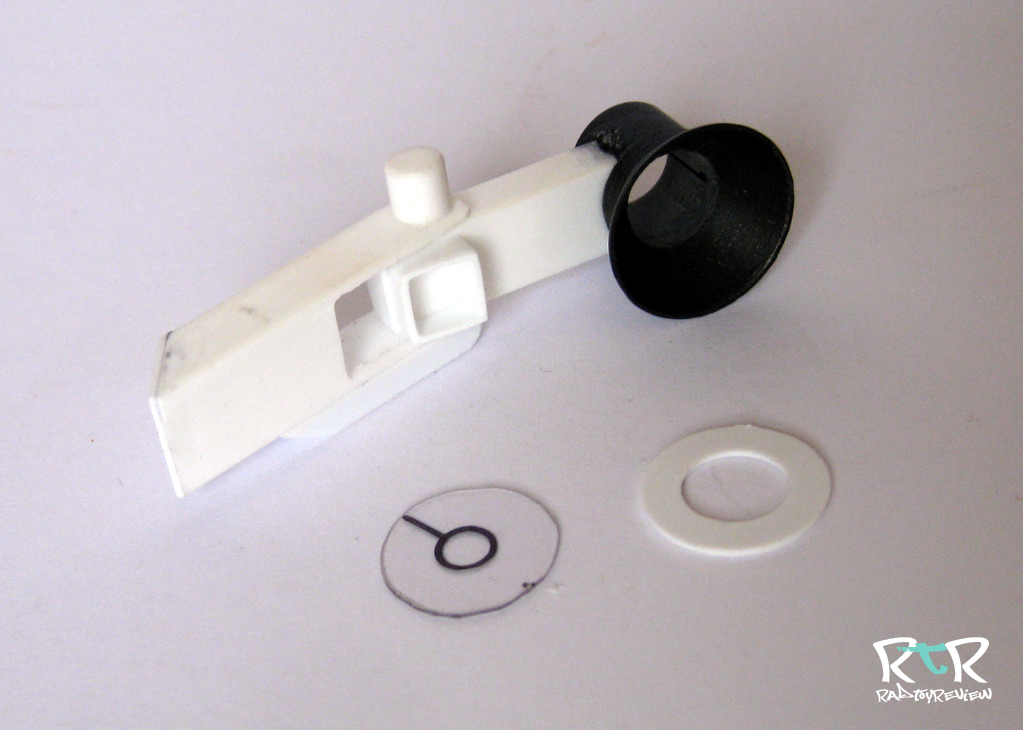
The scope was made from Evergreen Scale Models strip styrene.  I used two sizes of square section strip to make the structure, one slightly smaller than the other, so that it could be made to pivot. The pivot is just a piece of circular rod styrene.  The eye piece came from my “bits box”.  The lens is just clear styrene sheet cut to size.  The scope was glued to the head before painting.  The eye ring and lens where left off until the Square was finished.  The eye ring was sprayed black.
The conversion was always going to be a JEA Square and by using a JEA MK 2 Square I could use a lot of the square without having to paint the entire thing e.g. the legs, face, fuel tank (I assume it’s a fuel tank), body below the head etc. I would have to paint the parts of the head that had been modified. For the base colour it is always a good idea to spray paint to get a good finish but I needed JEA green!  Not like it’s immediately available amongst the colours in model stores I’ve visited.  I did venture into the realms of using a spray gun a few years back, but the time spent cleaning it was very frustrating.
I therefore elected to use Citadel acrylic paints which I would apply with a broad paint brush to give as smooth a finish as possible.  I made up the JEA green with Citadel acrylic paints (available from Games Workshop stores and hobby shops).  After a bit of trial and error, I ended up mixing mainly Astronomican Grey, with a little bit of Fenris Grey and Snot Green (don’t blame me it was the names on the pots!!).  Other colours could probably be used. Just eyeball it.
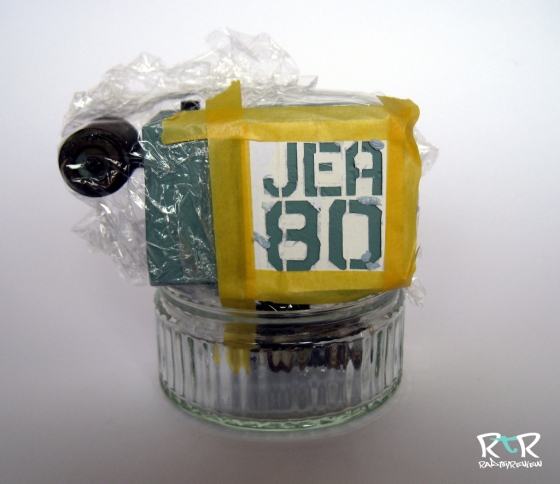
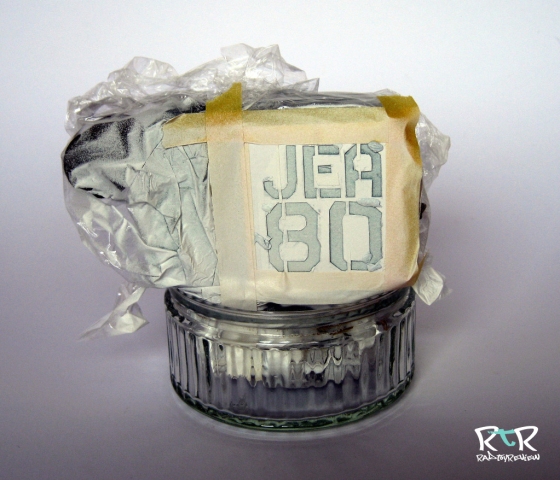
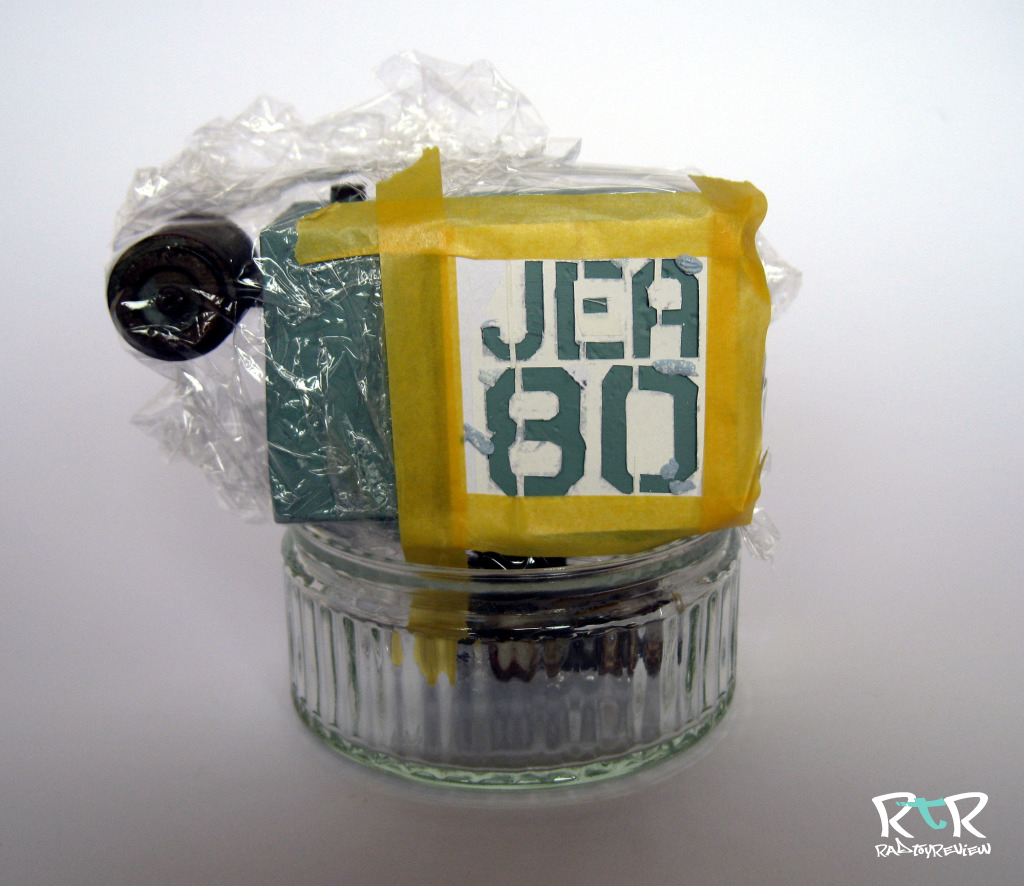
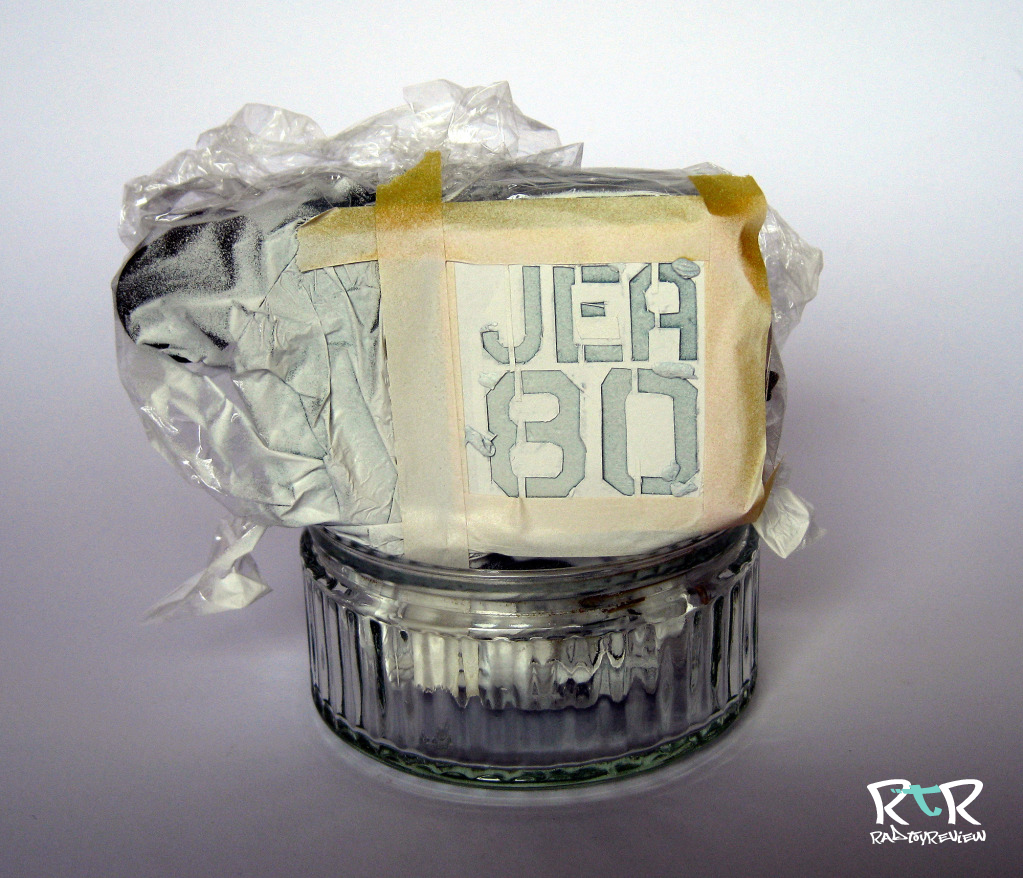
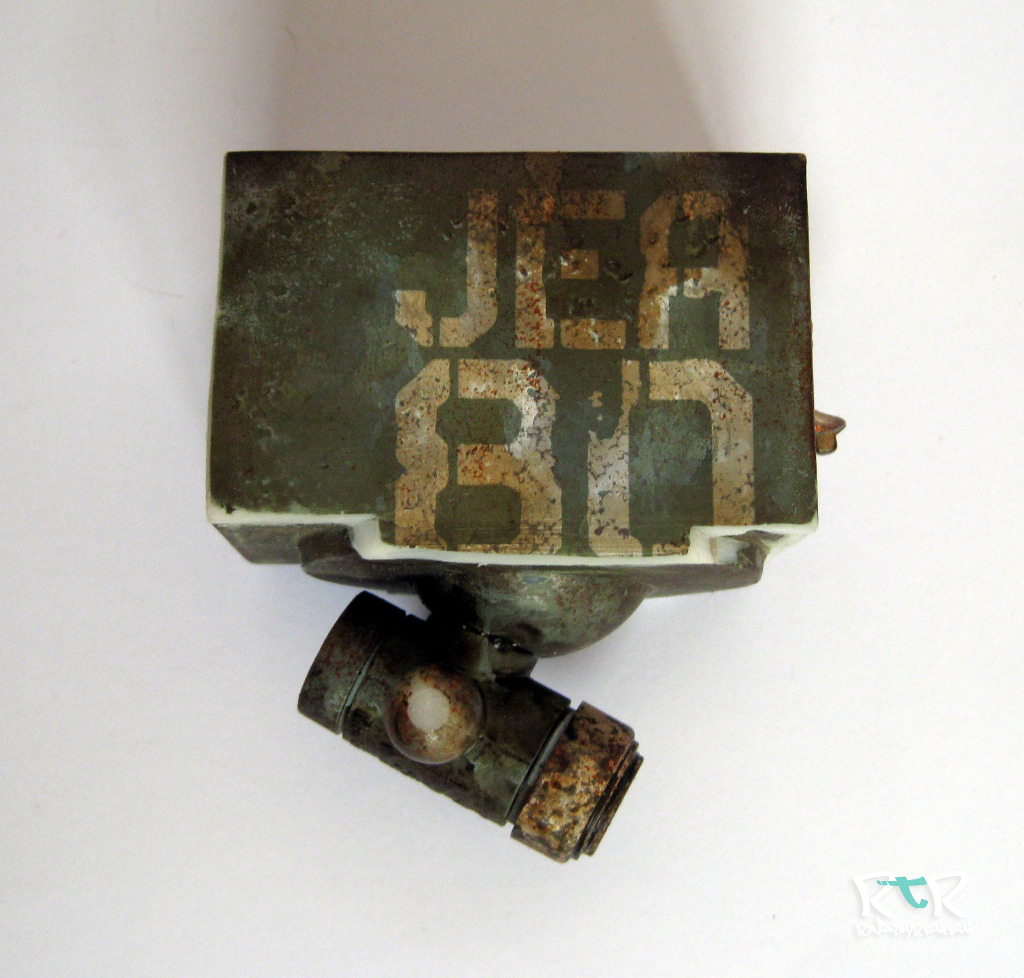
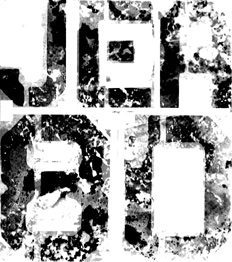
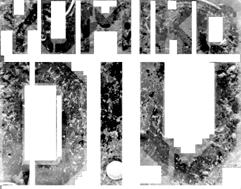
Next, it was time to apply the insignia, of which there were only two different ones ‘JEA 80’ and ‘YUMIKO DIV’.  I photographed these on my original Mk 2 Square.  Using Photoshop, I reduced the two insignia in size to better fit the new head.   They were then tweaked using ‘brightness/contrast’, ‘desaturate’ and ‘invert’.  They were printed and cut out with a sharp scalpel. I did need to suspend some of the centres of certain letters by leaving a thin strip of paper acting as a bridge.  I also made a few mistakes, but corrected them with small pieces of masking tape.  Each stencil in turn was placed in position and stuck down with Tamiya masking tape, I used cling film to cover the rest of the square.  Just before spraying I noticed that edges were lifting around some of the letters and numbers. To correct this I used small pieces of Blu Tack, which while not perfect isn’t really a problem as the insignia on ThreeA toys are often broken up to simulate weathering.  I could correct the letters and number later if necessary with white paint.
To apply the insignia I used Humbrol acrylic matt white aerosol spray. Having applied one insignia I had to strip down the masking and apply the next.  I needed to use ‘JEA 80’ twice as it was on both sides of the head.
The next job was weathering.  ThreeA toys can vary in weathering and the second JEA Mk2 Square, which I converted, was more weathered than my original one.  They legs were certainly more brown, so I would have to weather the head and scope to match in with the legs.  Again, I would use Citadel acrylic paints.  I started by applying a thin wash of Dark Flesh (which is a reasonable mid rust colour) mixed with a little Chaos Black. The colour was blended into the white areas of the face.  During this early stage I painted on a ring of black around the eye.  I did this by cutting out a paper stencil, with two circles the inner one being held in place by thin strips of paper.  The stencil, cut to size, was then taped over the face and I then very carefully painted between the circles. When the stencil was removed, where the thin paper strip had been, was painted over.
The edges of the head and scope were stippled with small pieces of coarse sponge dipped in a mixture of Scorched Brown mixed with Chaos Black.  In parts the same was done with grey I mixed from Skull White and Chaos Black to represent paint chips and again with Blazing Orange mixed with a little Dark Flesh to represent rust spots.  A fine paint brush was also used with these three colours to refine and emphasize some of the stippling as well as to pick out the scratches and dents on the sides of the head.  The rust colour was used as wash to run into depressions and as trails from areas here rust might have gathered.
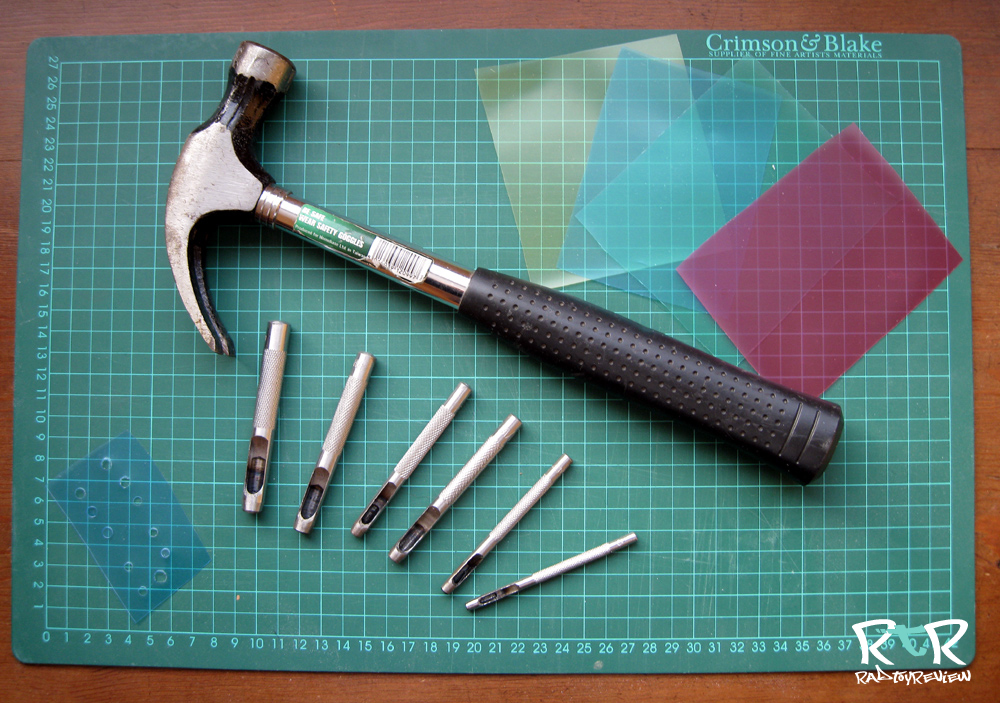
For finishing touches the inside of the scope was painted back and the lens and eye ring glued in place. I also added an eye lens after painting the eye black. I used a punch (see above picture) to cut out a 6 mm disc from shiny coloured plastic, bought as cheap folders for notes.  I got the punches on a well known online auction site, as set of sizes from 3 mm to 8mm, which work for other eye sockets I have used them for.  They will stay in place pretty well if you don’t want to risk permanent change to your 3A toy, but a touch of super glue on the edge will secure them even better.
Thanks for your interest in reading this article.
We hope you enjoyed the latest Workshop. Big thanks to Paul for once again putting this together for us. 
 We’d love to hear from you and check out what kind of customs you’re working on! Send us a shot of your latest custom work with a brief description to radtoyreview@gmail.com. 

Hit us up on Facebook or Twitter pages to stay updated whenever we post new Workshops and epic toy reviews!

Until next time!

THE WORKSHOP – Crossbow by Paul Benson

Paul kicks out another Workshop jam! Today he’s actually fulfilling a special tutorial request made by RtR reader Gwen. We were asked if we could shed some light on how to make a modern crossbow. I responded by saying that I’d do my best. It turns out my best is asking Paul!

once again with absolute flying colors..

Enjoy!

– Knives

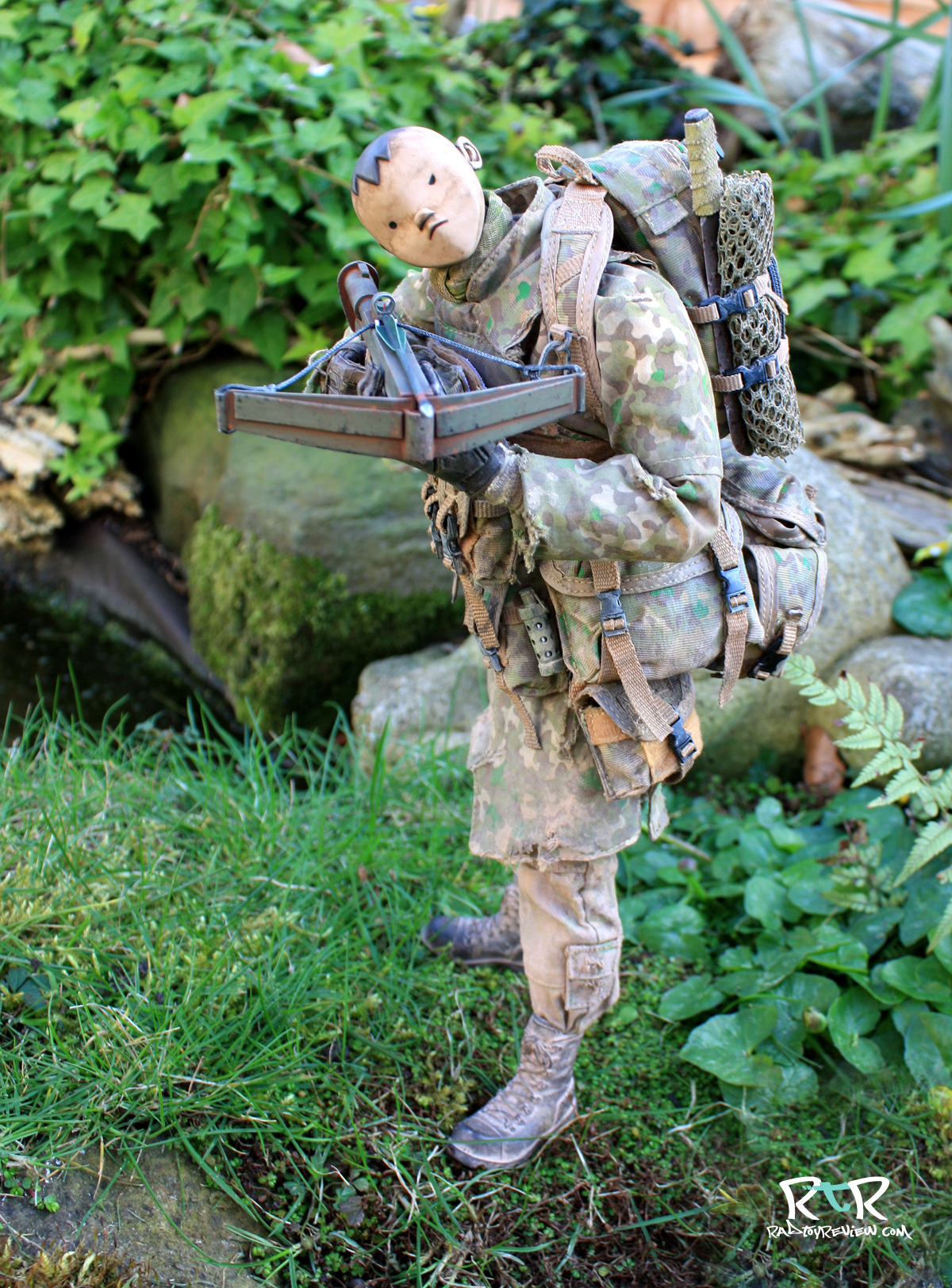
CROSSBOW
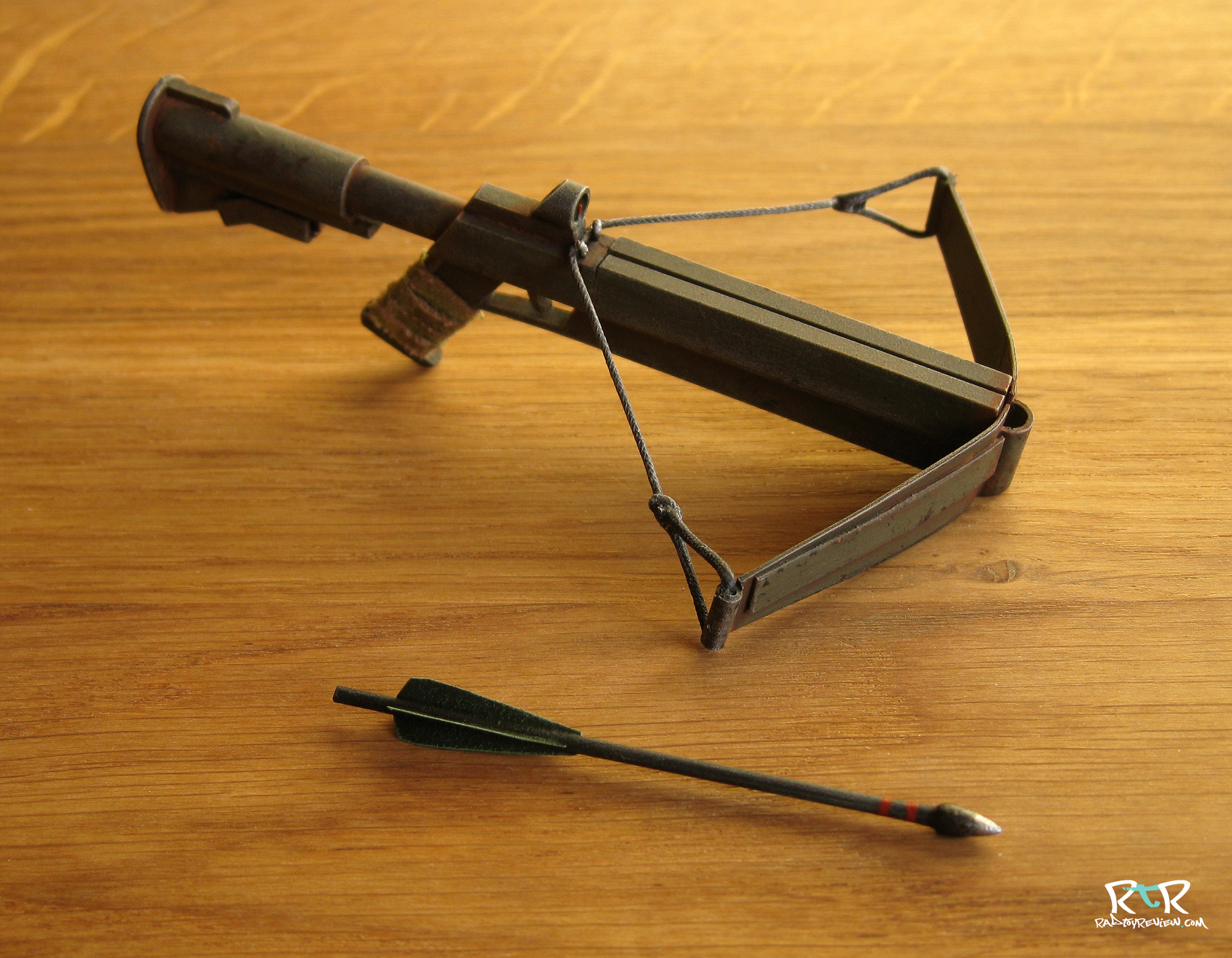
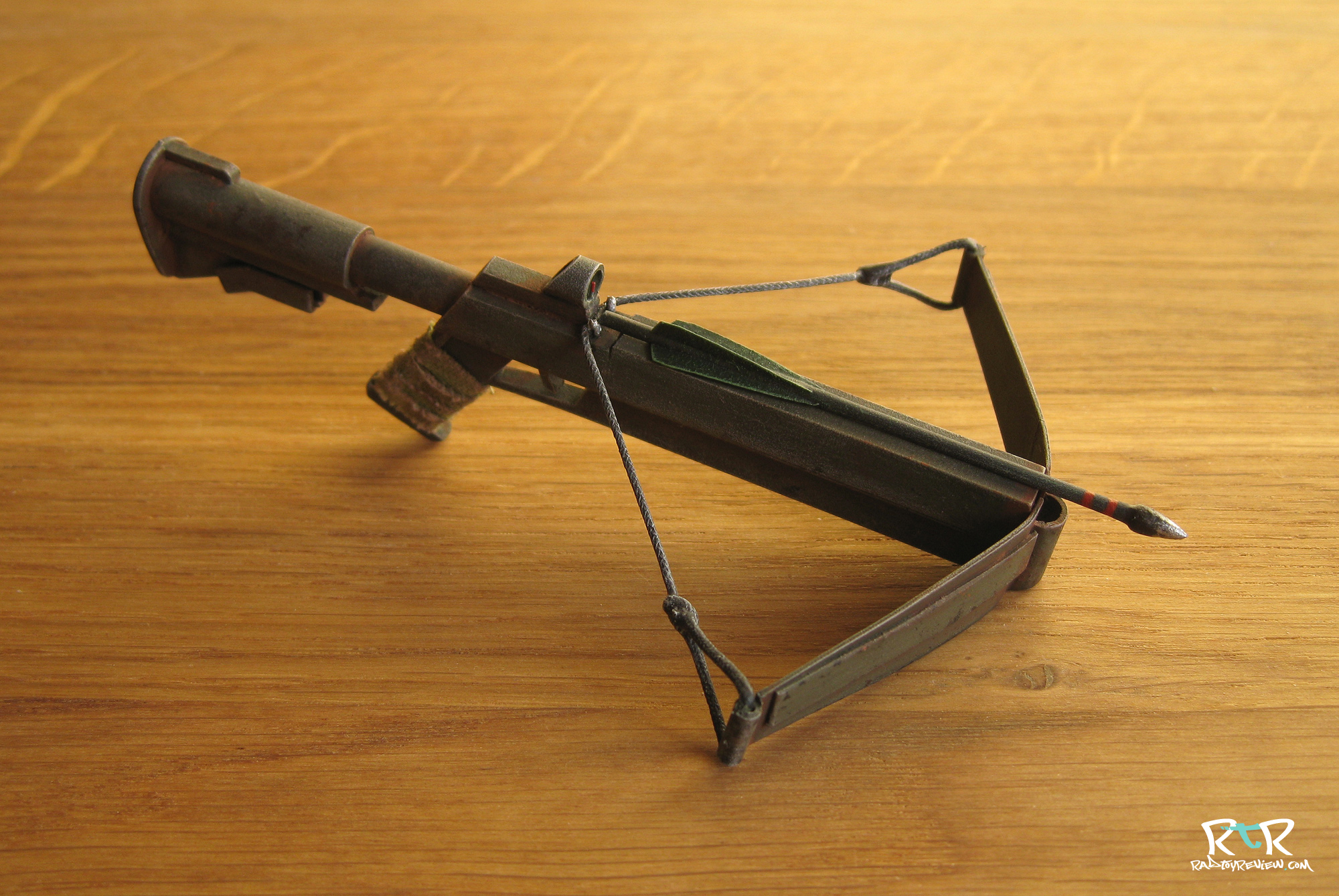
About a week ago I was asked if I could “figure out a way to make a crossbow”.  I wasn’t sure whether I would make a good job of one; but I saw it as a challenge and went for it. I scribbled down some notes below to describe how I did it.
To start the project I needed to research crossbows. I printed out a few pictures of some from a web search and pulled out my stock of Evergreen Scale Models strip styrene. I then did a sketch of the crossbow bearing in mind the strip styrene I had. To help move things along, I pulled a M4 shoulder stock out my ‘bits box’ to work into the design. You could probably cut one off of any old 1/6 rifle you have lying around. The sketch was done to the same size as the crossbow which will help in cutting the styrene exactly to size.
On to the making! In previous articles I have mentioned the materials, tools and paints I use.  Here are those tools again, if only to show the saw that was really useful in making this model. Also I want to be sure to mention the glue again, which is a thin super glue that can be obtained from Games Workshop vendors. The great thing about it is, it comes with a little brush inside which gives you loads of control.
The picture below shows the crossbow with the parts labelled.  The notes below explain how the parts went together.
Part [a] is a piece of 6mm by 6mm square hollow section styrene. The rear of which has been cut at an angle. After about 20mm, the front top of the section is completely cut away to take two pieces of styrene (parts [b]) that will form the channel for the bolt fletching.
Parts [b] are two pieces of 6mm by 2.5mm solid styrene, spaced slightly apart and glued to part [a].  The gap between parts [a] and [b] are filled with super glue by simply painting into the gap several times until it was filled.
Part [c] is also a piece of 6mm by 2.5mm solid styrene glued centrally along the bottom of part [a].  I used the handy modelling saw to cut the trigger guard out from the rear of this piece.
Part [d] is another piece of 6mm by 2.5mm solid styrene.  A piece of 3mm semi circular styrene is glue to the back of this piece to shape it to be more like a hand stock.
Part [e] is the M4 shoulder stock.
Part [f] is a piece of 5mm tube which fitted perfectly into the shoulder stock and part [a].
Part [g] is a piece of 3mm by 2mm solid styrene.
Part [h] is a piece of 5mm tube styrene.  I made a sight line from some heat stretched sprue from a plastic kit (see pictures below).
Part [i] is cut from of 6mm by 2.5mm solid styrene then shaped with a scalpel and sand paper until it looks like a trigger.
Part [j] the bowstave, limb or prod (it seems to have several names) is made from 1mm sheet styrene.  To get the shape right I folder paper in half and then in half again.  I then drew a slanted line from 4mm to 6mm.  The centre of the bowstave would cover the end of parts [a] and [b] glued together.  I also cut a slot for the bolt fletching to go through.  PLEASE NOTE: If I were to attempt this crossbow again I would use slightly thicker styrene sheets for two reasons 1.it snapped under tension whilst the base coat of paint dried, being under tension may have caused this and 2 although the bowstave had a very realistic bow to it, it seemed to straighten out after a while (still not too shabby looking).  I did try to improve the bow and also make a repair by gluing two strips of 1mm styrene onto the front. I think it gave it some cosmetic interest as well as served it’s repair purpose rather well.
Part [k] is a 5mm tube styrene cut in half.
Part [l] is some type of man made fibre cord I found in the bits box.  Keep in mind that if you use thread for modelling projects you can usually see lots of fine loose threads that do not look very realistic. Choose wisely.
Part [m] the string is again a piece of cord, from a camera I believe.
Parts [n] are two pieces of copper wire cut and then slotted through two holes drilled in part [a].
Part [o] is a piece of 3mm by 2mm solid styrene.
Part [p] the bolt shaft, is a piece of copper rod.  The ‘pointy’ end is filed and then finished of with fine sandpaper.
Part [q] the fletching is made from paper.  Paper was folded in half and then in half again. A single feather half was cut to make four. These were then glued to the shaft and then painted with super glue to give them a little more thickness/strength.
Part [r] is just a thin collar cut from a cotton bud tube.  Super glue is then painted onto the end of the bolt to give a better shape.
To paint the crossbow, I first washed it in soapy water to get rid of dust and grease marks. Then I base coated it with Humbrol matte light olive aerosol paint.  Similarly, the bolt was sprayed with a matte black Humbrol aerosol paint.
After leaving the pieces out over night to dry, the crossbow was further painted with some Citadel acrylic paints and MIG weathering pigments.  First it was given a wash of Camo Green mixed with Chaos Black.  When dry, I dry brushed with Camo Green mixed with Skull White.  General wear and tear marks were made with a sponge, putting specks onto the crossbow using Dark Flesh, Chaos Black and Blazing Orange. A wash of MIG old rust was applied liberally to nooks and crannies.  While drying I blending it onto flat areas with a cotton bud.  The sight line in part [h] was painted with Blood Red.  The crossbow string was painted with Chaos Black and then dry brushed with grey made from mixing Chaos Black and Skull White.
The taping on the hand stock is just some linen wrapped around it and painted with a wash of Camo Green, dried and then glued in place.
The black bolt was dry brushed with the afore mentioned grey made from Chaos Black and Skull White.  The fletching was painted with Dark Angels Green, and then dry brushed with the same colour mixed with Skull White.  Stripes were added with Blood Red. A simple. useful trick here is to just hold a brush in place while rotating the bolt.
And FINALLY.. the pointy end was then dry brushed with Boltgun Metal.
We hope you enjoyed the latest Workshop. Big thanks to Paul for once again putting this together for us. 
 We’d love to hear from you and check out what kind of customs you’re working on! Send us a shot of your latest custom work with a brief description to radtoyreview@gmail.com. 

Hit us up on Facebook or Twitter pages to stay updated whenever we post new Workshops and epic toy reviews!

Until next time!


THE WORKSHOP – Weathering by Paul Benson

In this humble web dude’s opinion, if there is one thing regular “The Workshop” contributor Paul Benson is amazing at.. it’s creating realistic weathering on just about anything.  In today’s workshop Paul’s going to walk you down the beach of learning and show you step by step how he achieves such believable results.

Enjoy!

– Knives

Weathering 
As we know weathering tends to be a geographical term referring to and I quote “Any of the chemical or mechanical processes by which rocks exposed to the weather undergo changes in character and break down”.  In the modelling world (not the one involving catwalks!) weathering is a whole variety of techniques used to simulate dirt, fading, spills, paint wear and tear, rusting, etc.

In this article I wanted to show how a 1/6 scale “heavily used” item might be weathered using various paint and weathering pigment techniques. A simple shovel seemed to fit the bill just right!  While the techniques I use here work well for me, they are not the only way to achieve good results.  Sometimes it can simply depend upon the paints and weathering powders you have at your disposal and how they work together. Try different things out and see what works for you!
It important to have a starting point. A good idea is to look at real world 1:1 scale objects to see how actual weathering affects them e.g. equipment, machinery, tools, fencing etc.  You need to have some idea of how dirt and mud end up on objects, what dirt and oil stains look like, how rusting might occur and leave it marks etc. I have found the workshop articles in military modelling magazines very informative. Tank and armoured vehicle modellers seem to be the masters at weathering so your sure to pick a thing or two up from them if you look at their work.

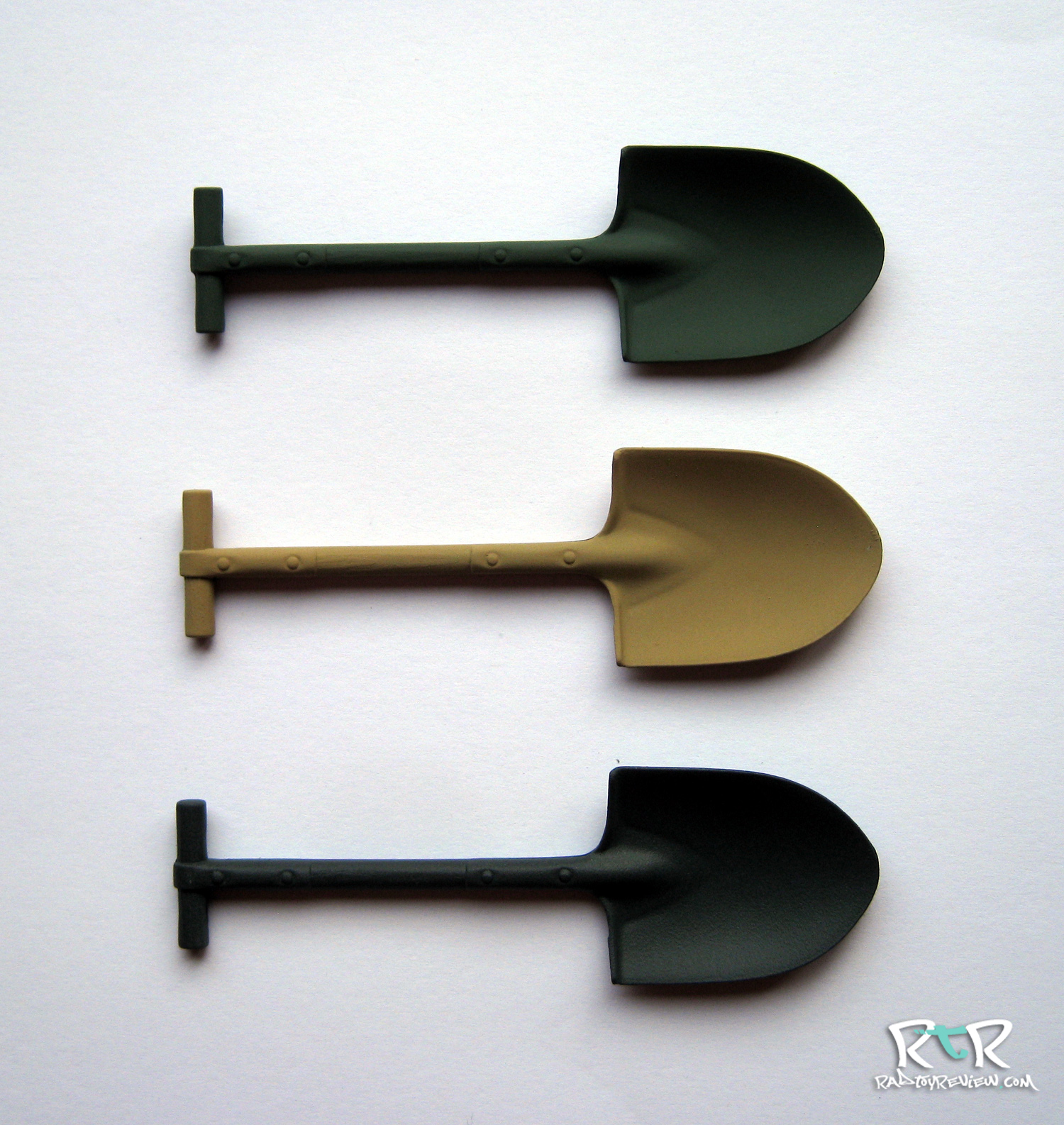
To start this project off, I got three plastic 1/6 scale shovels courtesy of E__y.

pic x Paul Benson

The article will deal with how I painted three shovels, each with a different base colour to show weathering.
In other Workshop articles I have described the paints and materials I use.  Generally I put on a base coat first with Humbrol acrylic aerosol paint, then I use Citadel acrylic paints (obtained from Games Workshop or hobby stores) and MIG weathering pigments.  MIG weathering pigments come in a range of colours for soil/mud/dirt staining and for rust/oil stains.  A substitute can easily be made by using artist pastels as they work in the same way.  Take a suitably coloured pastel and rub it back and forth on fairly fine sandpaper or a nail file.  They can be stored individually and used as such or combined.The first thing to tackle with the shovels was to remove the cast lines with sandpaper and a file.  The shovels were then washed in warm water with a bit of detergent, this was to remove any factory grease marks.  Then I sprayed one was sprayed with Humbrol Desert Yellow, the next Dark Green and the third with Tank Grey.

pic x Paul Benson

The shovels were then left overnight for the paint to dry.  To add a little wear to where paint may have thinned, each shovel was dry brushed with as near a colour to the base coat as possible mixed with a little white.  So for the desert camo shovel this meant using GW Desert Yellow mixed with Skull White. It’s subtle, but effective.

pic x Paul Benson

Next to chip the base paint back to the undercoat. A darkish grey was made up with GW Chaos Black and Skull White, this was then dabbed onto the shovel where paint chips would occur using small pieces of cut sponge. I have found that by dabbing on a piece of paper first several times, removes paint until just enough is left to leave clear dots and specks on the piece you are working on.  Small scratches were painted in with a fine paint brush.  Shovel 3 was going to be the most rusted of the three, so small rust marks were applied with a sponge using GW Dark Flesh.

pic x Paul Benson

Now general rust and rust staining were applied.  I used MIG weathering pigments New and Old Rust.  Weathering pigments can be applied in several different ways.  They can be mixed with water or a binding agent and washed over a piece or they can be applied dry.  For these shovels it would be more appropriate to apply them dry.  Using a stiff brush or a cotton bud (never thought that I would end up using these, but I happened to try one of my wife’s supply and found them very useful) I used the two pigments individually or blended to rub across the shovels.  To put on a thicker layer the pigments can be dabbed on with a sufficient amount of water to make a paste and then rubbed in.  A stiff brush, kitchen paper or a finger, dry or damp, can be used to blend the pigment across flat surfaces and will tend to leave pigment in depressions.

pic x Paul Benson

pic x Paul Benson

The next step was to pick out areas worn through to bare metal.  For all three shovels GW Boltgun Metal was dry brushed onto areas where wear had occurred because of knocks and general erosion to the blade caused by digging.

pic x Paul Benson

pic x Paul Benson

Time to add the dirt.
For desert camo shovel I used MIG Gulf War sand.  I mixed this pigment with a little white acrylic to act as a binding agent.  This was painted onto the end of the spade blade and then gradually wiped away with kitchen paper and my finger until I got the effect I wanted.  With the green shovel I just used MIG Dried Mud mixed with a lot of water. This was then painted onto the blade end of the shovel and then allowed to dry.  The same technique was used on the reverse.  For the grey shovel I just added more rust with MIG Old and New Rust!
At this point because of handling the bare metal effect had dulled and so therefore I re-applied GW Boltgun Metal were needed.  As a final addition I dry brushed GW Mithril Silver to the bottom edge of the shovel blade and to where a boot had been placed during digging to represent metal that had been polished by wear.

pic x Paul Benson

pic x Paul Benson

There were several stops and starts on this project where I had done a little too much or too little weathering.   Occasionally too much paint or pigment had been applied. To fix this, vigorous rubbing with kitchen paper is usually sufficient to tone down the paint effect.  Unfortunately this can also polish the base coat and give it a shiny effect.  I usually correct this by spraying the piece with Humbrol acrylic aerosol Matt Varnish.
Sometimes errors need to happen and it gives you a chance to assess what you are doing and ask yourself “Does this look realistic?”, “Does this shovel look like it has been used a lot in a natural way? “Does this shovel look like it has been left out in all weathers?” etc.
We hope you enjoyed the latest Workshop. Thanks to Paul for once again putting this together for us. We hope it helps take  your weathering skills to another level!
 We’d love to hear from you and check out what kind of customs you’re working on! Send us a shot of your latest custom work with a brief description to radtoyreview@gmail.com. 

Hit us up on Facebook or Twitter pages to stay updated whenever we post new Workshops and epic toy reviews!

Until next time!


THE WORKSHOP – DIY Square Mule by Paul Benson

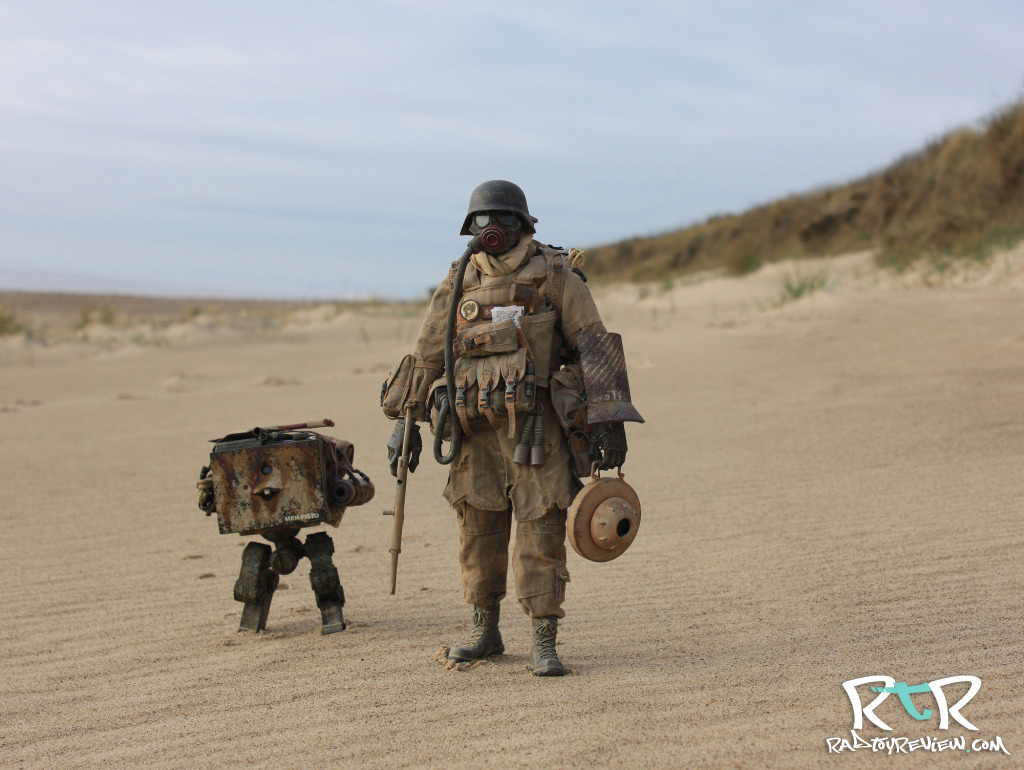
Paul Benson stopped by to show off his custom Desert Mule Square. Much of the gear shown was hand made and painted by Paul. He took some time out of his day to give an overview of his process of putting all the bits together to create a truly cohesive look.

Enjoy!

– Knives

The Square Mule

pic x Paul Benson

One of my favourite ThreeA figures is the Desert Grunt. I thought he could do with a ‘mule’ to carry his equipment and what better than the MK2 Square! With this “tutorial” I’ill go through each equipment item and try to explain how I painted it and if I made it, how I did so.  Some of the equipment might seem random, but I hope it looks like the kind of gear a Grunt would find useful when scouting or on maneuvers.

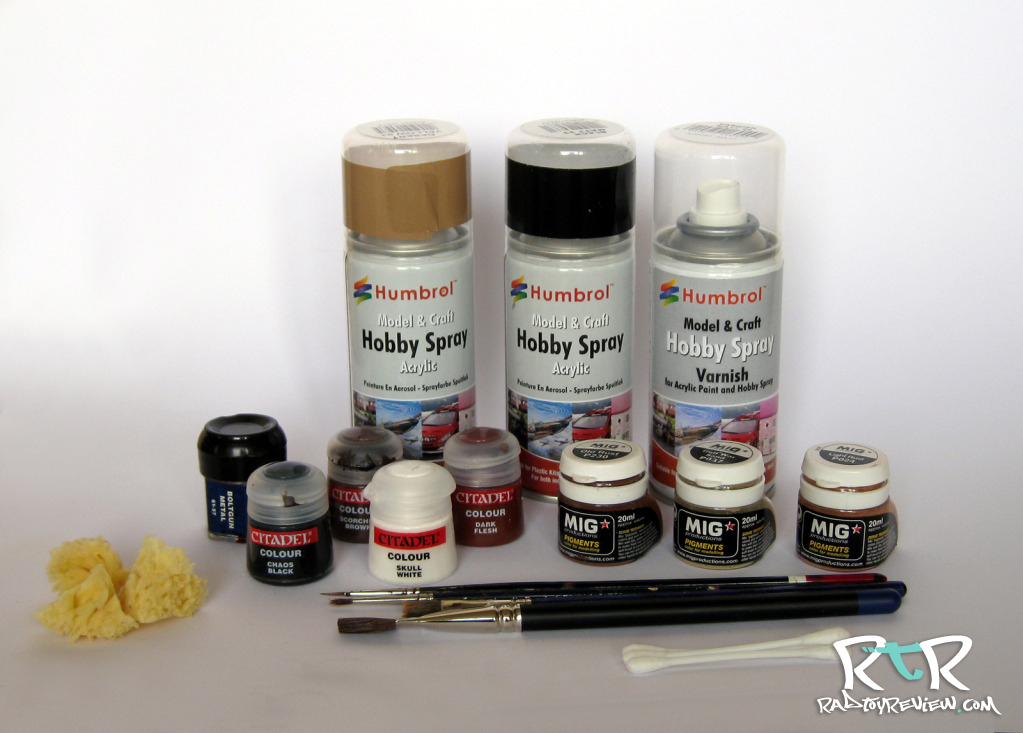
The main paints I used are shown below.

pic x Paul Benson

 The aerosol sprays are used to provide a base colour onto which other painting including paint chips and weathering is added with Games Workshop acrylic paints.  Games Workshop paints are very good and are easy to get hold of, either at a local store or online. They come in a range of both basic and very useful blended colours. The names of the paints, I might as well use them, are referred to below. Bits of sponge and old paint brushes were mainly what I used to do this piece. I use MIG weathering powders to apply further weathering, such as rust staining and accumulated dust and sand on equipment. Yes, those are cotton buds laying there. They are ideal for rubbing on the weathering powders.

pic x Paul Benson

1.  The webbing net was made from 10mm and 5mm Grosgrain and 1/6 side releases.  I used a green plastic cutting board with a square grid for spacing the webbing out accurately.  I sellotaped it down and then gluing with super glue as it went together.  The webbing was painted with desert sand acrylic paint.  To dirty-it up I used a wash of scorched brown and hint of chaos black.  I then drybrushed (a technique of wetting a brush with paint and then almost drying it and then wiping it across the area you are working on) with desert sand mixed with a little skull white.  Then finally to bring out the texture of the webbing weave, I lightly drybrushed with white again.  The pouches are swiped from my Desert grunt.  They were just drybrushed slightly with a desert sand/white mix to help them blend a little better.
pic x Paul Benson
2. No idea where the camo netting came from, I have had it for years. It seemed ideal for the task and already had a camo pattern, which I think of as the American chocolate chip. The netting was folded over to the correct length and then rolled and then tied with bits of thread. The strap was made from Grosgrain again. The net is plastic and has a slight sheen to it, so I sprayed it with matt varnish to kill it.  It was then dirtied up with a wash of scorched brown/black mix.  To finish, I lightly drybrushed with a desert sand/white mix. The strap was treated in the same way as the webbing net.
3. I needed a couple of bits of equipment that would appear to have some weight and when put into the webbing net pockets would pull the webbing net across and down over the MK2 square to give it a realistic lay and hang. I set about finding something made of metal. This bit of equipment is possibly an empty water or fuel tank. It actually an old a car touch up paint container I found in the garage. It even still contains some dried up old paint!  I cut off the end with the screw thread on.  To break up the length I thought a black band would be good idea.  So the container was sprayed with matt black first.  A thin strip of masking tape was applied and then sprayed again with desert yellow.  Using bits of sponge, paint chips were applied with grey made from chaos black and skull white.   Some of these would be left to represent chips through to the undercoat and then using boltgun metal and a brush some of the grey chips are gone over to represent chips through to the base metal.  Edges were drybrushed with boltgun metal.  Bits of rust here and there was painted in with dark flesh. Old and new rust staining was applied with a cotton bud in various places using the two rust weathering powders.
 

pic x Paul Benson

4. and 5. To add weight to the other side of the webbing net I used a little brass collar. Sprayed it black and then drybrushed it with boltgun metal, as I did with item 5 which is a spare metal fastening from a piece of Ikea furniture.
6.  Not sure a Grunt would have a laptop but closed, it looks like it could be a bit of general equipment!  It was already painted matt back, so I just dirtied it up with Gulf War Sand weathering powder.  I did this using a large brush and just applied it all over, rubbing it in, not that evenly, as I went along.  It stays in the depressions as dust and sand would.
7.  The air filter is from a WWII 1/6 gas mask.  Painted in the same way as item 3.
8. and 9.  I made this ‘grunt-portable antirobot weapon’ [(GRAW) which is a play on typical army descriptions used to describe anti tank weapons e.g. the bazooka etc.] some while ago. I will not go through how I made it in detail here.  It may be appropriate to do so in another article.  Essentially it is a WWII bazooka tweaked with styrene strips including tubing and other cross sections.  Again, it is painted in the same way as item 3.
10, 11 and 14. These are bits from 1/6 small arms, possibly a M4 which I had stripped down to make some 3A themed small arms. Items 10 and 11 are just sprayed black and then drybrushed with boltgun metal.  They are then dirtied up in the same way as item 6. Item is painted in the same way as item 3 again.
12.  The shovel is painted in the same way as item 3 again, although more weathering is applied to give the idea of heavy wear and tear.
13.  Ammunition magazines painted in the same way as items 10 and 11.

pic x Paul Benson

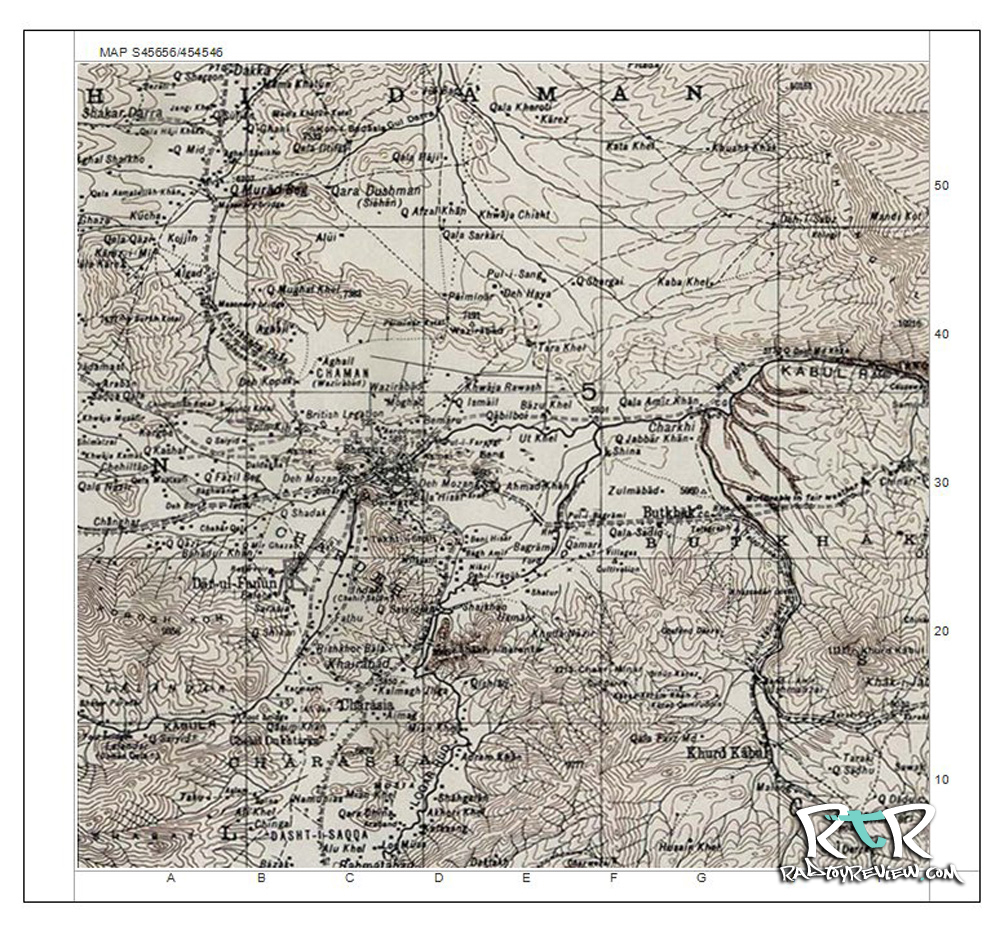
15.  The map is made using the magic of a Google search and Photoshop.  It is an old map of a desert area. I simply printed it out and cut it to size. I gave it a bit of ‘usage’ by wadding it into a small ball and then flattening it back out. Then I gave it realistic tight map folds. After that desert sand weathering powder was rubbed onto the map, both sides, with a brush.
16.  The tool case was a clear plastic box for screws.  It was painted in the same way as item 3.  To personalise it, I painted a skull and initials by hand.
17.  The rope is a 1/6 scale WWII climbing rope that came with a different figure.  Tied off with thread it was then light drybrushed with a desert sand/ white mix.

pic x Paul Benson

We hope you enjoyed the latest Workshop. Thanks to Paul for once again putting this together for us. Now get out there and customize something!
 We’d love to hear from you and check out what kind of customs you’re working on! Send us a shot of your latest custom work with a brief discription to radtoyreview@gmail.com. 

Hit us up on Facebook or Twitter pages to stay updated whenever we post new Workshops and epic toy reviews!

Until next time!