THE WORKSHOP – DIY 1/6 machete by Paul Benson

Today you’re going to learn from my main man Paul Benson how to fashion a made from scratch machete for your wee plastic army. Break out your tiny tools and follow along!

– Knives

THAT’S NOT A KNIFE, THIS IS A KNIFE.
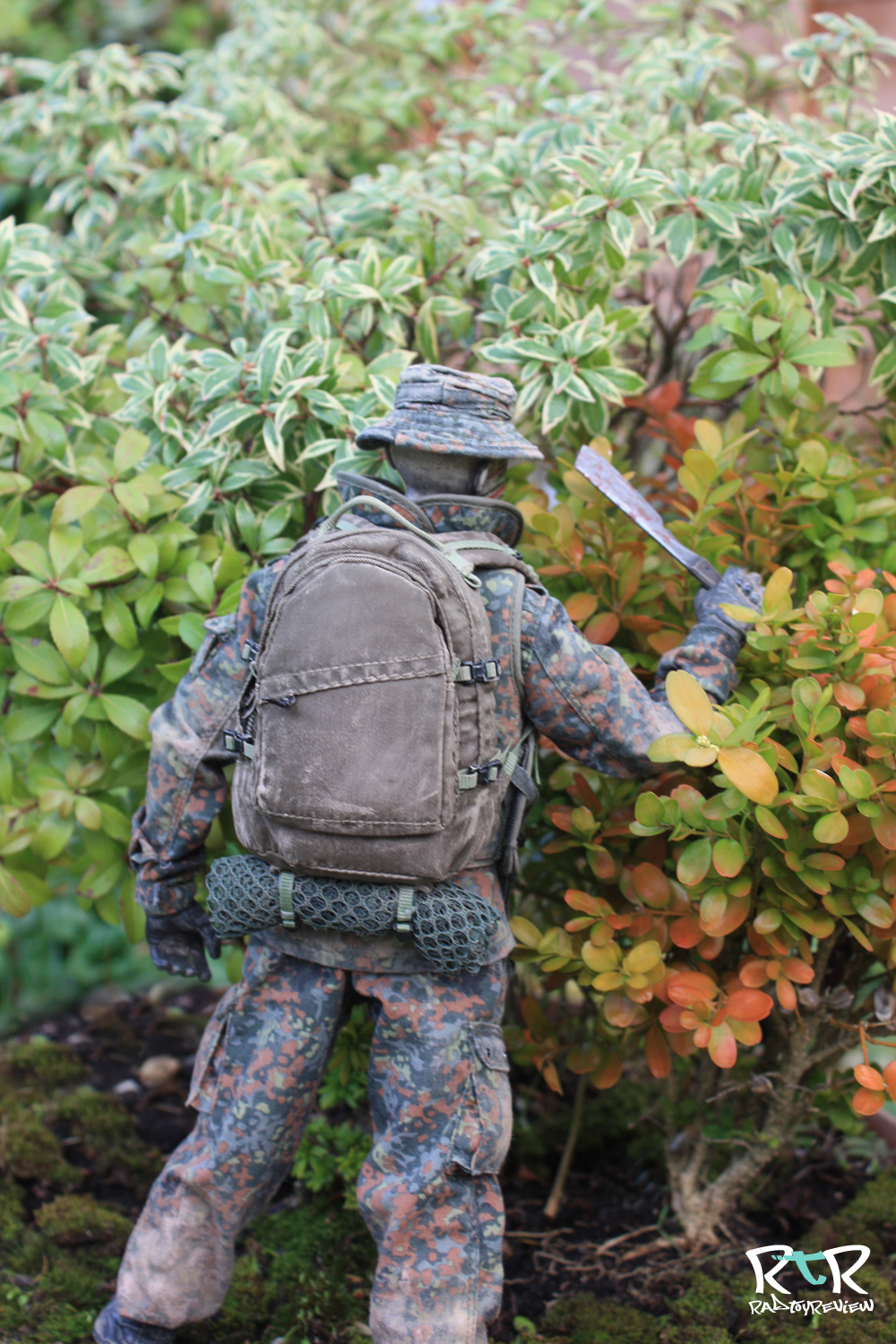
Missed out on the ThreeA Jungler Ranger Grunt and then regretted having done so ever since, so I have kitbashed my own.  Although the camouflaged kit I have used tends to suggest temperature forest rather than tropical jungle.  I thought he still needed a machete to aid  movement through heavy vegetation, ground clearance, cutting wood for fires etc.
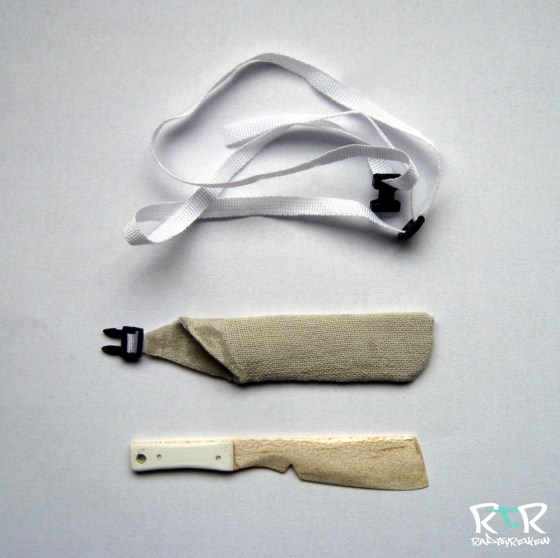
The design I went for is similar in design and size to the British Army Bushcraft machete.
The materials I used were 3mm sheet balsa, 1mm sheet styrene and 3mm Grosgrain and linen cloth.  The paints were a Humbrol acrylic aerosol spray, Games Workshop acrylic paints and a MIG weathering powder.
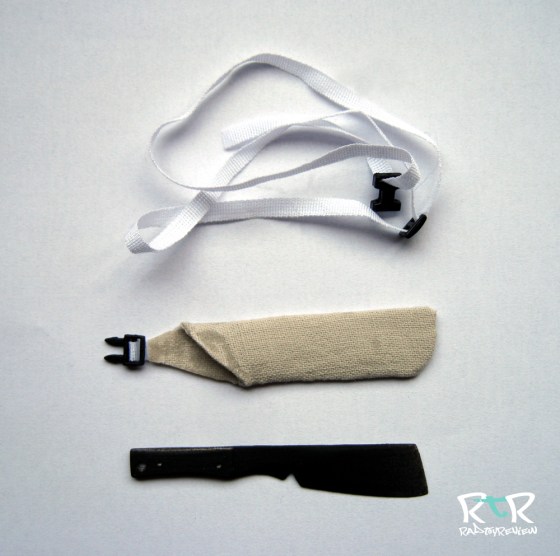
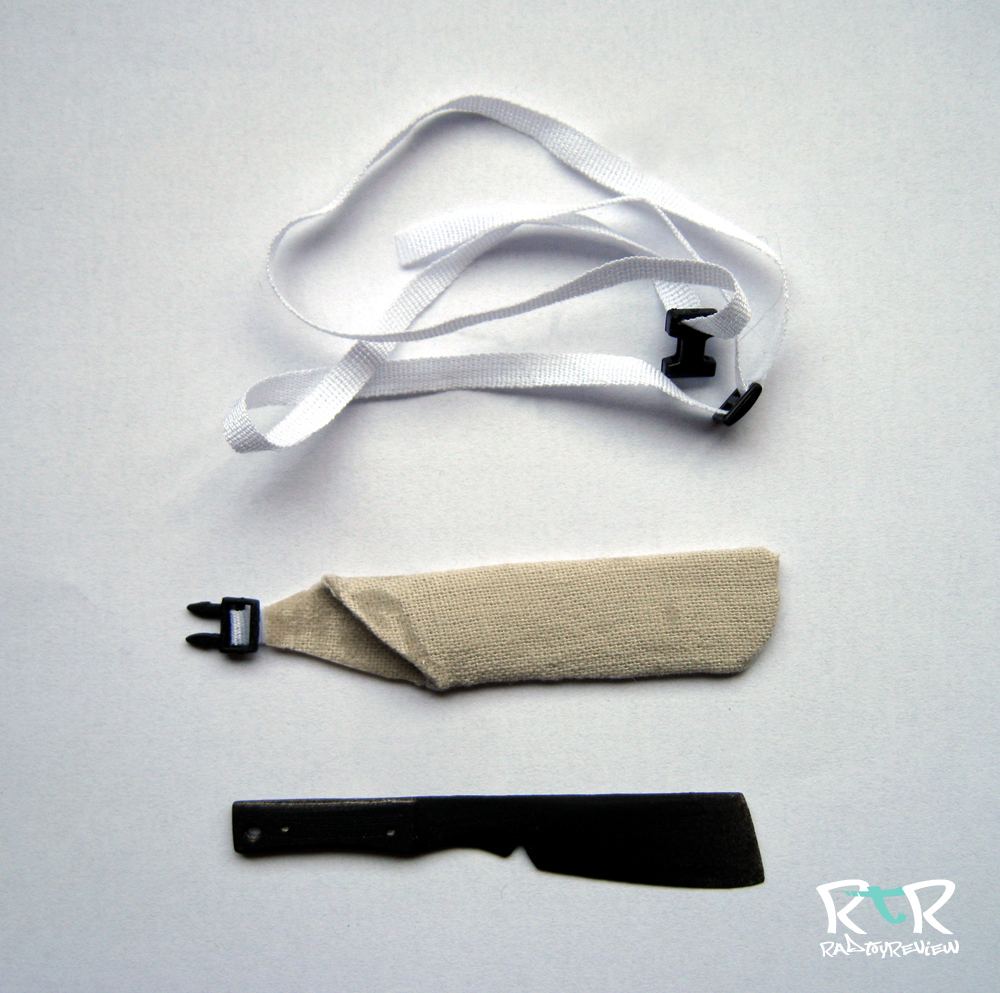
To make the machete the outline was drawn on a piece of sheet balsa and cut out with a sharp scalpel.  It was then shaped with a scalpel and then with sandpaper.  An edge to the blade was made with fine emery paper.  The blade was then painted with super glue to harden the surface several times.  Sand it down again to get a very smooth surface. The hand end of the machete was then used as a stencil to draw two grips onto 1mm styrene sheet.  Cut them out and glue in place.  “Screw” holes were drilled with a scalpel blade.  To give the impression of wood grain I scratched the styrene handles with a scalpel blade point.
To make a sheath of the correct shape and size, I used the machete as a stencil to draw out the form on styrene sheet. The shape was then cut out with scissors.  I’d never suggest that I’m very good at sewing.  Buttons tend to be my limit. So assembly of the sheath was not done with finely sewn lines, I used super glue!! Use what you’re comfortable with.
The first step was to cover the styrene shape I had made.  The fine linen material I used was wrapped round completely with a slight overlap and then cut.  A few dabs of glue here to hold it fast.  Where straight lines were needed, the linen was painted with super glue which hardened it and made it very easy to cut clean.  Games Workshop super glue is superb for this job, as the pot it is in comes with a small brush.  The back of the sheath won’t be very neat, but no one should see it anyway. A second piece of linen was used as the front of the sheath and again glued around the back as neatly as possible.  To create an edge to the sheath where the machete would go in, the linen was folded over and glued inside. The top part of the sheath was painted with super glue and cut neatly.  A short loop of Grosgrain was looped through one half of a 1/6 side release and glued behind. At this point you can clean it up by cutting any loose threads.
The webbing body strap was 3mm Grosgrain cut generously (it would be cut to the correct length later once on the figure) and looped through the other half of the side release.  The sheath could just have easily been attached to the loop webbing on the figure.
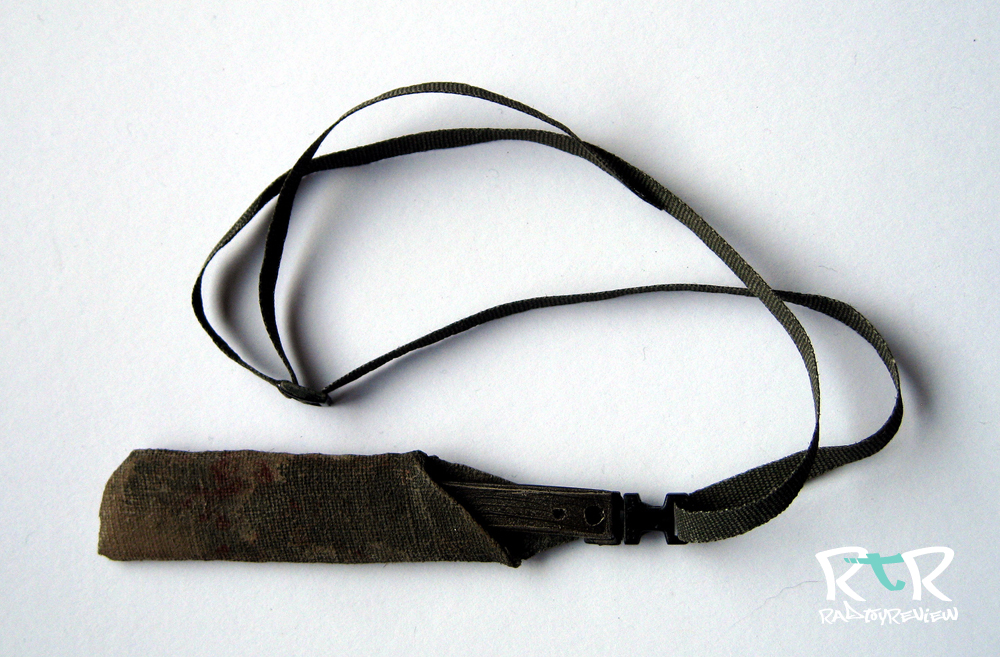
The machete was then sprayed with Humbrol matt black acrylic aerosol paint.  When dry the blade was dry brushed with Games Workshop boltgun metal acrylic paint. Unfortunately I was too vigorous and knocked of a little of the blade at the end. The handle was painted with GW scorched brown and when dry further dry brushed with scorched brown mixed GW skull white. The webbing strap and sheath were painted with GW catachan green acrylic paint mixed with a little GW chaos black. It was then dry brushed with catachan green mixed with skull white.  To highlight the weave on the webbing and sheath, they were both finally dry brushed very lightly with skull white by itself.  To dirty up the sheath dry mud MIG weathering powder was mixed with a little GW skull white and dabbed onto the sheath, this would match what I had done to the clothing of the kitbashed grunt I had made the machete for.  To add a little bit of rust to the machete I used GW dark flesh lightly dabbed on with a small piece of natural sponge.  The technique is all about trial and error, for example I dabbed the piece of sponge (around 4cm by 4cm cut from a bigger sponge) into the paint and then dabbed it onto paper.  When I got a random pattern of small randomly shaped marks I was happy with, I applied the sponge to machete blade.  Where I need more marks I rotated the sponge and dabbed again.  I did the same technique on the sheath to add a little visual interest, although rust from the machete blade may well have got onto the sheath anyway.
We hope you enjoyed this episode of The Workshop. Thanks Paul putting together for us. Now get out there and customize something!

We’d love to hear from you and check out what kind of customs you’re working on! Send us a shot of your latest custom work with a brief discription to radtoyreview@gmail.com. 

Hit us up on Facebook or Twitter pages to stay updated whenever we post new Workshops and epic toy reviews!

Until next time!


THE WORKSHOP – DIY 1/6 shotgun by Paul Benson

Well this is a first. As I worked on getting the Paul Benson penned (Mouse9090 on many-a-forum) MK2 Square workshop together for today, to my pleasant surprise I received a SECOND tutorial from him without warning a few moments ago. As the 2nd was practically ready to post, I decided to go ahead and toss it up! I’ll post Pauls 1st(now 2nd) tutorial early next week! 

Thanks Paul for going above and beyond, I really appreciate it! 

– Knives

SHOTGUN BANG, WHAT’S UP WITH THAT THANG?
I like the shotgun that comes with the ThreeA Grunt, but I wanted to make something a bit more compact, something for close contact, maneuvering in tight spaces, ‘breaching’ etc.  I went for the ubiquitous side-by-side doubled barrelled shotgun.
For equipment I’ve made for figures before, they tend not to be completely scratch built and I tend to use bits from my 1/6 kitbash ‘bits box’ where possible.  For this shotgun I would need a trigger with guard as they are a pain to make as I’ve learned before.  I know it is a double barrelled shotgun, but a single trigger will suite just fine for firing both barrels.
 
The main tools I used are shown below.
The little saw is the best thing I ever bought for this kind of work.  Nail files are really useful, they give you a flat surface to work on.  I also use various grades of sand paper and emery paper.  The glue, as shown, is a thin super glue that can be obtained from Games Workshop vendors. The great thing about it is, it comes with a little brush inside which gives you loads of control.  Over balsa wood it can be painted with the brush to give you a really hard surface to work with further.  Super glue is also a really good filler for narrow gaps.  Rather than craft knives I use scalpels. Blades can be changed very easily and come in lots of shapes.  Although I have fine drills, very often I use a small pointed scalpel blade to made small holes by simply rotating the blade.
STAGE 1
In the planning stage I looked at a bunch of shotguns online for reference and to get a feel for the variety of design and the detail in the engineering.  What I end up with sometimes turns out a little different to how it started in my mind. Which is fine, it’s often just a bit of trail and error.
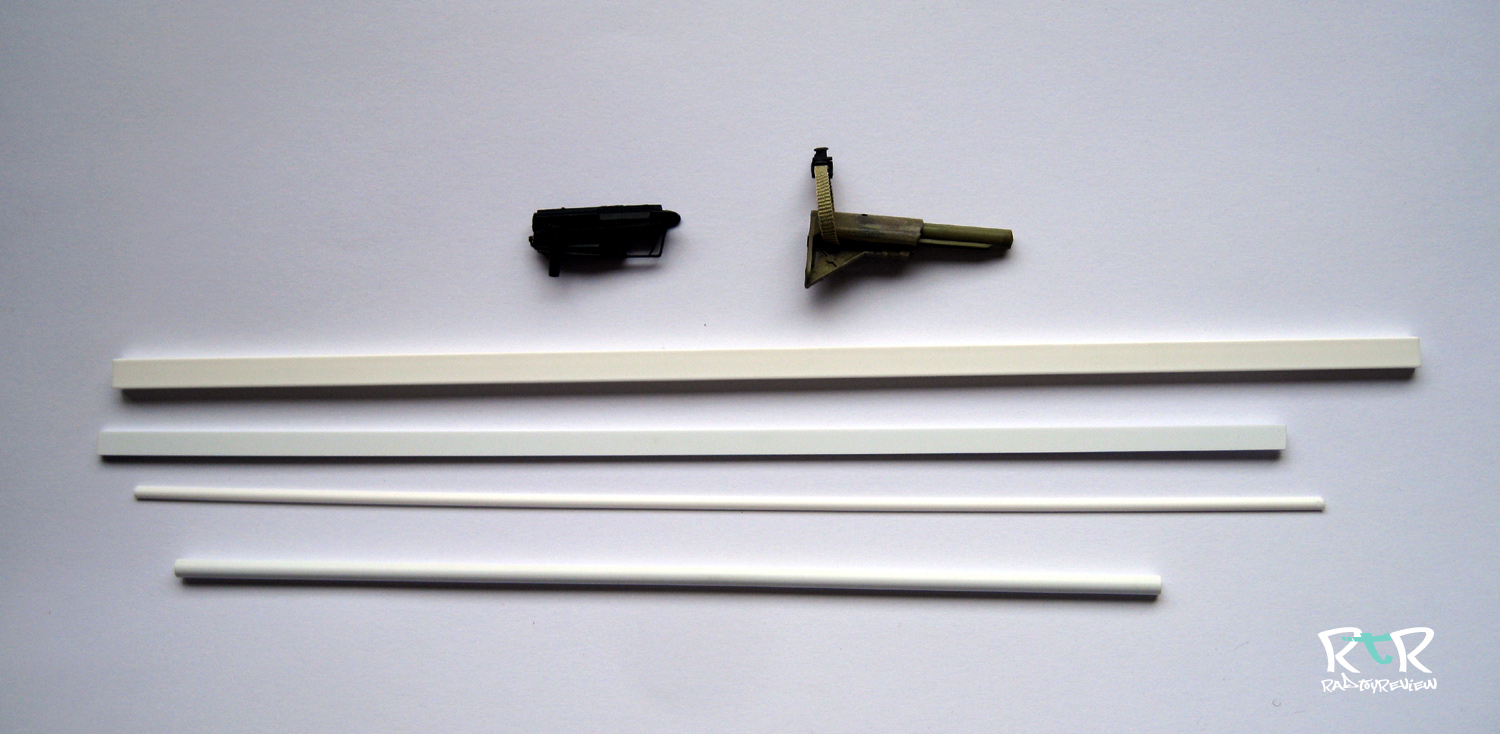
I did find a section of a rifle with trigger and guard in my bits box and a shoulder stock (which I ended up not using!).  Got together the ‘strip styrene’ (it is called this by the firm that make it, ‘Evergreen Scale Models) which I thought I might use.  I also used some sheet styrene not shown.
STAGE 2
Some in progress pieces are shown below.
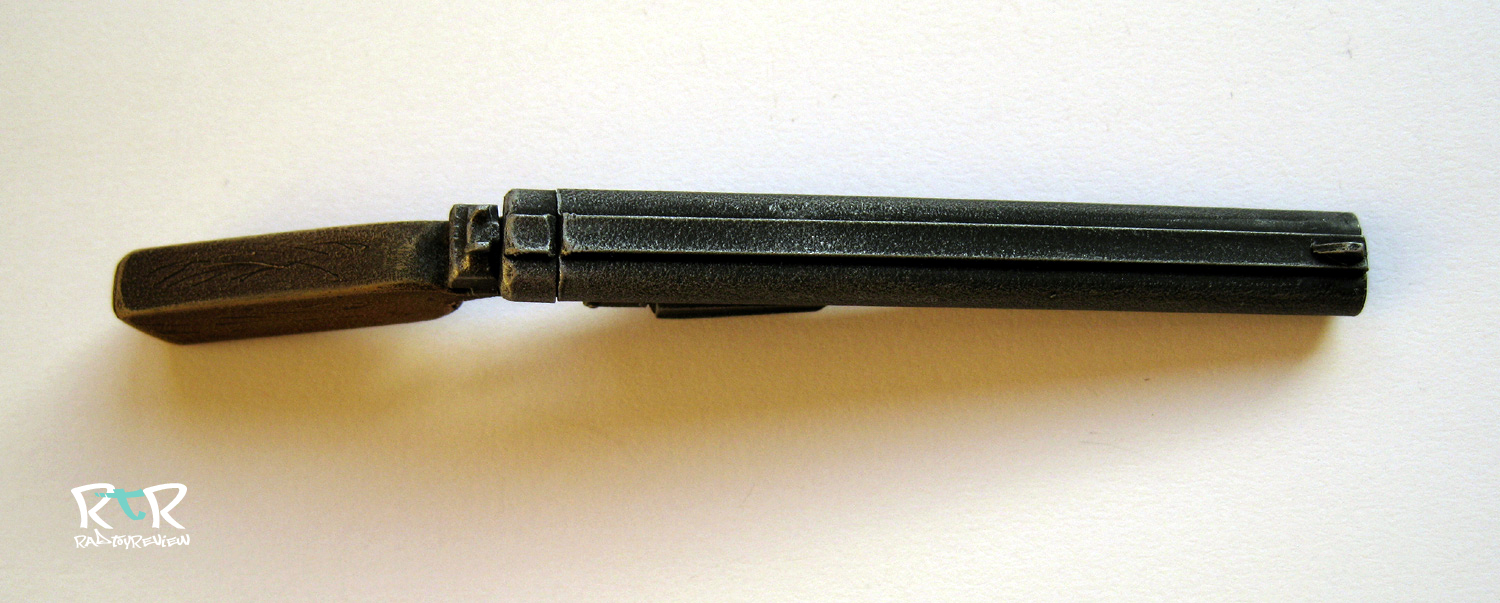
The two barrels were made from 5mm styrene tube.  They were glued together and thin strip of 3mm semi circular styrene, turned over and glued along the top.  As shotguns often break to load, I cut off a 4 mm section of the barrels to make the housing for the firing pin mechanism. The two short tubes making this section were then filled with 3mm styrene rod.
The part of the rifle from the bits box, that included trigger and guard, was cut to receive the first part of the barrels as a first fit.  I did not set out to make an engineered masterpiece and therefore it will not actually hinge, but as you can see in the next picture, further shaping of this section and the front stock has shown where the barrel could pivot.
The back stock is 10mm by 6mm rectangular hollow section styrene to which I have glued small pieces of sheet styrene to block it in.  An alternative stock could easily have been made of balsa wood.
The front stock is two pieces of 6mm by 2.5mm rectangular solid section styrene glue together and cut into the stock shape.  Along the bottom edge a strip of 3mm semi circular styrene was glued. I added a front sight and strikers, using 1mm sheet, cut and shaped with scissors.  Further sanding down and filling was done to complete the model and scratches were added to the front and back stock to give the impression of wear and tear.
STAGE 3
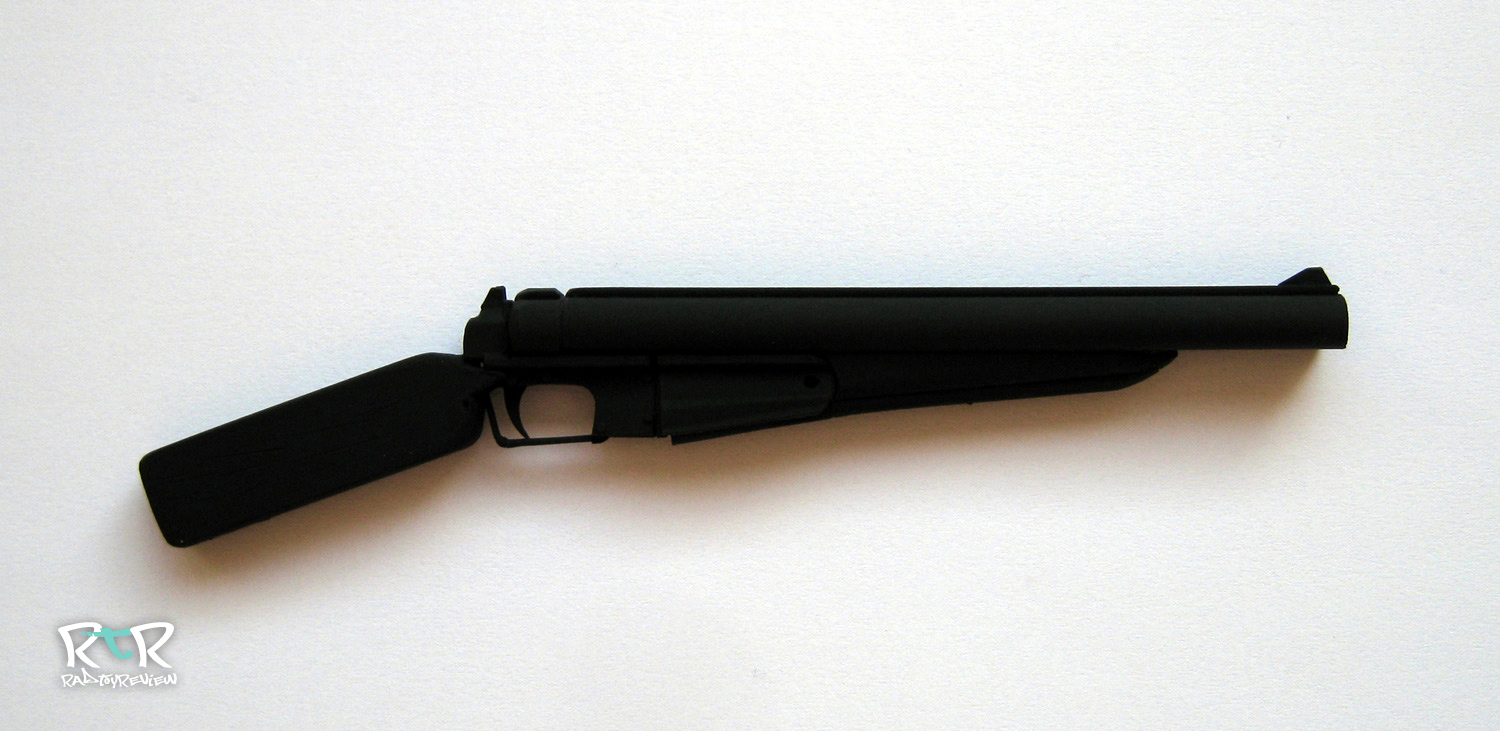
The shotgun was then washed in detergent to remove any grease marks and then sprayed with matt black acrylic paint.  I have never seen the need to buy an air brush and always use Humbrol acrylic aerosol paints to a give a base colour.
I tend to use Games Workshop acrylic paints which are very good and are easy to get hold of, either at a local store or online. They come in a range of both basic and very useful blended colours. They are kind to brushes as there is no need to use solvents for cleaning.  The names of the paints, I might as well use them, are referred to below.
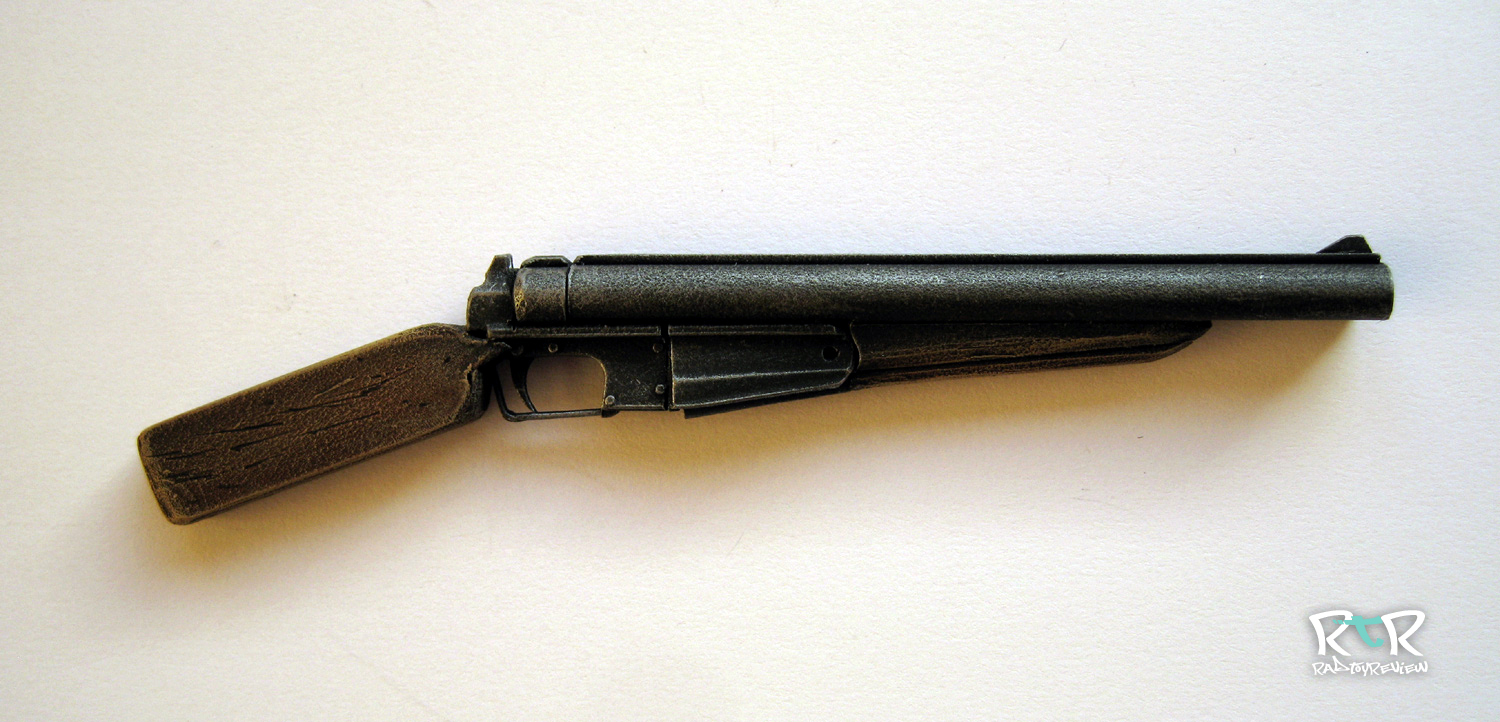
The next stage was to paint the stocks.   I did this by dry brushing, a technique that would hopefully leave the wear and tear scratches darker. Dry brushing is a technique of wetting a brush with paint and then almost drying it with paper towel, then wiping it across the area you are working on. Keep going until you get the effect you need.
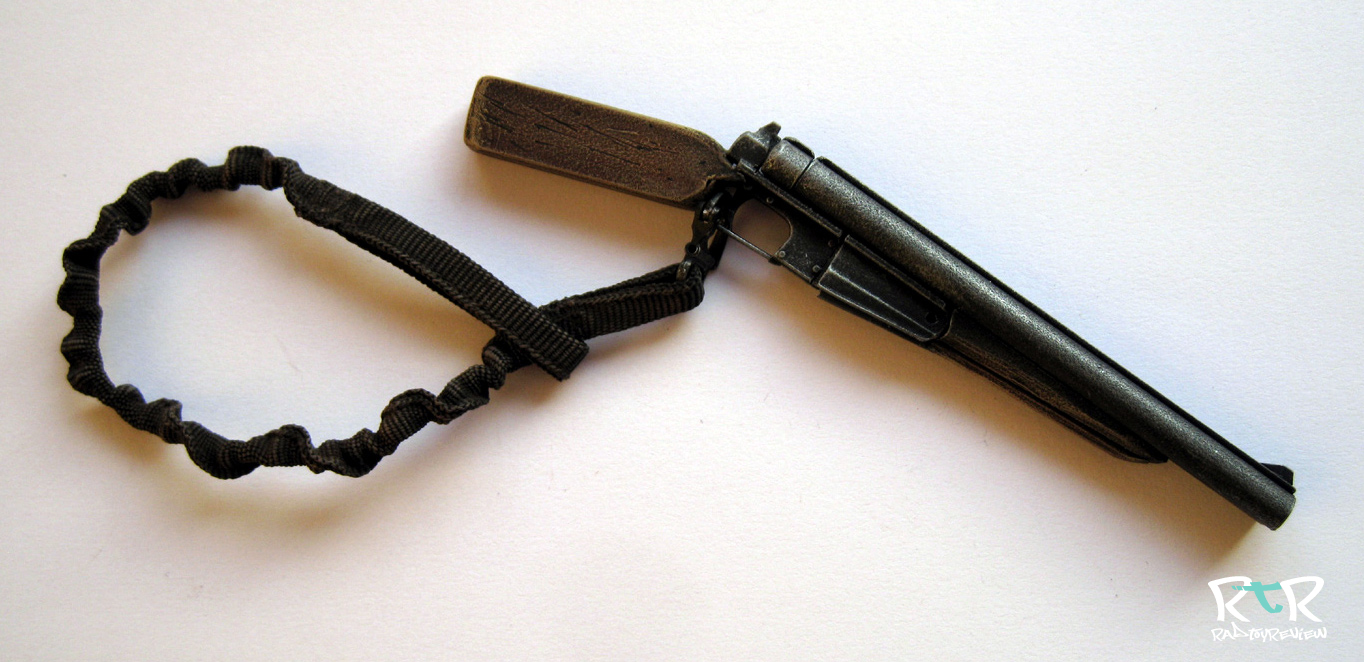
Firstly, I used Games Workshop Scorched Brown, then GW Dark Flesh, then GW Desert Yellow and finally GW Desert Yellow mixed with a little bit of GW Skull White.  The metal parts are dry brushed with GW Boltgun Metal.  Where surfaces might be more worn than others, more drybrushing can be applied.
A tether added for good measure and you’re good to go!
We hope you enjoyed this episode of The Workshop. Thanks Paul putting together for us. Now get out there and customize something!

We’d love to hear from you and check out what kind of customs you’re working on! Send us a shot of your latest custom work with a brief discription to radtoyreview@gmail.com. 

Hit us up on Facebook or Twitter pages to stay updated whenever we post new Workshops and epic toy reviews!

Until next time!


THE WORKSHOP – Custom Brit Squad Dropcloth by KidAkira

Twenty Seven. That’s how many high quality photo’s the mad custom ninja KidAkira sent me to go along step by step with this intensely in-depth  Dropcloth customizing Workshop. On top of that, he chose my favorite bot as his subject matter. I’m absolutely blown away by how many tasty nuggets he packed into this thing. Thanks so much brutha! I hope all you good people learn a ton from it and enjoy!

– Knives

Firstly, Thanks to Knives for inviting me to do a custom tutorial for Rad Toy review. Today I’m going to go through the process of turning a 1/6 DIY Dropcloth figure into a Brit Squad Dropcloth…
The first stage for this custom was to dismantle the Dropcloth (DC) into parts. This makes it much easier to work on each part and doesn’t leave you with any hard to reach areas. DC’s are fairly easy to pull apart, remembering to always be gentle, and the use of a hairdryer to soften the vinyl parts will make it easier still…
The next stage is to mask off each piece for laying down the basic colours. Once ready each section was sprayed with 2 to 3 light coats of paint…
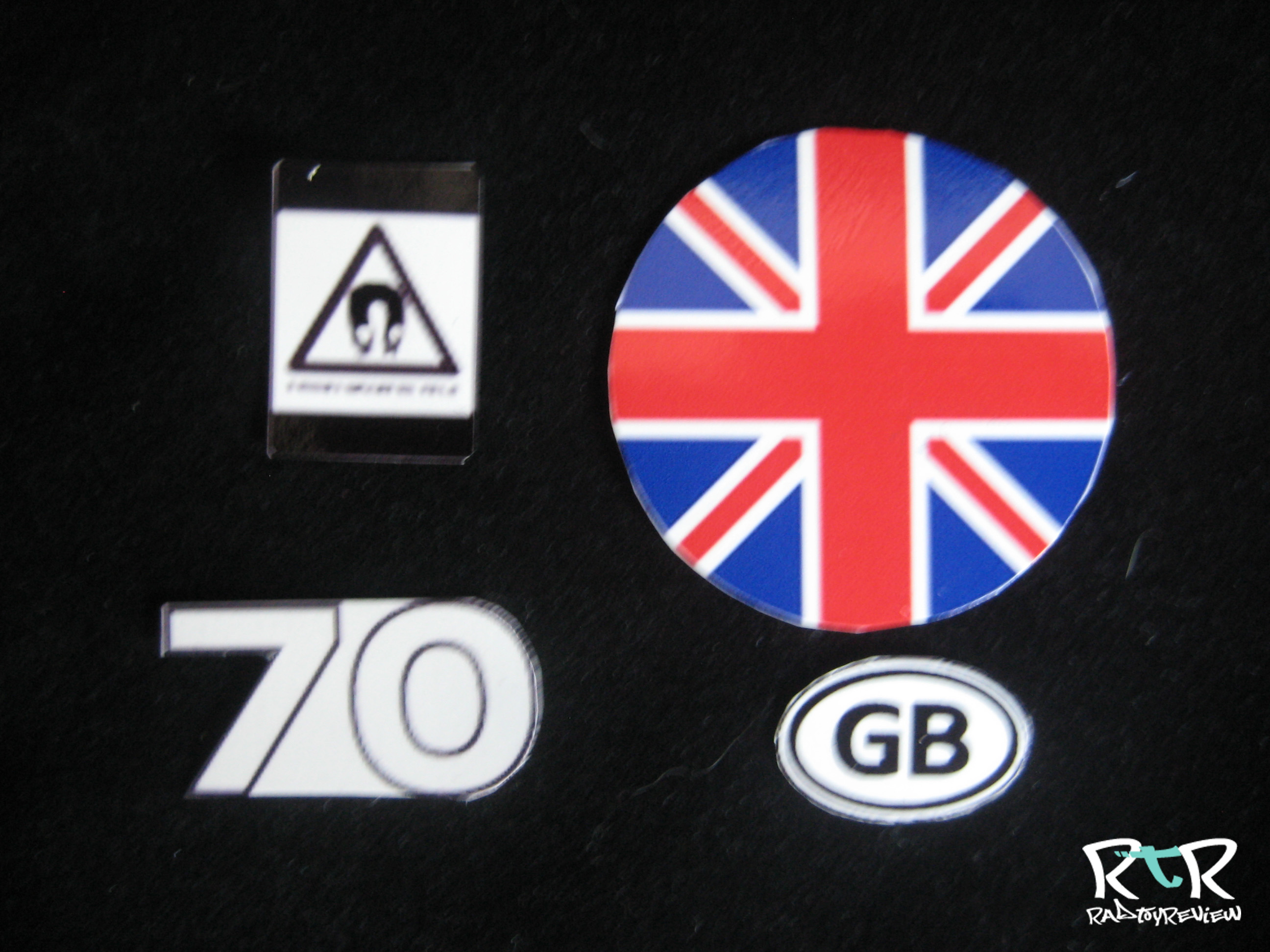
Once these parts are thoroughly dry, the masking tape is removed and a very light layer of clear gloss lacquer is applied. I find the gloss finish helps the decals adhere better to the surface… I won’t go into Decal making and application in this tutorial)… Once the decals are in place and dry all the pieces are given a light coat of clear satin lacquer…
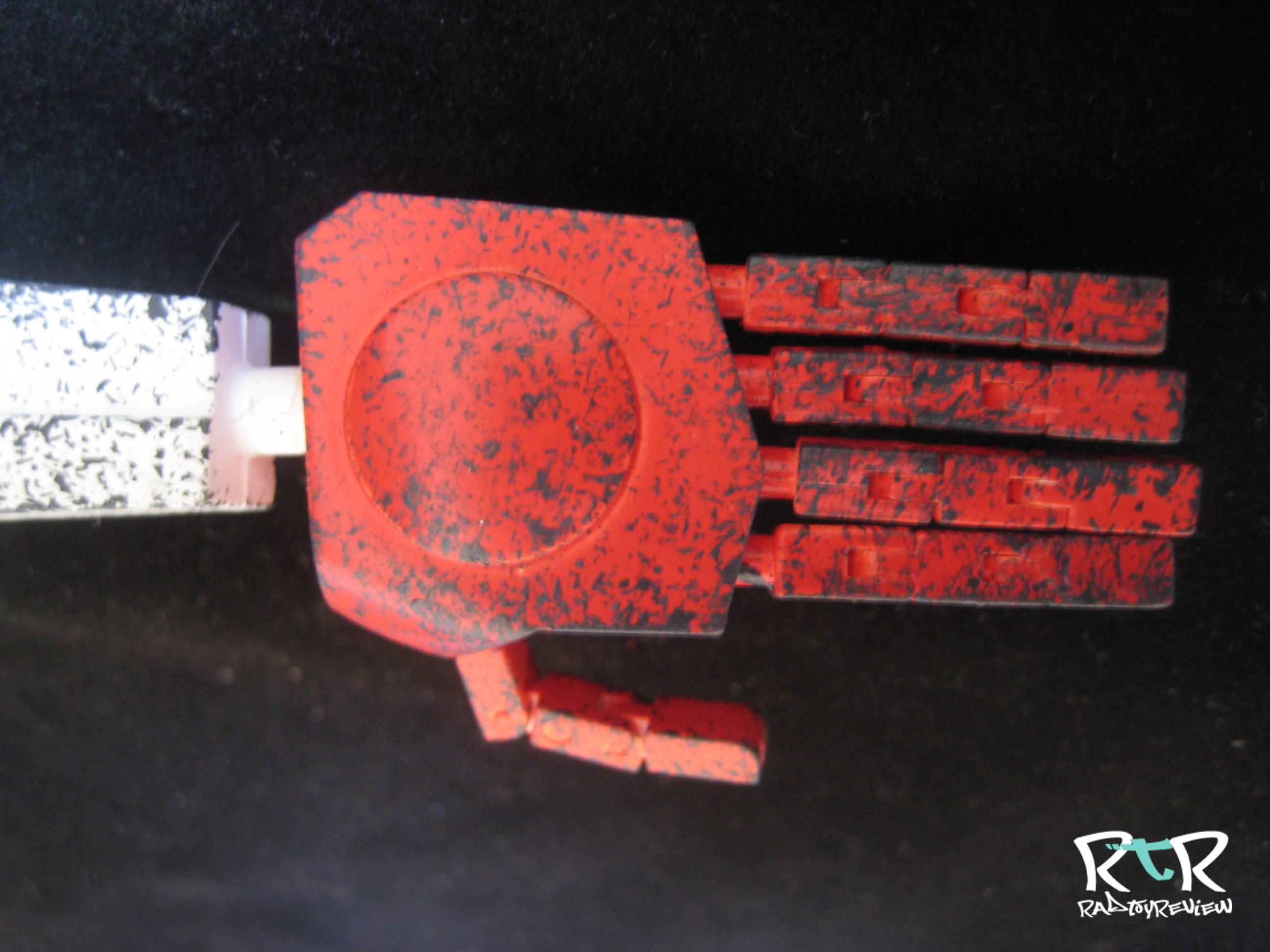
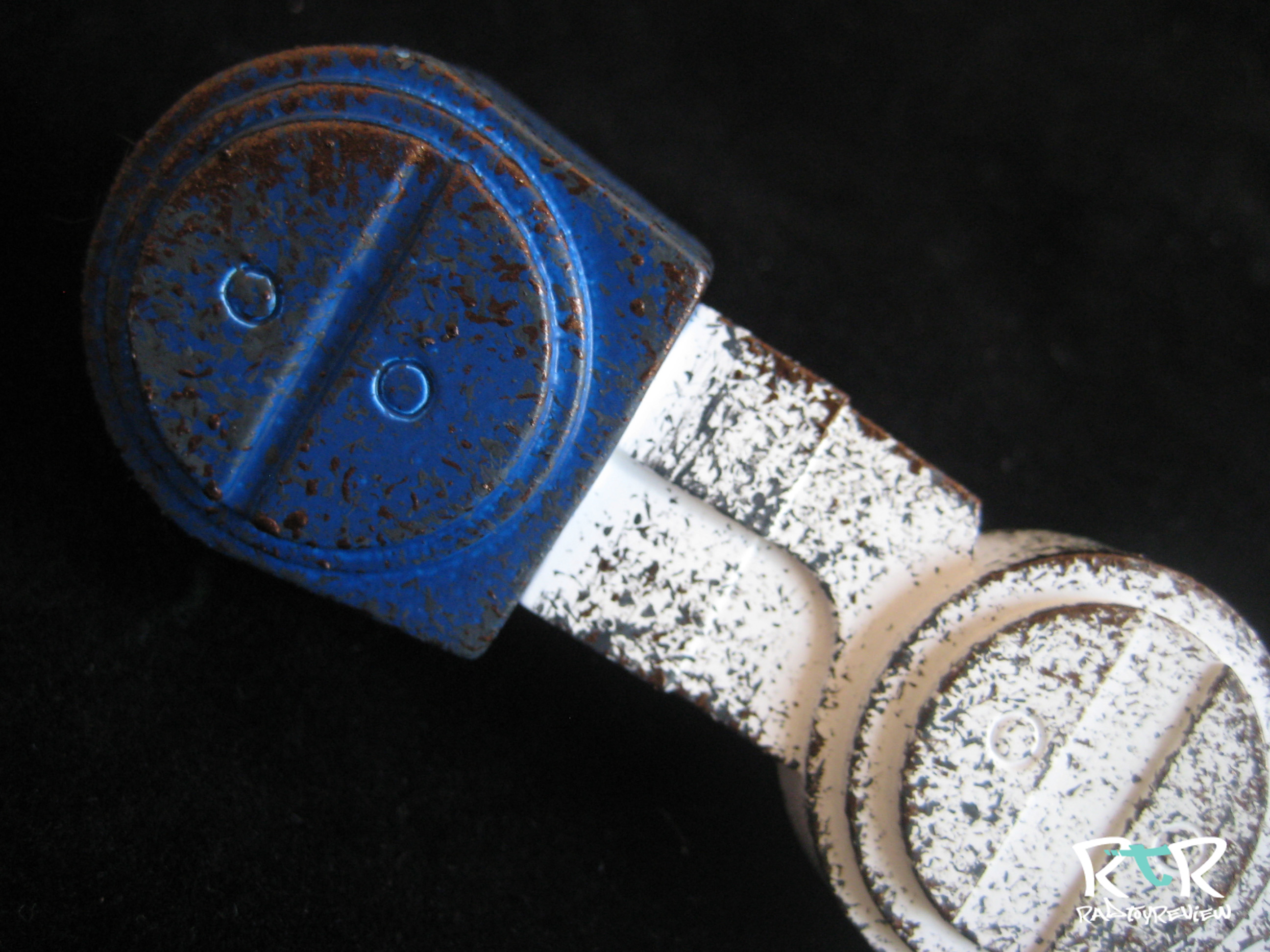
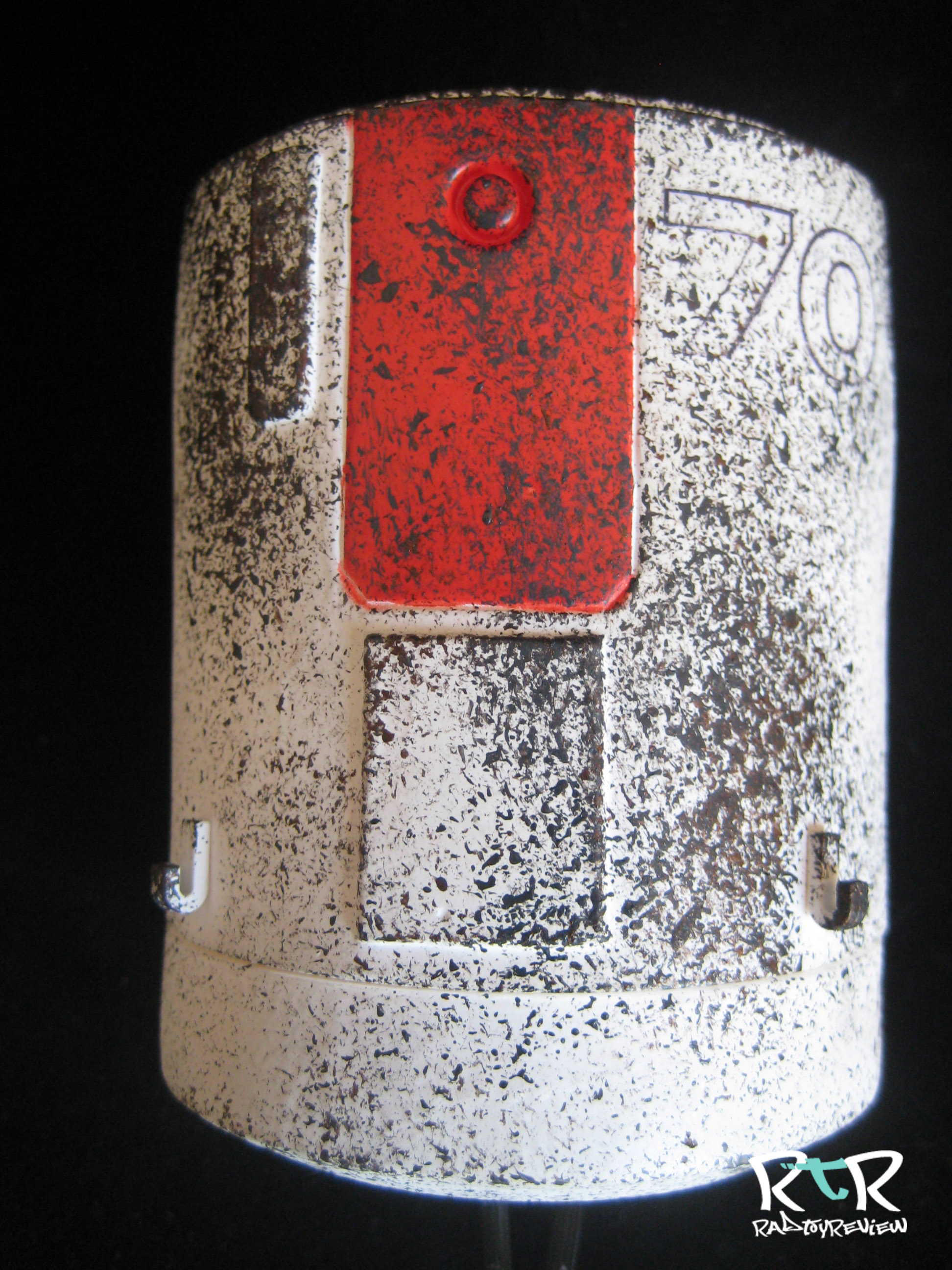
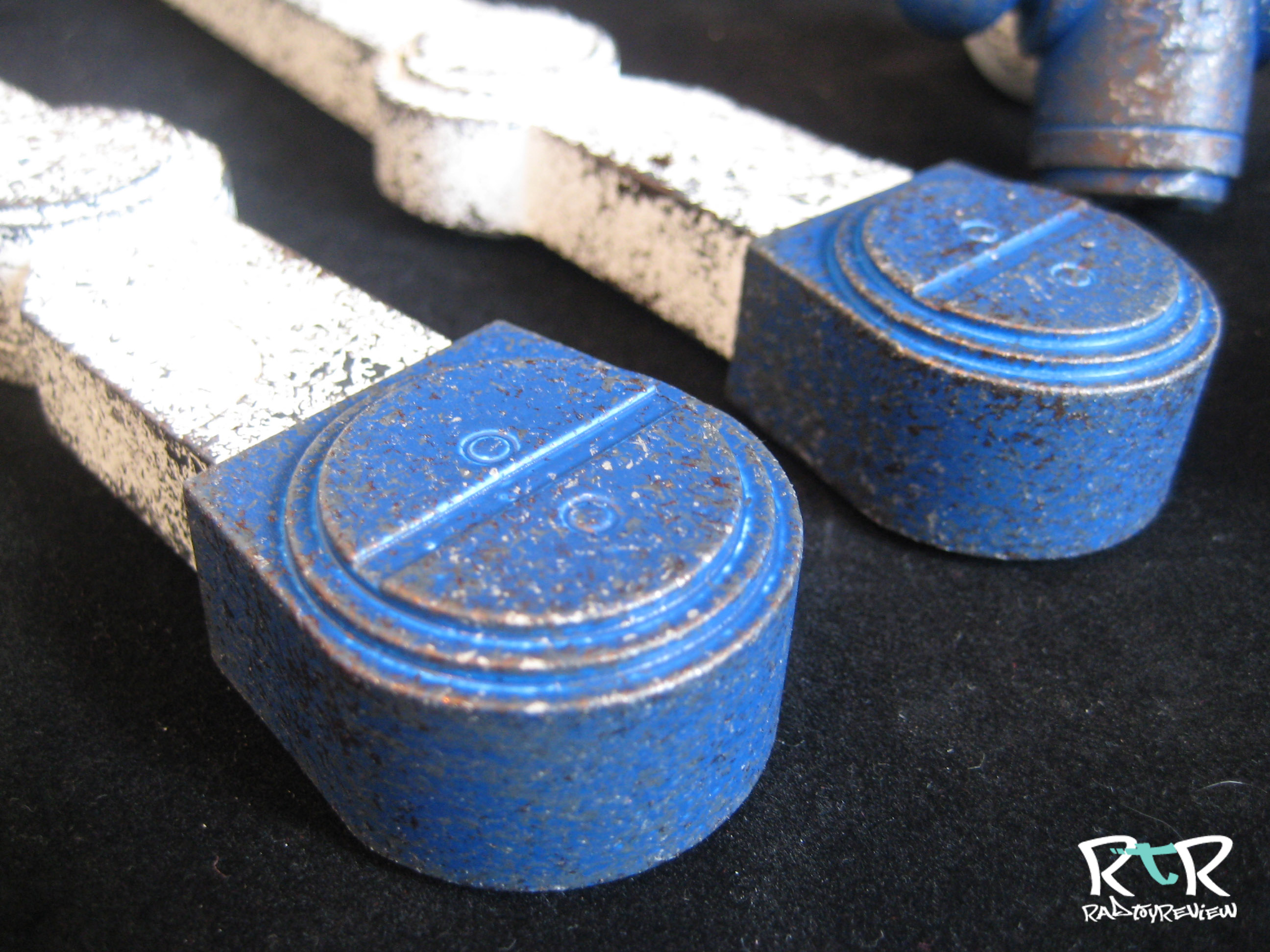
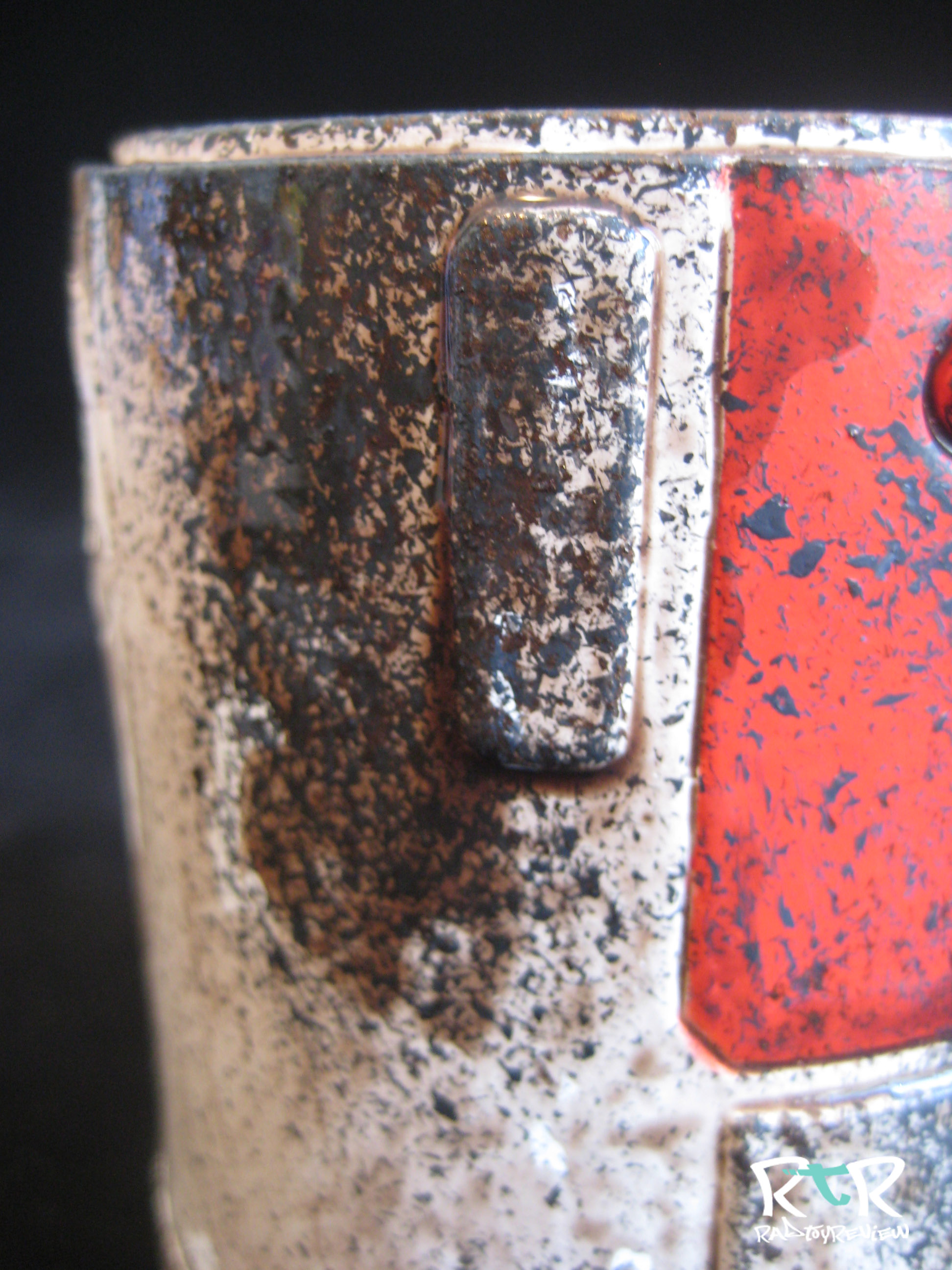
Now to begin the weathering process. For this DC i decided to go for slightly less rust than i have gone for on my previous Brit Squad bots. To achieve this affect is very simple. I use a synthetic sponge torn into small pieces to give a nice uneven texture. By dabbing the sponge into the paint and wiping the excess off, use tissue, hand or jeans; then stipple the sponge onto the areas you want weathered. Apply more or less depending on your desired effect. I used 3 different paints to achieve this finish. Citadel paints Adeptus Battlegrey, for the first layer followed by Tin Bitz and finally Mithril Silver…
The next stage of weathering is using washes. This is probably the easiest part of any custom that requires weathering and is hard to get wrong. The 2 washes I used were again from Citadel paints; Devlan Mud and Ogryn Flesh. Using a soft medium sized brush, apply the first layer of wash liberal over the areas your weathering. In this case, everywhere. Once applied, let sit for a little under a minute, then using a tissue or soft cloth, dab the excess was off. Repeat until the desired effect is achieved then repeat with second colour wash…
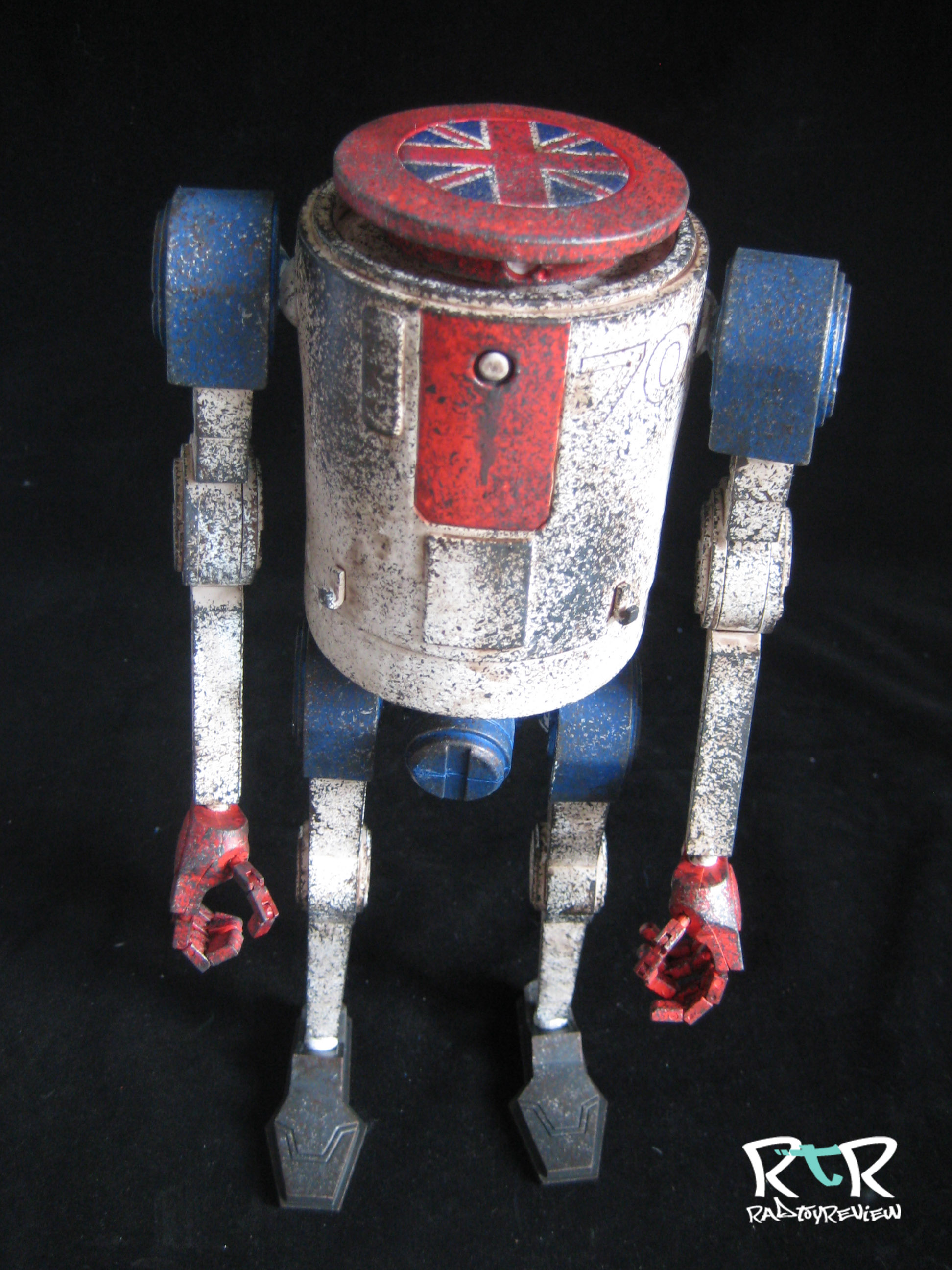
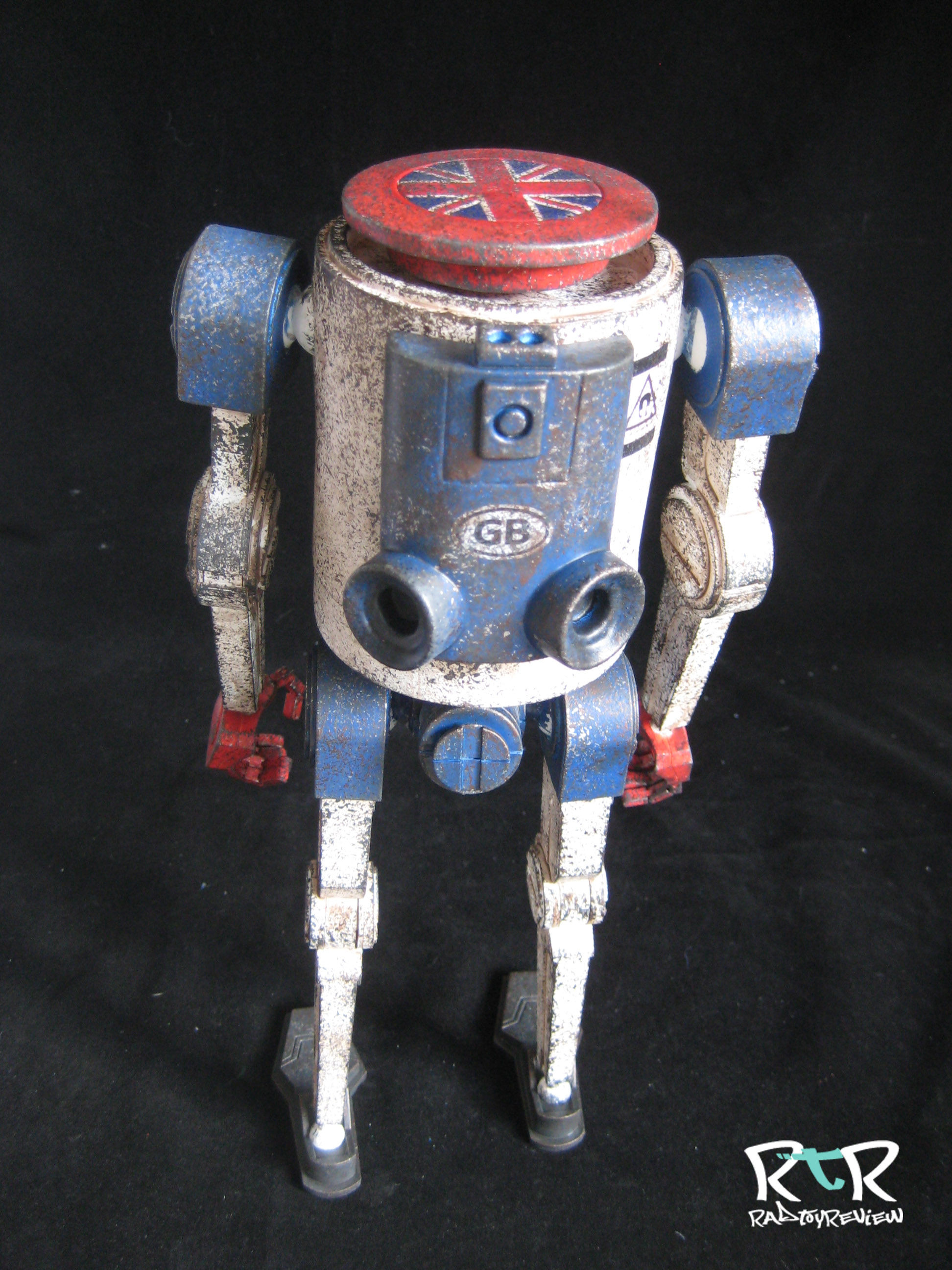
Once the washes have dried completely, another layer of clear satin lacquer is applied and your DC should now look like this…
Now it’s time for reassembly. Again, the DC’s are fairly easy to dismantle and put back together but the hairdryer will help if your having trouble. And again remember to be gentle and take your time…
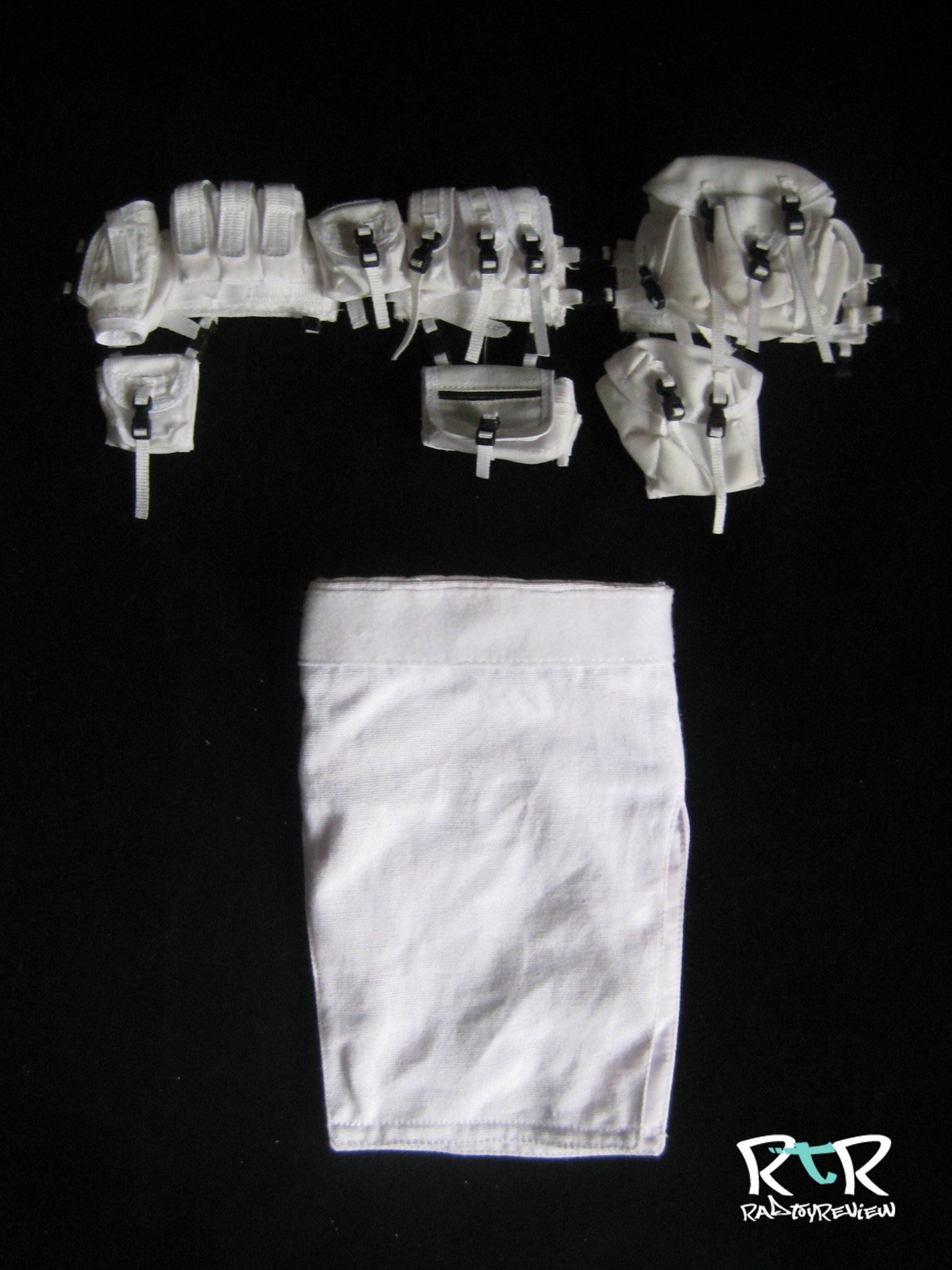
Time now to move onto the soft parts…
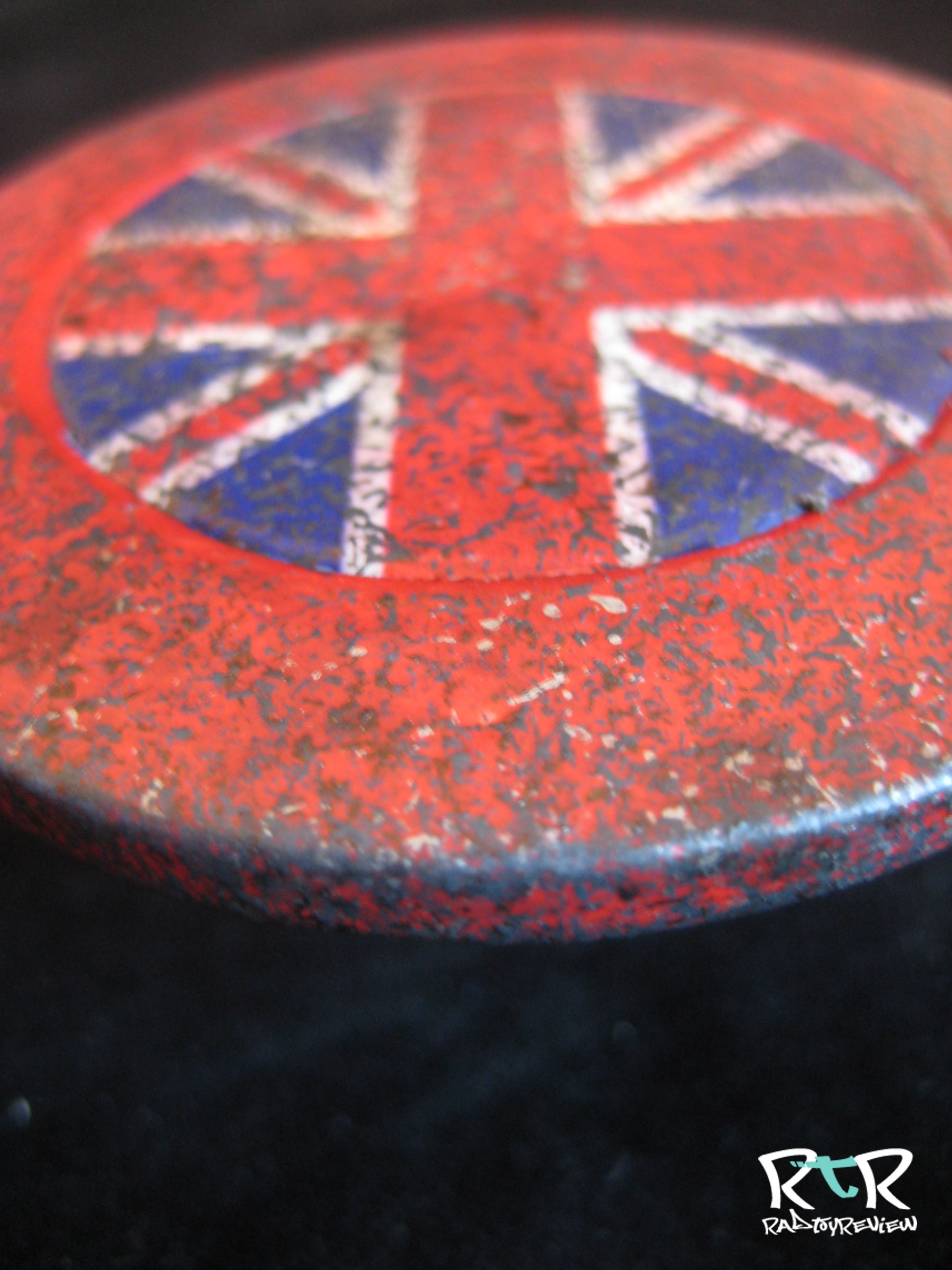
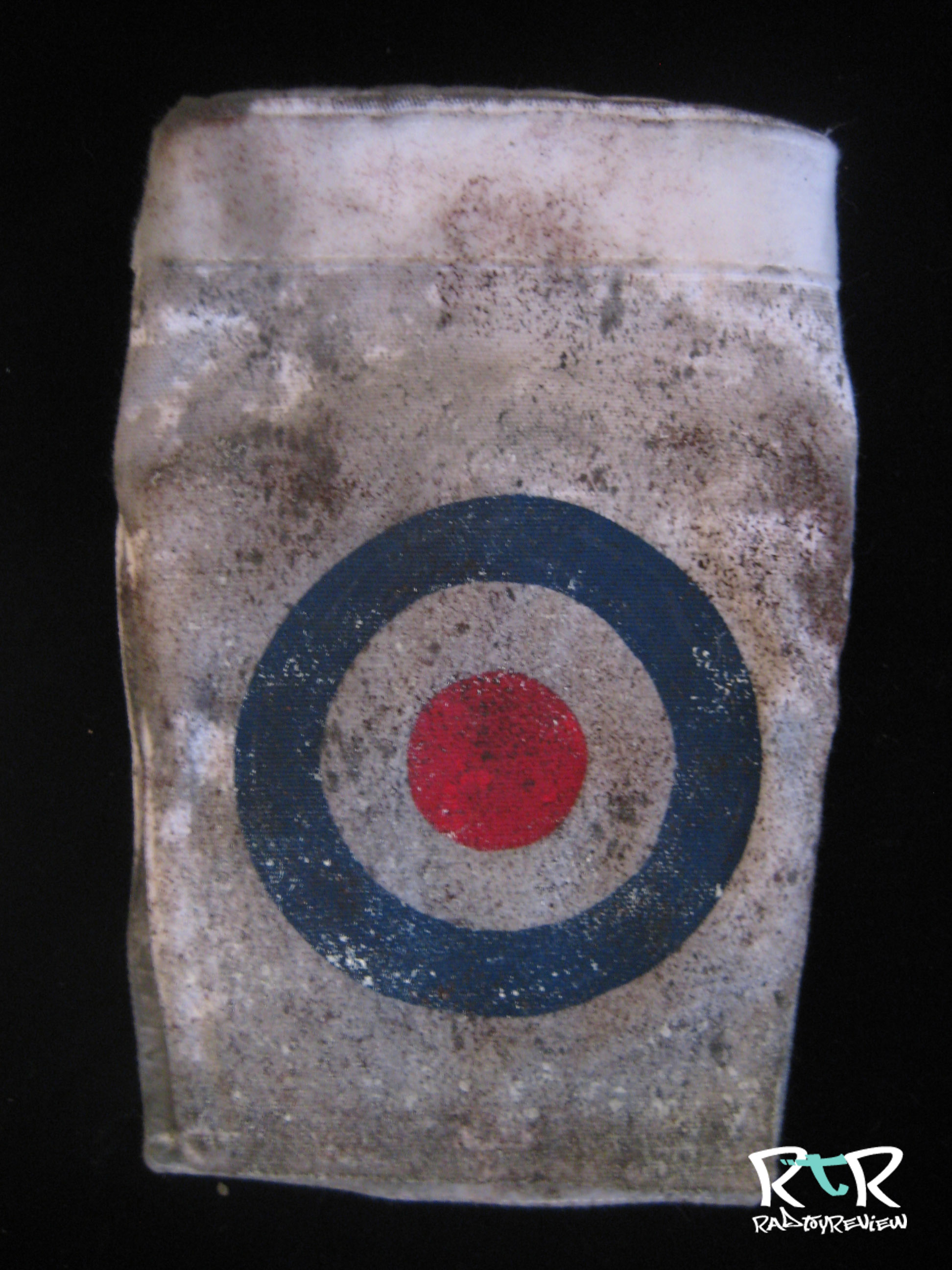
Firstly I drew the Bullseye onto each side of the skirt using a compass. I then hand painted each section…
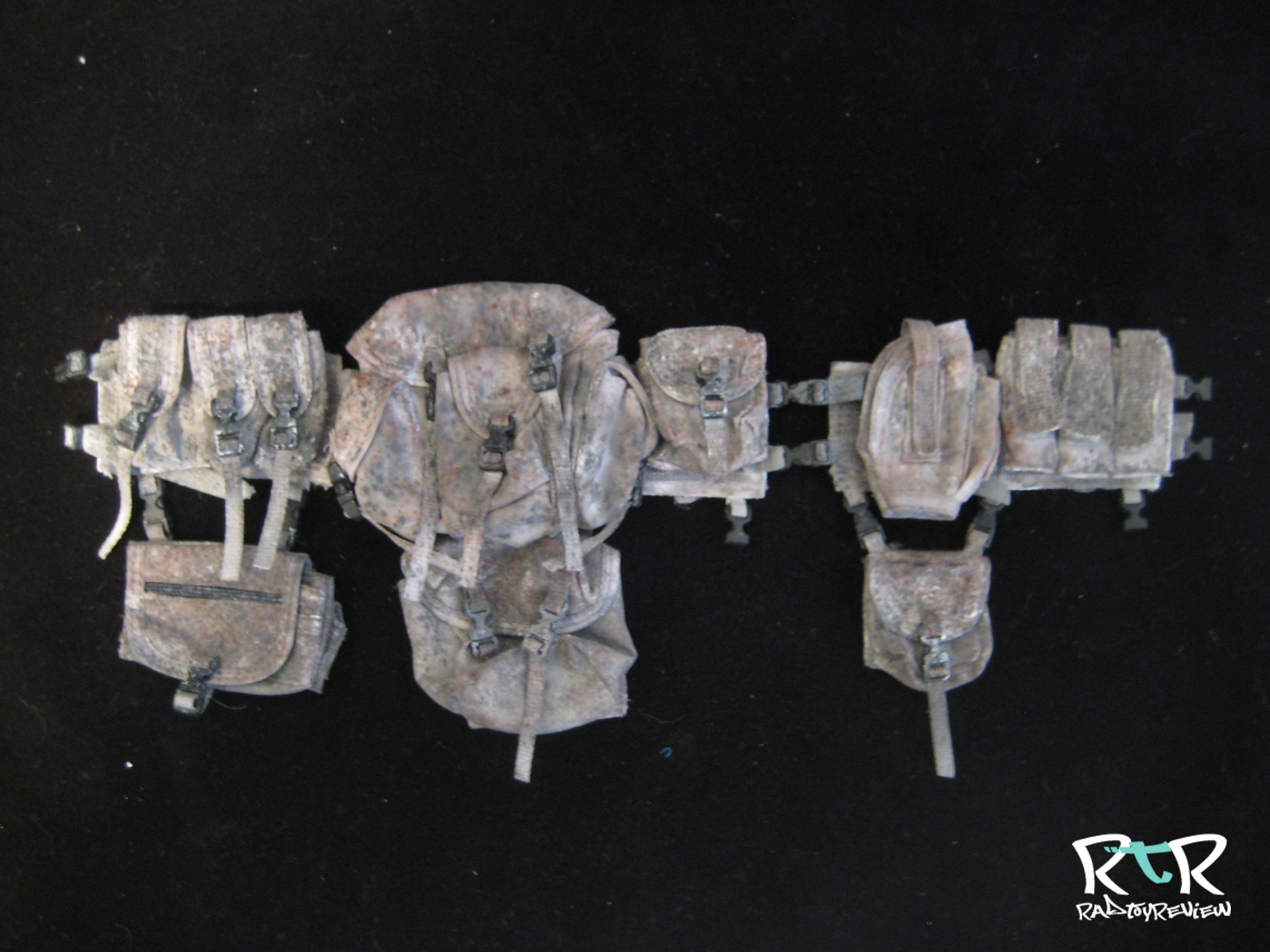
Then I applied a very watered down mix of the Citadel Adeptus Battlegrey paint to the pouches and skirt to give the base weathering layer…
Once dry, I then used the same stippling method as before building up layers of Citadel paints Adeptus Battlegrey, Scorched Brown and Skull White…
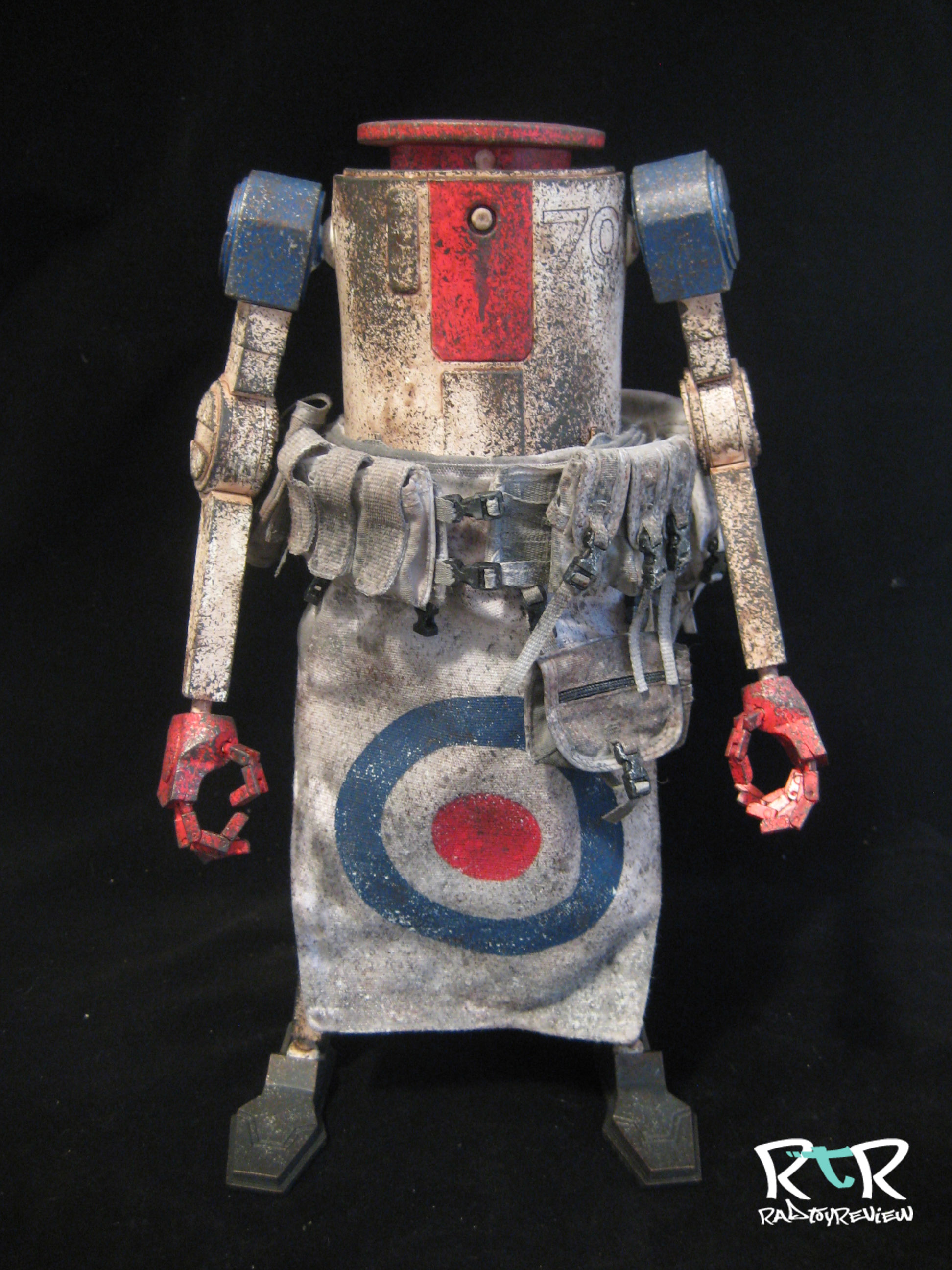
Once dry the skirt and pouches were put back on the DC…
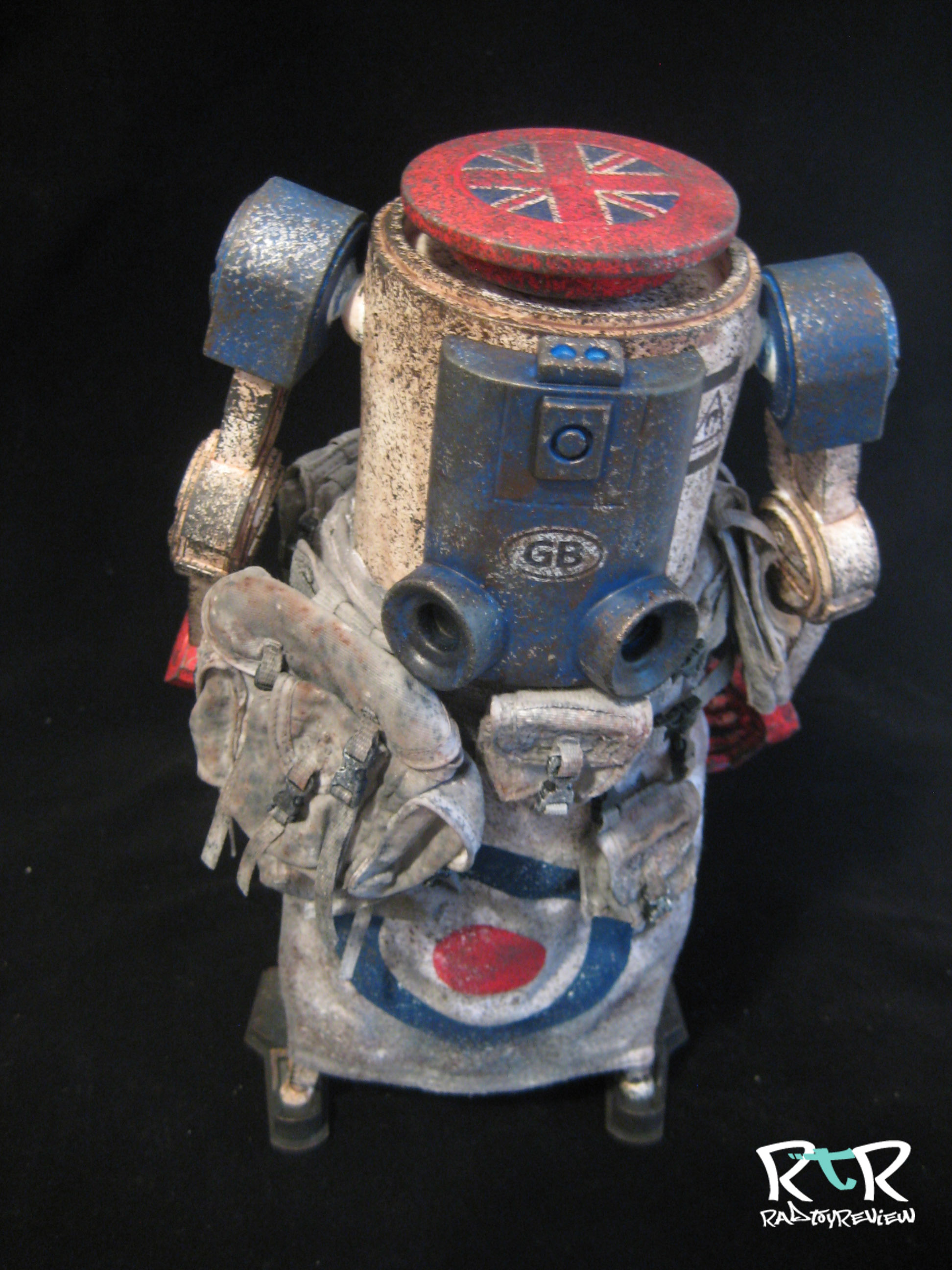
And with weapon in hand (in this case Vanilla TQ’s Shotgun), this Brit Squad DC is ready for battle…
Cheers
KidAkira
We hope you enjoyed this episode of The Workshop. Huge thanks again to Kid Akira for putting this fantastic piece together.  Now get out there and customize something!

We’d love to hear from you and check out what kind of customs you’re working on! Send us a shot of your latest custom work with a brief discription to radtoyreview@gmail.com. 

Hit us up on Facebook or Twitter pages to stay updated whenever we post new Workshops and epic toy reviews!

Until next time!

THE WORKSHOP – Le’ skateboard – by Goatbot/Simon

Once again, Simon/Goatbot/Goatballs/Goaty is back with another not-for-the-weak-knee’d tutorial. This time he’s going to walk us through his process of making his own custom skateboards for 1\6 figs. 

Enjoy!

– Knives

Le’ Skateboard tutorial:
Alright then… first off, I just have to say that I’m doing this because those slack bastards at threeA have refused to heed my repeated demands for some street transport for their figs. I couldn’t be arsed to wait for the Adventure Kartel Zomb zimmer frame and decided to make a skateboard or three in the meantime. Also, big props to much missed threeA forum boardie Dante for the OG suggestion.
Down to business…
The materials you’ll need..
  • super glue (or crazy glue to the colonials )
  • stock card (old cereal packets, birthday cards are ideal )
  • exacto knife and sharp scissors
  • steel rule 
  • cutting mat
Skateboards are a very personal affair and first ye’ ve got to decide what style ride ye want… old school, street or a long board.
Once ye’ve picked yer poison ye’ll have to create a template. I do all mine by eye alone… ye computer whizzes should be able to knock something out in no time though!
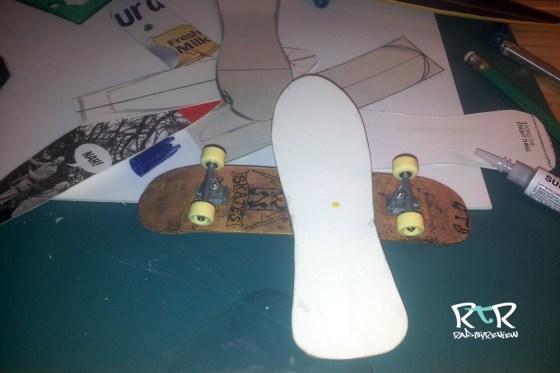
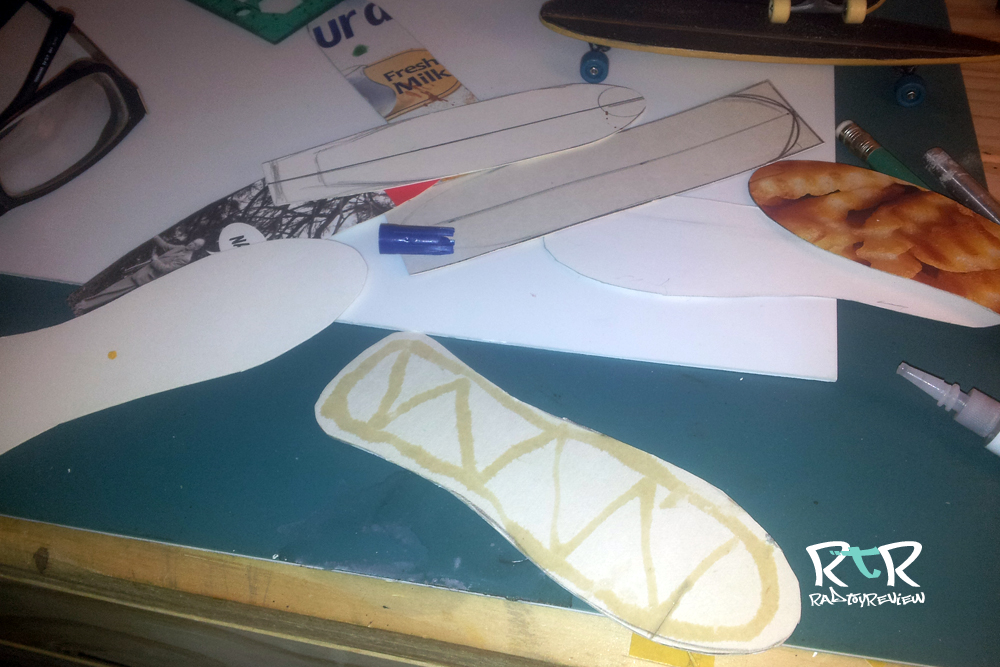
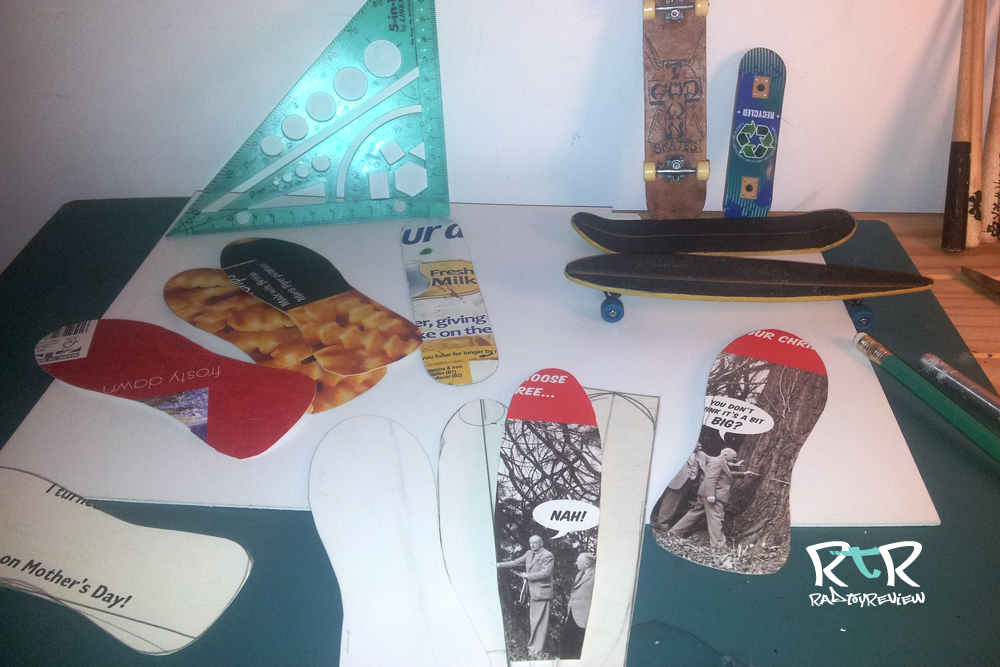
Ideally it should be a rectangle roughly 14 cm x 3cms. Once you’ve that measured out, take a pencil and draw a line bisecting the rectangle. Then draw or trace yer shape out. Once yer happy cut it out, rounding out any imperfections. Then simply use the template you’ve just created to draw out 4 – 6 more “boards” depending on how thick the card is and how thick ye want yer deck.
 
I find 4 layers of average greeting card stock will do the job nicely .
O.K… taking care not to glue yourself together, carefully glue the layers of card together one at a time. Ye can add kicks at this stage by simply bending the card where ye want em..
I find drawing around the edge of the board then a few lines in the middle will do. After each layer take care to trim any excess off and round out any imperfections. Rinse and repeat until ye are satisfied with the shape and thickness.
 
Apply more glue (ye may need to open a window unless ye dig cheap highs..) around the edge of the board to make sure the layers are firmly in place. This will also create a hardened edge that ye can lightly sand to add shaping.
After that its time for the grip tape. I use any old sheets of sandpaper or aluminium oxide cloth paper about 80 – 120 grit. Take what you have,  glue it to the board and trim to fit !
Apply glue once more around the edge of the board… once again, sand and clean up any last irregularities.
Now its simply a matter of adding any designs ye want. You can print off graphics and decals from yer computer or just doodle with a brush or pen. This is for me the most fun part of it all… I’ve gone for a homage or two  to the first board I ever rode.. my big bro’s dog town board. No doubt a few of ye will have similar nostalgia in mind .
Once yer happy with the graphics its time for some wheels. Silly enough, there’s not many decently sized trucks and wheels about. I find Tech Deck (TM) ones too small but you can lengthend them a bit with appropriately sized plastic tubing and the wheels glued in place on the end.
The trucks I have are old ones from a Dragon “In Dreams” skate fig, which are ideal at 3cm wide.. ye can either glue them straight on or mark  the bolt holes and drill them out with a pin drill or dremel to retain the spin.
Hopefully this will inspire a few of ye out there. I’d love to see some pics of a few finished decks at some point.
If any one out there happens upon a company thats producing some decent  1/6 sized trucks hit us up, my zombs would appreciate it!
Many thanks!

We hope you enjoyed the Workshop. Big thanks to Simon for taking time away from making amazing customs to write/photograph this up for us!

We’d love to hear from you and check out what kind of customs your working on! Hit us up on Facebook or Twitter pages to stay updated and please let us know what kind of workshops you’d like to see.

Until next time!