
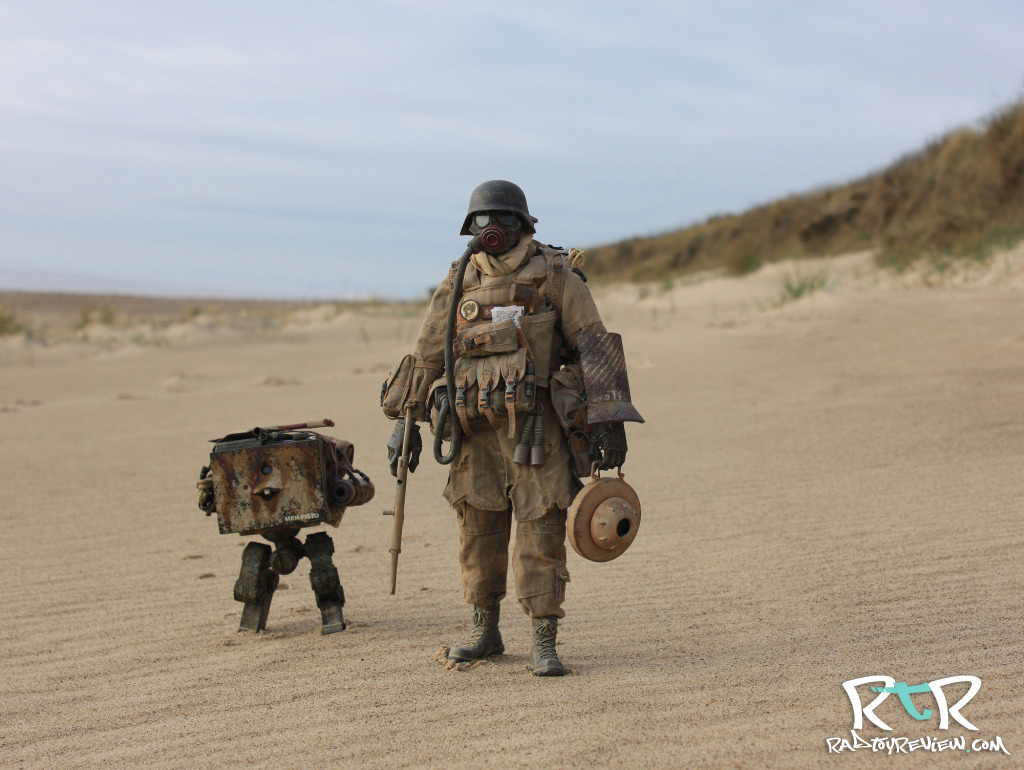
In this humble web dude’s opinion, if there is one thing regular “The Workshop” contributor Paul Benson is amazing at.. it’s creating realistic weathering on just about anything. In today’s workshop Paul’s going to walk you down the beach of learning and show you step by step how he achieves such believable results.
Enjoy!
– Knives
Weathering
As we know weathering tends to be a geographical term referring to and I quote “Any of the chemical or mechanical processes by which rocks exposed to the weather undergo changes in character and break down”. In the modelling world (not the one involving catwalks!) weathering is a whole variety of techniques used to simulate dirt, fading, spills, paint wear and tear, rusting, etc.
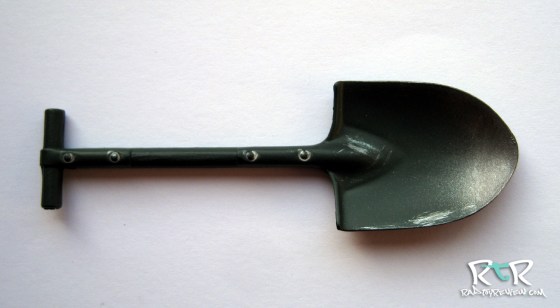


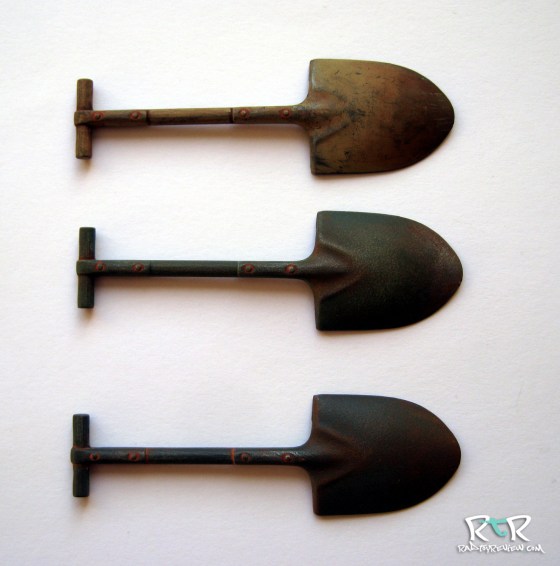
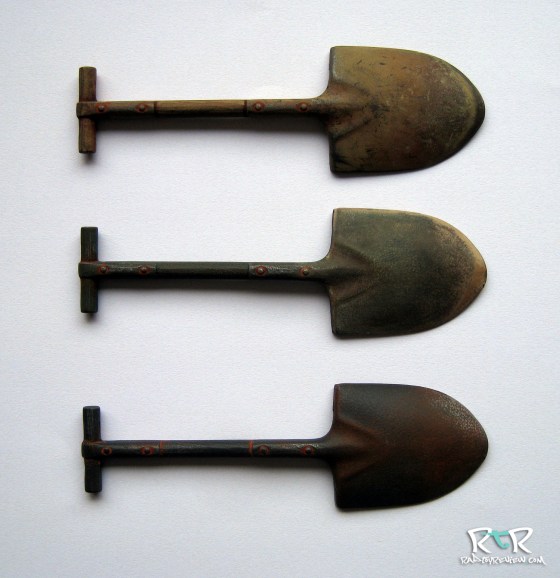
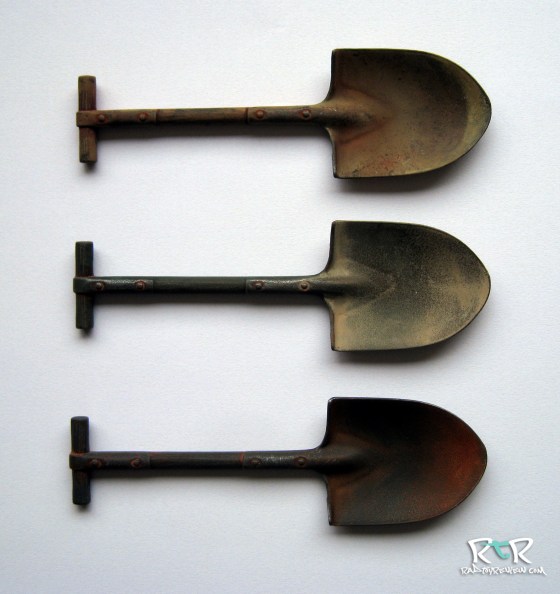
In this article I wanted to show how a 1/6 scale “heavily used” item might be weathered using various paint and weathering pigment techniques. A simple shovel seemed to fit the bill just right! While the techniques I use here work well for me, they are not the only way to achieve good results. Sometimes it can simply depend upon the paints and weathering powders you have at your disposal and how they work together. Try different things out and see what works for you!
It important to have a starting point. A good idea is to look at real world 1:1 scale objects to see how actual weathering affects them e.g. equipment, machinery, tools, fencing etc. You need to have some idea of how dirt and mud end up on objects, what dirt and oil stains look like, how rusting might occur and leave it marks etc. I have found the workshop articles in military modelling magazines very informative. Tank and armoured vehicle modellers seem to be the masters at weathering so your sure to pick a thing or two up from them if you look at their work.
To start this project off, I got three plastic 1/6 scale shovels courtesy of E__y.

pic x Paul Benson
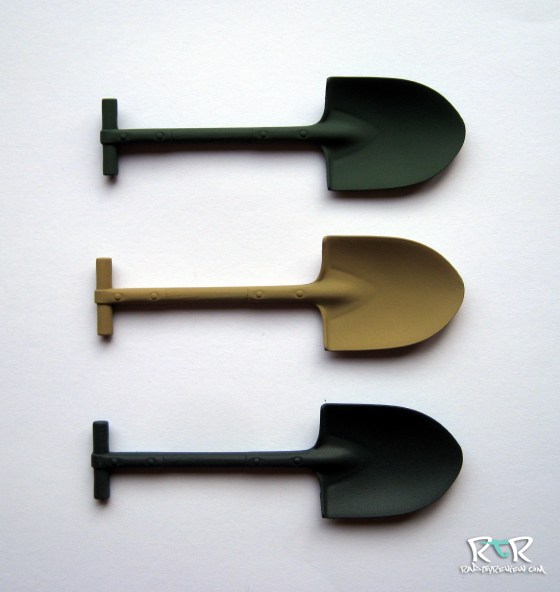
The article will deal with how I painted three shovels, each with a different base colour to show weathering.
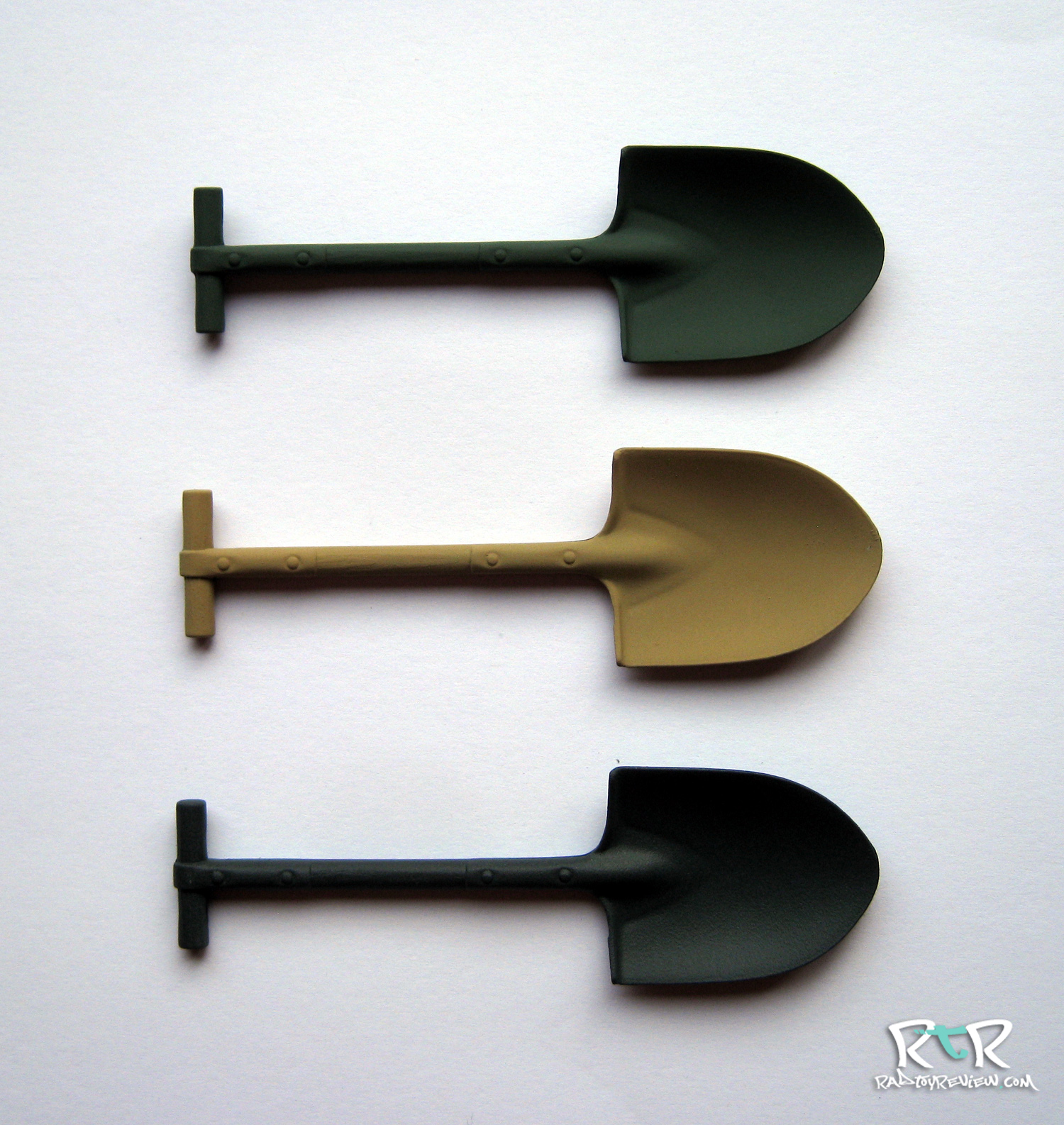
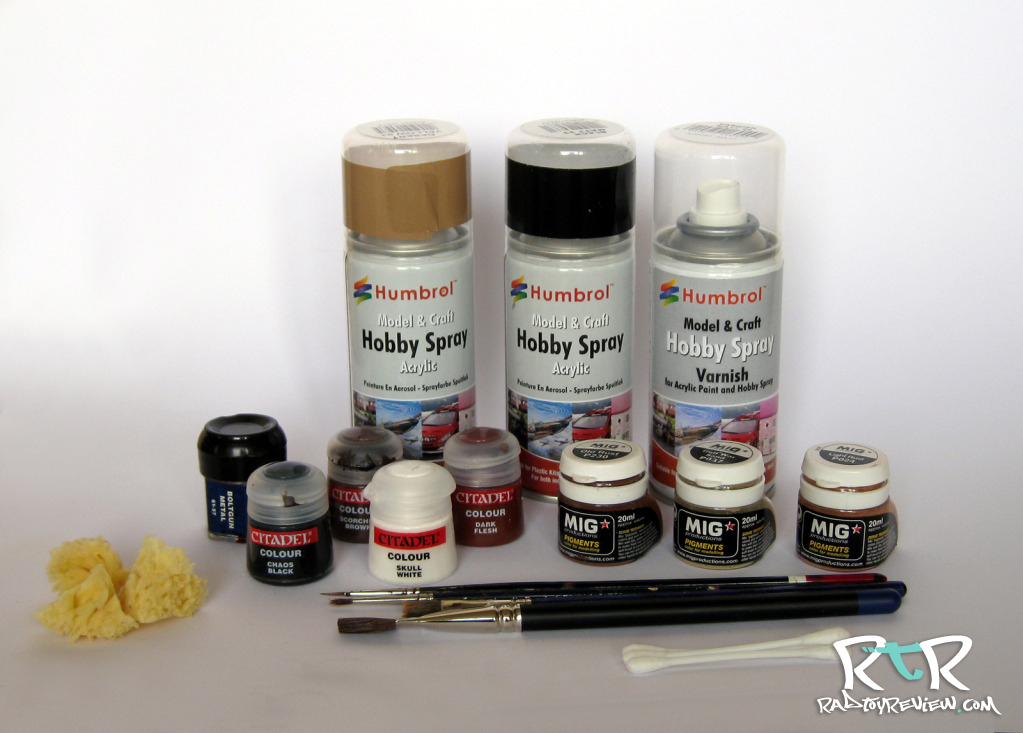
In other Workshop articles I have described the paints and materials I use. Generally I put on a base coat first with Humbrol acrylic aerosol paint, then I use Citadel acrylic paints (obtained from Games Workshop or hobby stores) and MIG weathering pigments. MIG weathering pigments come in a range of colours for soil/mud/dirt staining and for rust/oil stains. A substitute can easily be made by using artist pastels as they work in the same way. Take a suitably coloured pastel and rub it back and forth on fairly fine sandpaper or a nail file. They can be stored individually and used as such or combined.The first thing to tackle with the shovels was to remove the cast lines with sandpaper and a file. The shovels were then washed in warm water with a bit of detergent, this was to remove any factory grease marks. Then I sprayed one was sprayed with Humbrol Desert Yellow, the next Dark Green and the third with Tank Grey.
pic x Paul Benson
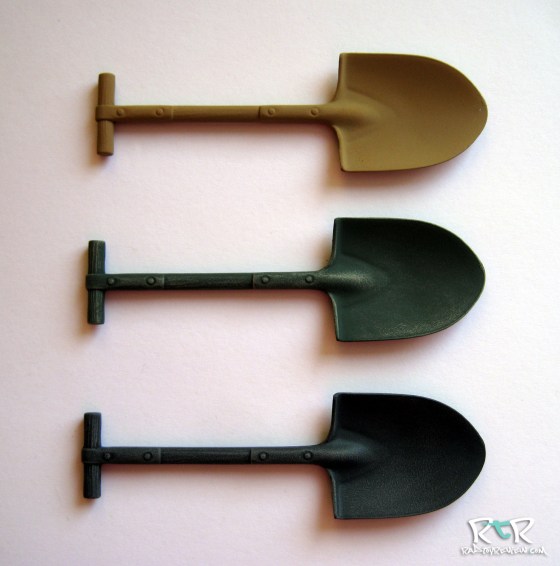
The shovels were then left overnight for the paint to dry. To add a little wear to where paint may have thinned, each shovel was dry brushed with as near a colour to the base coat as possible mixed with a little white. So for the desert camo shovel this meant using GW Desert Yellow mixed with Skull White. It’s subtle, but effective.

pic x Paul Benson
Next to chip the base paint back to the undercoat. A darkish grey was made up with GW Chaos Black and Skull White, this was then dabbed onto the shovel where paint chips would occur using small pieces of cut sponge. I have found that by dabbing on a piece of paper first several times, removes paint until just enough is left to leave clear dots and specks on the piece you are working on. Small scratches were painted in with a fine paint brush. Shovel 3 was going to be the most rusted of the three, so small rust marks were applied with a sponge using GW Dark Flesh.

pic x Paul Benson
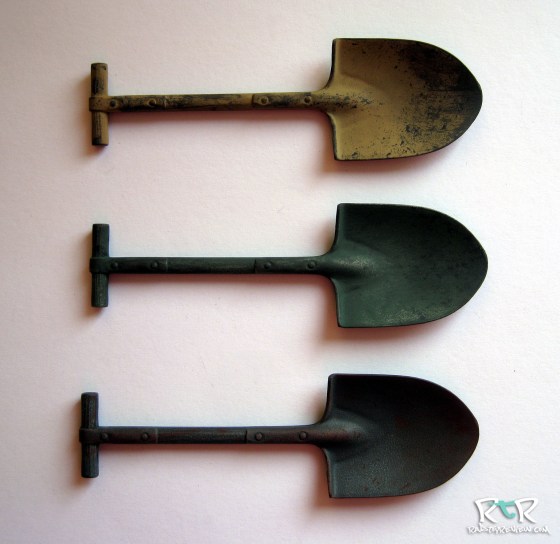
Now general rust and rust staining were applied. I used MIG weathering pigments New and Old Rust. Weathering pigments can be applied in several different ways. They can be mixed with water or a binding agent and washed over a piece or they can be applied dry. For these shovels it would be more appropriate to apply them dry. Using a stiff brush or a cotton bud (never thought that I would end up using these, but I happened to try one of my wife’s supply and found them very useful) I used the two pigments individually or blended to rub across the shovels. To put on a thicker layer the pigments can be dabbed on with a sufficient amount of water to make a paste and then rubbed in. A stiff brush, kitchen paper or a finger, dry or damp, can be used to blend the pigment across flat surfaces and will tend to leave pigment in depressions.

pic x Paul Benson

pic x Paul Benson
The next step was to pick out areas worn through to bare metal. For all three shovels GW Boltgun Metal was dry brushed onto areas where wear had occurred because of knocks and general erosion to the blade caused by digging.

pic x Paul Benson

pic x Paul Benson
Time to add the dirt.
For desert camo shovel I used MIG Gulf War sand. I mixed this pigment with a little white acrylic to act as a binding agent. This was painted onto the end of the spade blade and then gradually wiped away with kitchen paper and my finger until I got the effect I wanted. With the green shovel I just used MIG Dried Mud mixed with a lot of water. This was then painted onto the blade end of the shovel and then allowed to dry. The same technique was used on the reverse. For the grey shovel I just added more rust with MIG Old and New Rust!
At this point because of handling the bare metal effect had dulled and so therefore I re-applied GW Boltgun Metal were needed. As a final addition I dry brushed GW Mithril Silver to the bottom edge of the shovel blade and to where a boot had been placed during digging to represent metal that had been polished by wear.

pic x Paul Benson

pic x Paul Benson
There were several stops and starts on this project where I had done a little too much or too little weathering. Occasionally too much paint or pigment had been applied. To fix this, vigorous rubbing with kitchen paper is usually sufficient to tone down the paint effect. Unfortunately this can also polish the base coat and give it a shiny effect. I usually correct this by spraying the piece with Humbrol acrylic aerosol Matt Varnish.
Sometimes errors need to happen and it gives you a chance to assess what you are doing and ask yourself “Does this look realistic?”, “Does this shovel look like it has been used a lot in a natural way? “Does this shovel look like it has been left out in all weathers?” etc.
We hope you enjoyed the latest Workshop. Thanks to Paul for once again putting this together for us. We hope it helps take your weathering skills to another level!
We’d love to hear from you and check out what kind of customs you’re working on! Send us a shot of your latest custom work with a brief description to radtoyreview@gmail.com.
Hit us up on Facebook or Twitter pages to stay updated whenever we post new Workshops and epic toy reviews!
Until next time!



 Rad Toy Review