
New epic Workshop by Kid Akira tomorrow! Crazy in-depth! Soak it in you lucky people! 🙂
Category Archives: The Workshop
THE WORKSHOP – Le’ skateboard – by Goatbot/Simon
Once again, Simon/Goatbot/Goatballs/Goaty is back with another not-for-the-weak-knee’d tutorial. This time he’s going to walk us through his process of making his own custom skateboards for 1\6 figs.
Enjoy!
– Knives
Le’ Skateboard tutorial:
Alright then… first off, I just have to say that I’m doing this because those slack bastards at threeA have refused to heed my repeated demands for some street transport for their figs. I couldn’t be arsed to wait for the Adventure Kartel Zomb zimmer frame and decided to make a skateboard or three in the meantime. Also, big props to much missed threeA forum boardie Dante for the OG suggestion.
Down to business…
The materials you’ll need..
- super glue (or crazy glue to the colonials )
- stock card (old cereal packets, birthday cards are ideal )
- exacto knife and sharp scissors
- steel rule
- cutting mat
Skateboards are a very personal affair and first ye’ ve got to decide what style ride ye want… old school, street or a long board.
Once ye’ve picked yer poison ye’ll have to create a template. I do all mine by eye alone… ye computer whizzes should be able to knock something out in no time though!
Ideally it should be a rectangle roughly 14 cm x 3cms. Once you’ve that measured out, take a pencil and draw a line bisecting the rectangle. Then draw or trace yer shape out. Once yer happy cut it out, rounding out any imperfections. Then simply use the template you’ve just created to draw out 4 – 6 more “boards” depending on how thick the card is and how thick ye want yer deck.
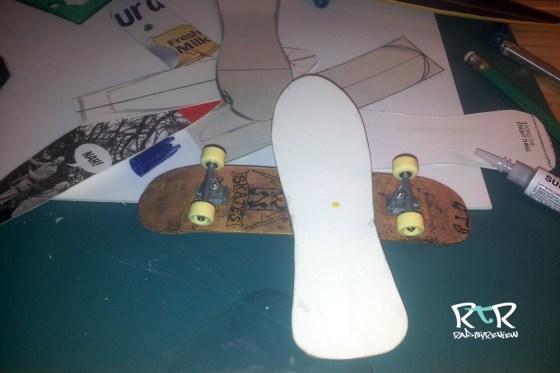
I find 4 layers of average greeting card stock will do the job nicely .
O.K… taking care not to glue yourself together, carefully glue the layers of card together one at a time. Ye can add kicks at this stage by simply bending the card where ye want em..
I find drawing around the edge of the board then a few lines in the middle will do. After each layer take care to trim any excess off and round out any imperfections. Rinse and repeat until ye are satisfied with the shape and thickness.
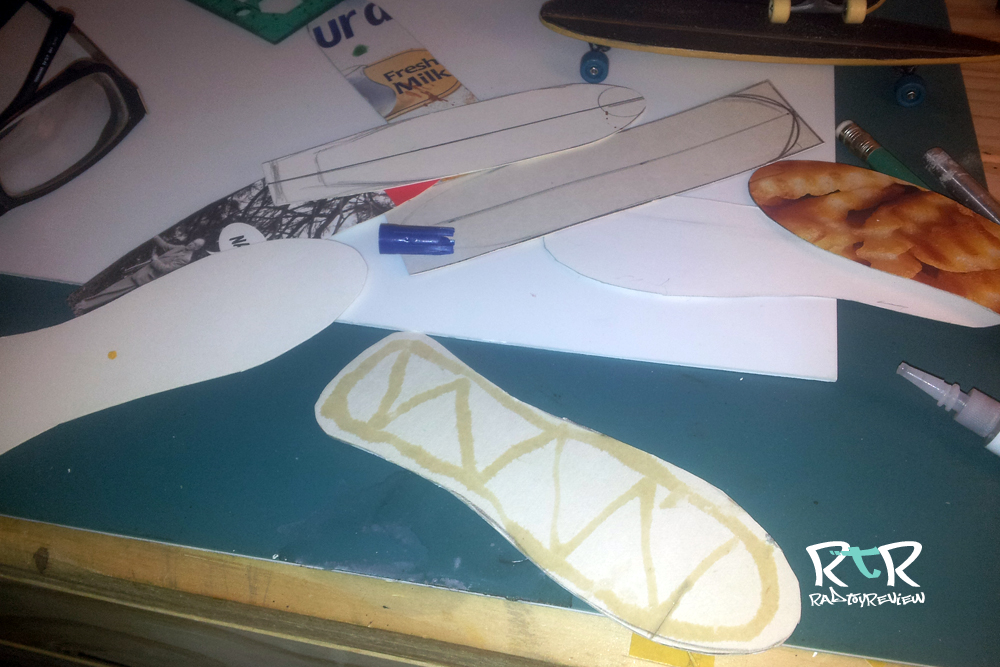
Apply more glue (ye may need to open a window unless ye dig cheap highs..) around the edge of the board to make sure the layers are firmly in place. This will also create a hardened edge that ye can lightly sand to add shaping.
After that its time for the grip tape. I use any old sheets of sandpaper or aluminium oxide cloth paper about 80 – 120 grit. Take what you have, glue it to the board and trim to fit !
Apply glue once more around the edge of the board… once again, sand and clean up any last irregularities.
Now its simply a matter of adding any designs ye want. You can print off graphics and decals from yer computer or just doodle with a brush or pen. This is for me the most fun part of it all… I’ve gone for a homage or two to the first board I ever rode.. my big bro’s dog town board. No doubt a few of ye will have similar nostalgia in mind .
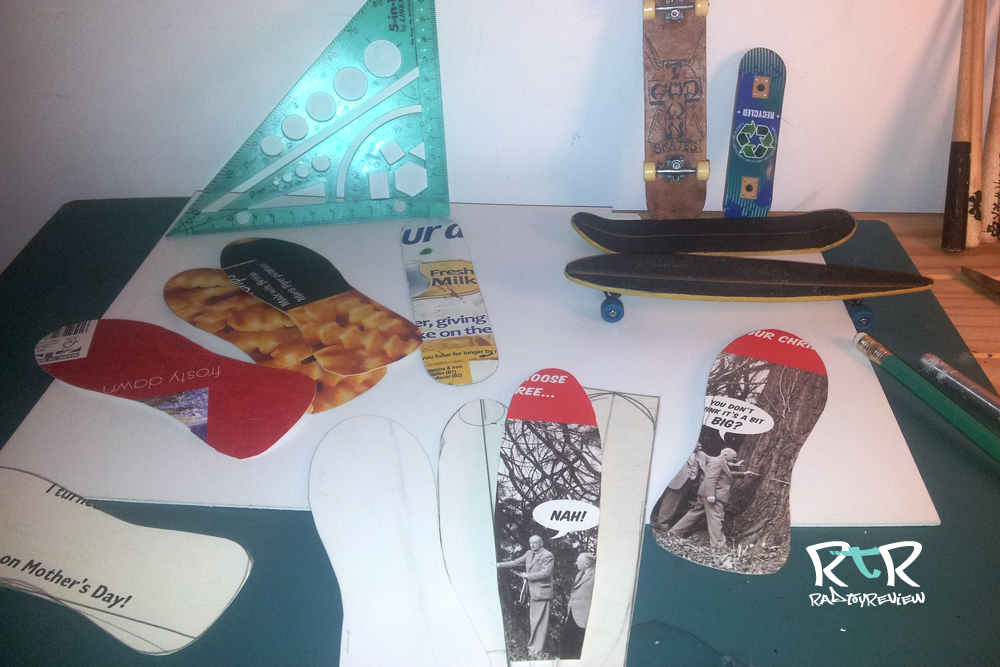
Once yer happy with the graphics its time for some wheels. Silly enough, there’s not many decently sized trucks and wheels about. I find Tech Deck (TM) ones too small but you can lengthend them a bit with appropriately sized plastic tubing and the wheels glued in place on the end.

The trucks I have are old ones from a Dragon “In Dreams” skate fig, which are ideal at 3cm wide.. ye can either glue them straight on or mark the bolt holes and drill them out with a pin drill or dremel to retain the spin.
Hopefully this will inspire a few of ye out there. I’d love to see some pics of a few finished decks at some point.
If any one out there happens upon a company thats producing some decent 1/6 sized trucks hit us up, my zombs would appreciate it!
Many thanks!

We hope you enjoyed the Workshop. Big thanks to Simon for taking time away from making amazing customs to write/photograph this up for us!
We’d love to hear from you and check out what kind of customs your working on! Hit us up on Facebook or Twitter pages to stay updated and please let us know what kind of workshops you’d like to see.
Until next time!
THE WORKSHOP – Wee Zombie Bashing Bat – by Goatbot/Simon
Happy Valentine’s Day everyone! If you’re lonely and sad today.. take heart! A new Workshop awaits!
What a treat today is… A little back history first. When I first got into collecting 3A, I remember seeing all these pictures of Tommy Mission figures holding these awesome little baseball bats. They all had different decals, witty scribe.. some had blood splatters, nicks/scratches etc. I ordered my first Tommy fully expecting to have some variant packed in with him. To my surprise, no bat.. just a dumb glowing hand (kidding?). After a smidge of digging I came to learn that these amazing little things were handmade by a fellah who, going completely off his various forum names, seems to have an intense, yet healthy fascination with goats.
Huge thank you to Simon/Goatbot/Goatballs/Goaty for this fantastic workshop! He was kind enough to create not just one, but TWO different tutorials for us! The second we plan to post later in the week. This one is the most complex yet and you get play to play with power tools. Please be safe and don’t poke your eye out kid!
– Knives
Howdy folks, must be a slow news week as Knives has very kindly asked me to provide him with a tutorial or two… you lucky people .. its a big honor to have been asked so thanks mush.
To the bat tutorial then..
For those of you who feel the need for some blunt force trauma in your lives, nothing says emo better than 3 foot of hickory planted firmly in the jacobs… hopefully this tutorial will make enough sense so ye can make your very own baseball bat…
This is a wee bit more demanding and requires you have a few tools laying about but if you can do it, anything goes.
Materials :

- power drill, cordless preferred unless ye have a bench vice or indeed a wood lathe (I use an 18v hitachi cordless impact driver drill)
- fine toothed saw ( gents, mitre etc )
- wood rasp
- small hobby files or a dremel
- sandpaper or better still aluminium oxide cloth 80 , 120, 240 grit should do it
- 12 mm HARDWOOD doweling , available in most hardware stores and model hobby shops. Ye can use lengths of twig, sticks etc but this will make th job way harder..
- electrical tape, medical tape etc ( for the grip )
- paint, pens, decals
- bees wax or spray varnish
- COMMON SENSE
- dust mask
- Well ventilated work space
Okay this my method only ! Those of ye with better tools and workspaces will no doubt adapt accordingly, I apologize for the picture quality as it was cold and no one was willing to take pics of me making toy bats… bastards..
Also a shout out to dedguy for inspiration and for making bats look so frick’n cool
To start off with I find it best to sit on a wee box or something low to the floor with materials and tools close to hand. Then I measure and cut how many bats I want to make..the bat should be around 13.5 – 14 cms but the over all length ye want to work with should be about 17 cm.. The remainder should be enough to fit snugly into the chuck of the drill . Bats come in all shapes and sizes so decide on the look ye want before hand. I make bats of differing styles and also of differing handle widths to accommodate various hand sculpts. Note its better to go too thin as ye can always bulk out the handle with “grip tape”. After inserting the wood into the chuck, engage the power to see how well the woods been seated… if its off it will wobble alarmingly.. just re-house it until it spins ” true” .
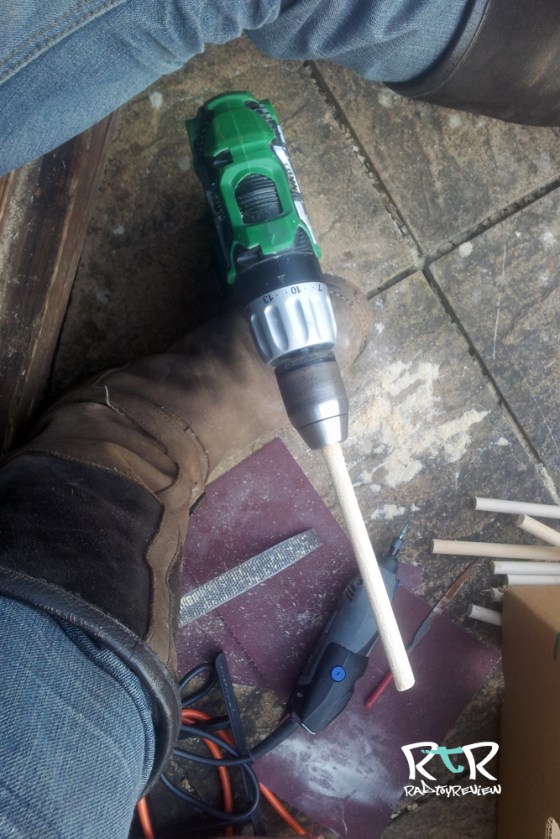
I then put the drill on the floor and brace it with a well planted foot across the battery housing ( as per the picture above) when its stable, select th speed ye require ( higher speeds work best) and away ye go .
With one hand operating th drill trigger I use the wood rasp to waste away the rough shape of the bat. I work on the opposite side of the wood to where I’m positioned taking care not to impose too much pressure on the wood..
Working your way from the chuck to the end of teh bat will have the best results but be wary of lingering too long in one spot lest ye thin it out too much.

I work my way up from the chuck end along th barrel of the bat a couple of times then stop to see how I’m doing… if I’m satisfied I’ll take a sheet of abrasive paper 80 – 120 grit, fire up the drill again and use th paper to smooth and shape teh bat to the required shape and finish.
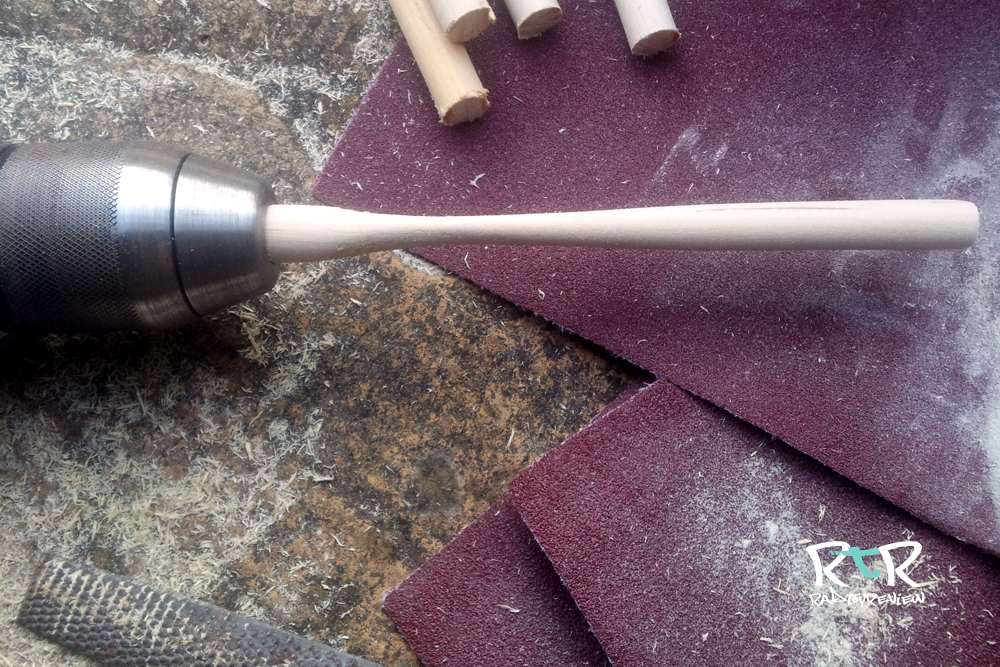
BE CAREFUL HERE .. you can grip th bat with the paper but be aware that it can snap if your grips too tight, also the transferred heat can cause nasty friction burns to you if yer not careful… try explaining that to your girl friend or nearest medical professional.
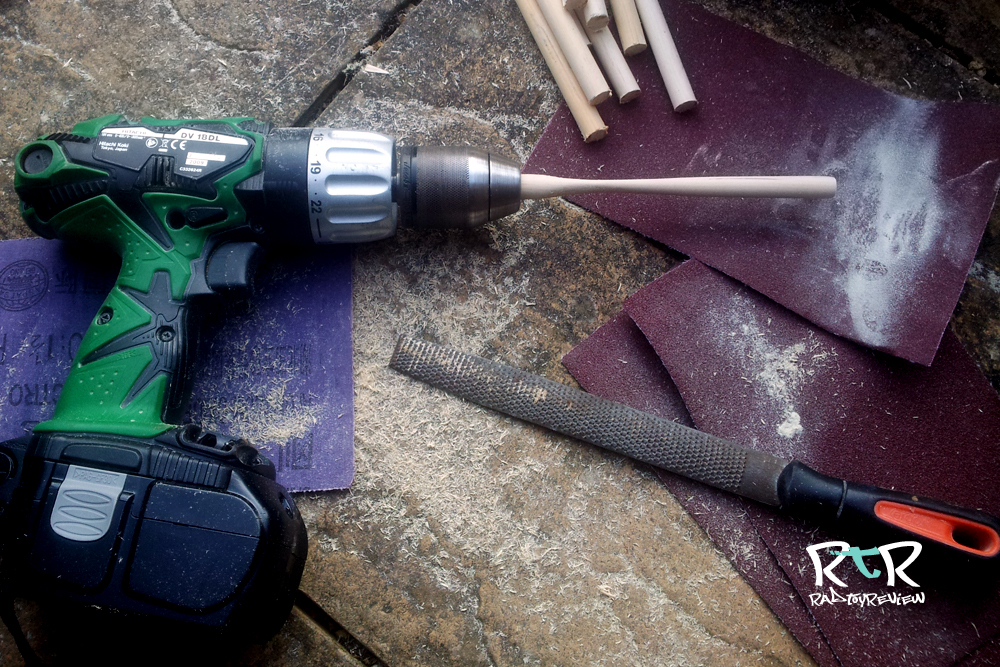
I usually leave the grip end until last as this reduces th likelihood of it snapping at the weakest point. I use a wee elliptical metal file to flare out the bottom of the handle and to create the hand stop at the end taking care to thin out the wood below the knob so as to make cutting off the wood sprue neater and easier.

Once yer satisfied ye can take the bat out, cut it off at the base and sand the base and top of the bat by hand .. If I’ve done this properly ye should now be teh proud owner of a 1/6 scale baseball bat !
or have a fine toothpick…
or maybe a burnt hand full of splinters.

Once yer done with this part its then up to you on finishing touches. I usually polish the wood with beeswax, paint it if required, then add weathering and teh odd nick or scratch before a final coat of varnish .
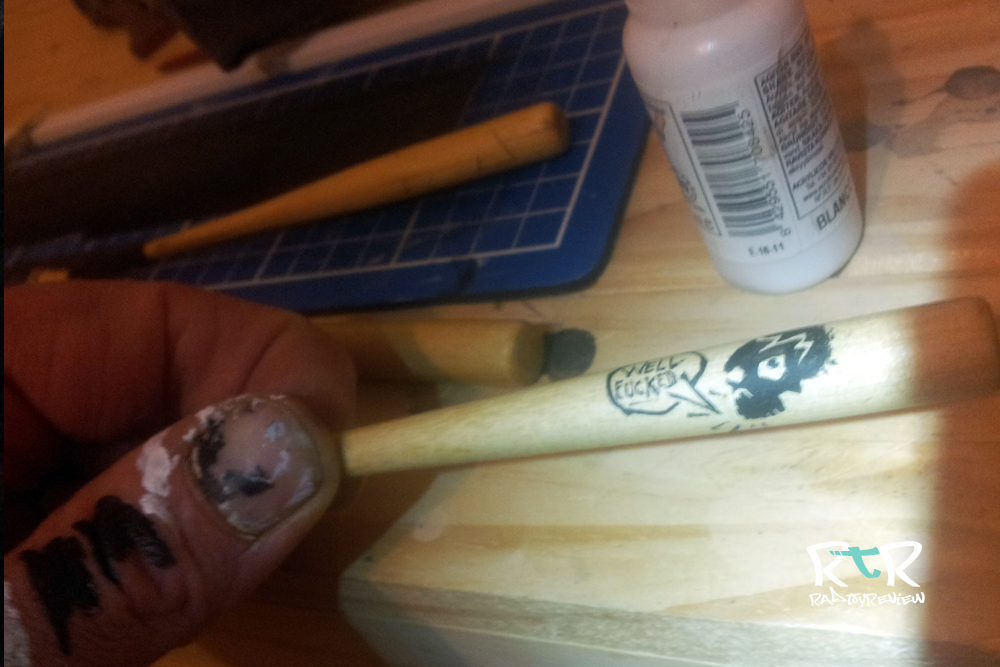
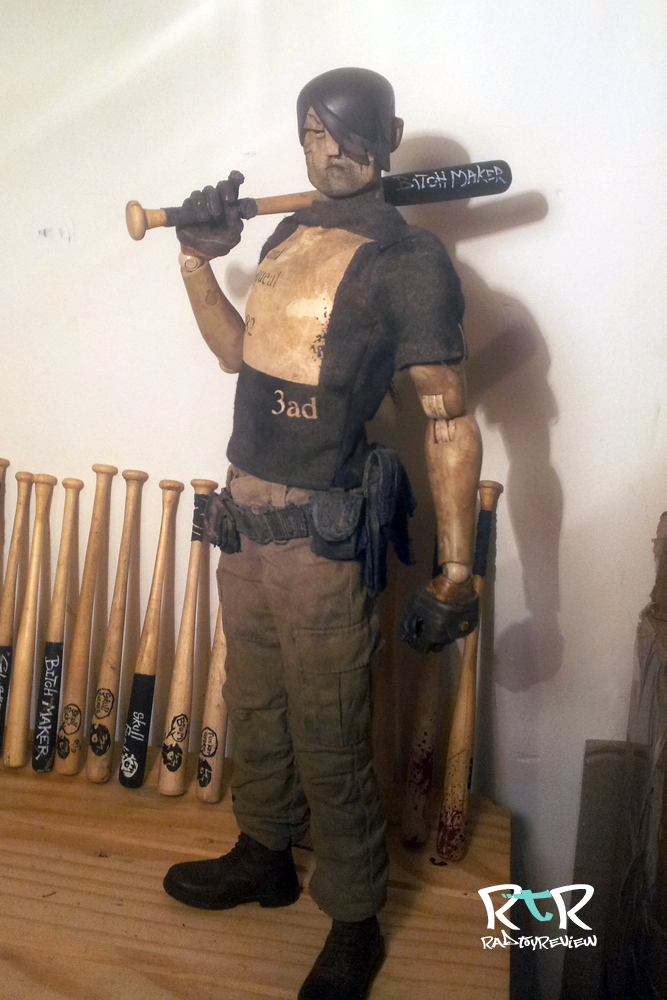
Your AK crew is now tooled up and ready to roam the streets..or your shelves, doling out righteous woody justice !
Thats it …done and dusted.
Many thanks for your time and patience and a huge props to Rad Toy Review.
cheers !
We hope you enjoyed this Workshop. Check back later in the week as we bring you another from the mighty Goat!
We’d love to hear from you here, on our Facebook or Twitter page. We’d love for you to share with us your own customs. Let us know how we’re doing and what kind of workshops you’d like to see.
THE WORKSHOP – F_SEBS “Rusting with gusto”
Today we have an all new workshop from F_Seb who many of you may be familiar with from his fantastic modeling, painting and character customization work. He’s gonna hold your hand and guide you through the steps he took to get some killer looking realistic rust fx on his BA custom bot. (Which had me asking, where’s the tutorial on THAT?) I know you’ll enjoy it and I think you’ll come out the other side a little more enlightened. Cheers!
– Knives
Hi all!! Before starting this custom, I had never successfully created any rusty effects as we can see on some tutorials. I’d read and tried the “salt layer” trick once a few months ago and the result was bad. I couldn’t get it to look right. I screwed up somewhere along the way I think. So on a whim, I decided to try a similar technique, but this time with sand..
Why?? I don’t really know why. At first, I didn’t think the result would be what I desired, but in the end it didn’t seem like such a bad idea. I’d made a few modifications to this little Armstrong, so it was necessary to paint it to make it more seamless.
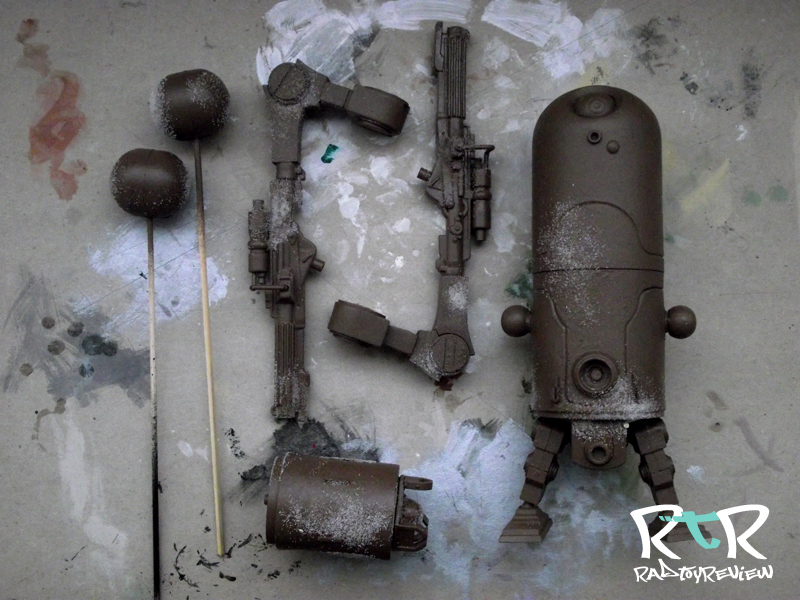
1.I used spray paint (mtn94 is my favorite, low pressure) for the base layer. I wanted a brown color as you can find in rust. I waited a little bit until it’s completely dry and used hairspray to stick the sand. The sand I used is the same of that you might find in a Japanese garden for interior design, it’s very thin and perfect for the scale. I did several spots of hairspray and then applied sand to it. You can choose to put as much sand as you like. Variety of amount here will give you variety in texture later.
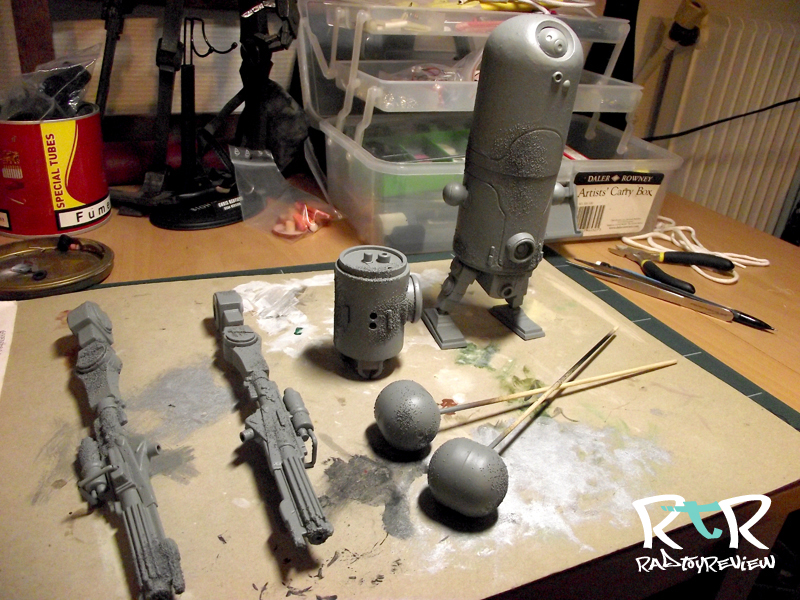
2. Once the sand is fully dry in place, I painted another layer this time in light grey. This is the color the bot might have been when it was fresh off the factory floor/clean. Note: If you have different base colors for different parts of the bot (ie: red arms, blue legs) just paint those parts accordingly.
3. Alright, let’s go to make-a-the-rust, or something like that!! So, here I used only two colors, Vallejo Clear Orange (70.956) and Liquitex black mars to get various browns and oranges. I then stamp on some more sand with a flat pencil to make irregular spots as well as do some dry brushing on the edge of the rust zone. Don’t forget to do random mixes of paint, it’s more beautiful with nuances.
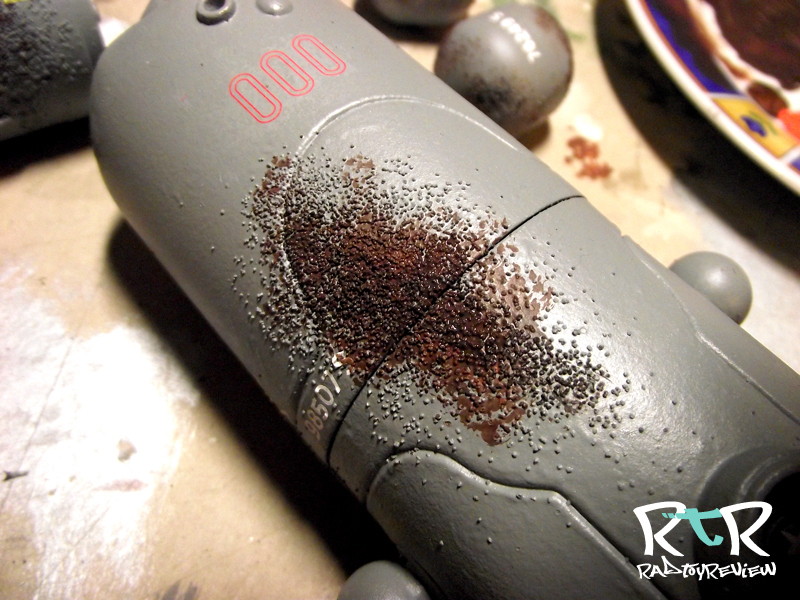
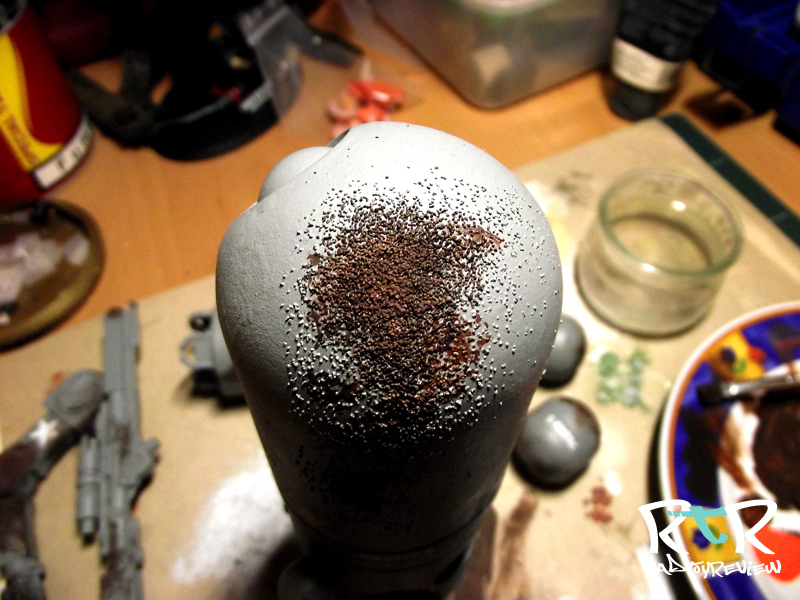
If you’re wondering why I started by painting the whole bot brown in the 1st step, you should start to see the reason for it here. As the sand gets knocked off while you dry brush and stamp you’ll notice under the color is the nice rusty brown giving the effect of rusted steel. You can knock bits and pieces of sand off where you please to make little spots of under painted brown rust. Again more texture, more variety.
4. OK, here I use Tamiya paint X26 orange clear and the same mix of paints I did for the rust spots (Vallejo Clear Orange (70.956) and Liquitex black mars) To get the runny rust look, I take a round pencil and I drop a tiny bit of water to make “roads” running down the body of the bot. Immediately afterwards I drop a gout of very diluted paint. It will follow the road, leaving just a little color. Redo that step until it gives you the desired effect. Note: starting with a clear water “road” instead of simply using very diluted paint ensures that the drip goes where you wish without any risk of it running over something you didn’t intend it to.
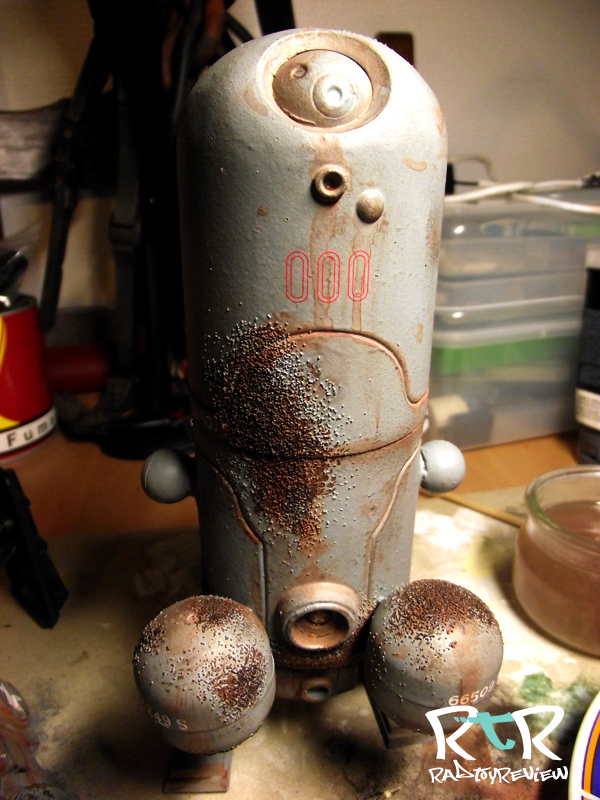
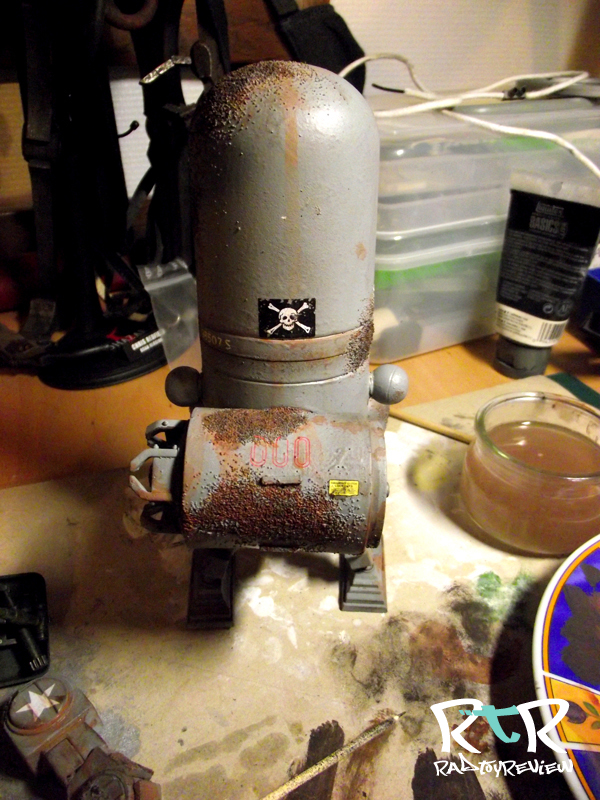
5. Now you can do some dry brush with a metallic paint (for me Tamiya chrome silver) which gives a nice scratched metal effect. You can also experiment with different ideas that mimic real world aged metal. Burn spots, oil leaks, etc.. Apply your paints in light layers and build them up until you’ve reached the desired look.
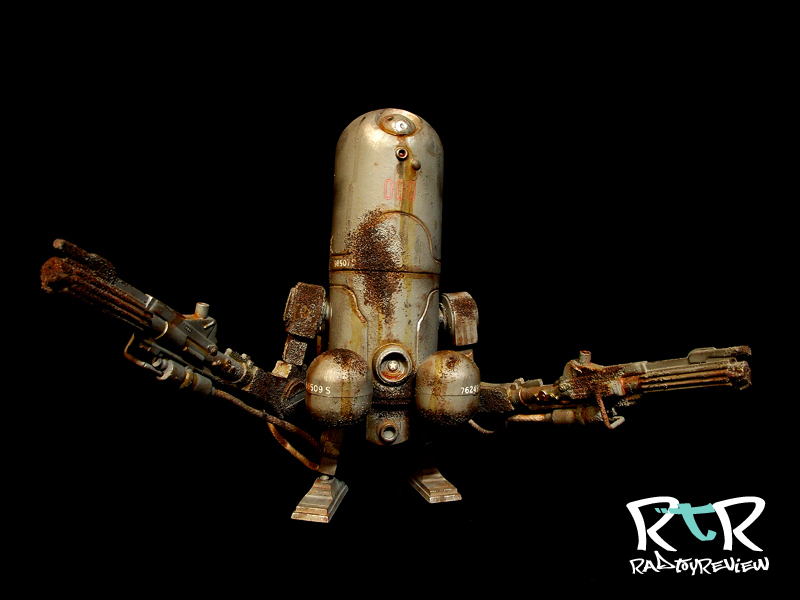
We hope you enjoyed the workshop. You can check out more of F_Sebs amazing work on his blog: http://sebscustoms.blogspot.com/. We’d love to hear from you here, on our Facebook or Twitter page. Let us know how we’re doing and what kind of workshops you’d like to see.
Happy rusting folks 🙂
 Rad Toy Review